




Scalable Home ESS: Plan Battery Capacity for Year 5
Scalable home energy storage lets you start with a 5 to 10 kWh battery today while keeping room for EV charging, heat-pump conversion, family growth, or longer outage backup later. The safest plan is to size the inverter, battery cabinet, wiring, BMS communication, and software platform for year-5 needs before buying the first module.
Buying your first home ESS is not only about today’s power bill. It is also about the home you may have in five years. A smaller starter battery can make sense, but only if the platform can grow with your loads. Before choosing the first 5 to 10 kWh system, you need to check how far the inverter, battery modules, wiring, and monitoring system can expand.
What does scalable home energy storage really mean?
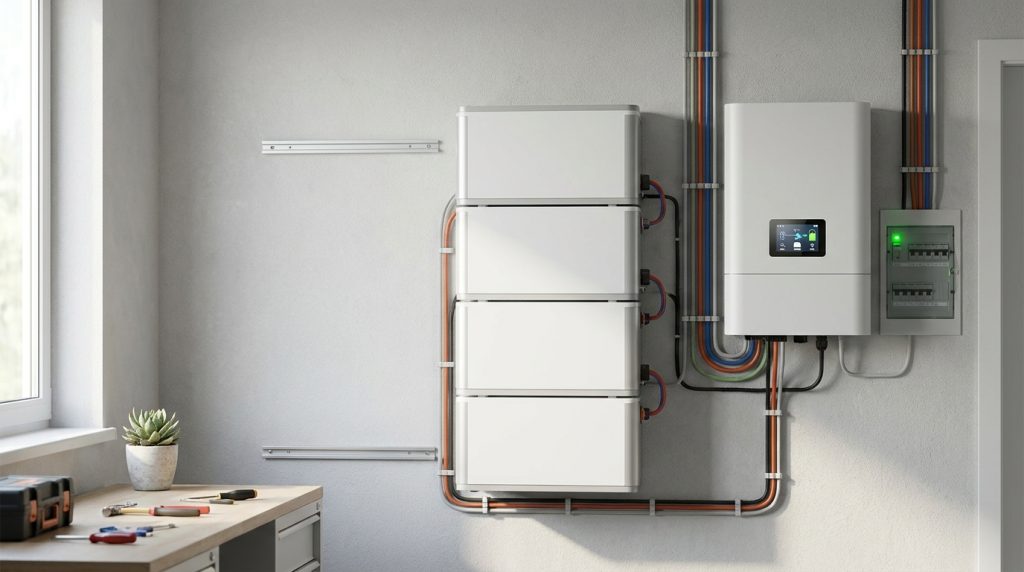
Scalable home energy storage means you can start with a smaller battery and add capacity later without rebuilding the whole system. The inverter, battery communication, installation space, and approved module limits decide how far that expansion can go.
A scalable ESS is more than a battery stack. It includes the battery modules, inverter, battery management system, energy management software, safety controls, cables, cabinet space, and installation plan. If one part cannot support expansion, the whole system may hit a limit earlier than expected.
This is why “scalable” does not mean unlimited. Some systems allow extra modules only within a fixed capacity range. GM Energy, for example, lists clear battery capacity tiers and system limits for its PowerBank setup, which shows why buyers must check expansion rules before purchase.
Use this quick checklist before calling a system scalable:
- Can the battery cabinet accept more modules?
- Does the inverter support the future battery capacity?
- Does the BMS support added modules?
- Will the same battery model be available later?
- Is there enough wall or floor space for expansion?
- Will the app or EMS manage the larger system?
For a deeper look at why battery architecture matters, read this guide to modular battery design.
Is a 5 to 10 kWh starter system enough today?
A 5 to 10 kWh starter ESS can be enough if your goal is essential backup or evening solar use. It becomes too small when you expect EV charging, electric heating, longer outages, or whole-home backup.
A small starter system is not a mistake. The mistake is buying a small system with an inverter and cabinet that cannot grow. A 5 to 10 kWh battery may cover basic backup loads, but it should not lock you into a short-term design.
| Your current goal | Is 5 to 10 kWh enough? | What to check before buying |
|---|---|---|
| Refrigerator, lights, router, phone charging | Often yes | Critical-load panel and backup circuit plan |
| Evening solar self-use | Often yes | Daily solar surplus and nighttime load |
| Whole-home backup | Usually no | Inverter output and larger battery path |
| EV charging later | Not as the main EV energy source | Charger power, schedule, and future inverter capacity |
| Heat-pump conversion later | Often not enough | Winter load, peak demand, and backup priorities |
| Longer outages | Depends on load control | Runtime target and future module limit |
A starter backup family might begin with 5 kWh for a refrigerator, lights, router, phone charging, and a few outlets. If they later need more outage coverage, they can add another module, but only if the platform was chosen for that path.
If you are comparing short backup devices with a full home ESS, this ESS versus UPS guide can help clarify the difference.
Which year-5 changes can increase your battery needs?
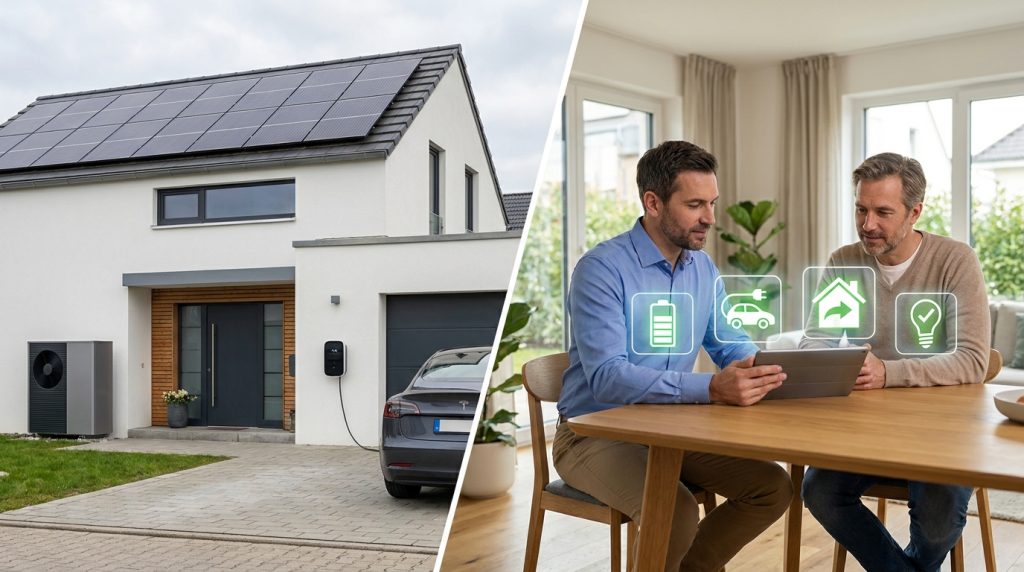
The biggest year-5 load changes are EV charging, heat-pump heating, larger family demand, and longer backup expectations. These affect both kWh capacity and kW output, so the first system should be sized for future expansion, not only today’s bill.
Your current electricity use may not show your future home. The U.S. Department of Energy notes that EV charging load depends on charger capacity, vehicle battery size, charging rate, state of charge, and charging profile. That means an EV does not add one simple number to your ESS plan.
Solar plus storage planning also depends on control coordination, communication, interoperability, and scalability, according to the DOE’s Solar Plus X work. For homeowners, that means future loads should be part of the first system design.
| Year-5 change | What it can change | Planning action |
|---|---|---|
| EV adoption | Higher evening load and possible peak demand | Do not assume the ESS will fully charge the EV |
| Heat-pump conversion | More winter electricity use | Separate comfort heating from critical backup |
| Family growth | More cooking, laundry, electronics, and comfort load | Reserve cabinet and inverter headroom |
| Longer outage goal | More usable kWh needed | Link backup time to critical loads |
| Solar expansion | More stored daytime energy | Check inverter and EMS compatibility |
EV adoption
An EV-in-two-years buyer may start with 10 kWh today. The smarter move is not to expect the home battery to fuel the car every night. The better plan is to choose an inverter and EMS that can manage charging schedules, solar surplus, and home backup priorities.
Heat-pump conversion
A heat-pump conversion can raise winter electricity use. Do not size the first battery around unrealistic whole-home heating during long outages. A safer plan is to keep critical loads separate, then decide later whether more modules are worth adding.
Family growth and outage expectations
A growing family may use more power in the evening when solar production is low. An elderly parent moving in can also change backup priorities. If outage protection becomes more important, use a dedicated 72-hour backup planning guide before adding capacity.
How much capacity should you plan for by year 5?
Plan year-5 capacity by adding today’s critical load, expected new electric loads, and desired backup duration. Then choose a platform with enough certified expansion capacity so the battery can grow without replacing the inverter.
Do not start with the largest battery you can afford. Start with the loads you must support, then map what could change. DOE’s REopt Lite guidance shows why battery size, dispatch, PV size, critical load, and outage duration need to be considered together.
Simple year-5 capacity formula
Use this simple planning method:
Year-5 target capacity = today’s critical-load need + expected new daily load + backup-duration margin + usable-capacity buffer
For example, a home may start with 5 kWh for critical backup. If an EV changes evening behavior and family use grows, the owner may plan for 10 to 15 kWh later. The first purchase should support that path, even if the first installed battery is smaller.
5-year capacity roadmap template
| Year | Expected load change | Battery target | Inverter headroom | Installation action | Decision trigger |
|---|---|---|---|---|---|
| Year 0 | Essential loads only | 5 to 10 kWh | Sized for future modules | Install starter ESS | Backup fridge, lights, router, outlets |
| Year 1 | Monitor real use | Same | Confirm peak load data | Review app reports | Nighttime usage is higher than expected |
| Year 2 | Solar use increases | Add if needed | Check export and charging limits | Tune EMS settings | Solar surplus is often wasted |
| Year 3 | EV or heat pump decision | 10 to 15 kWh | Confirm kW output | Add module if justified | New load is confirmed |
| Year 4 | Family load grows | 10 to 20 kWh | Check panel and circuit plan | Adjust backup loads | More evening demand |
| Year 5 | Longer backup goal | Platform maximum if needed | Avoid inverter replacement | Final expansion | Outage goal changes |
For cost and runtime planning, pair this roadmap with a backup runtime cost estimate.
Why inverter headroom matters more than many buyers expect
Battery capacity tells you how long the system can run. Inverter output tells you what it can run at the same time. A scalable ESS should leave enough inverter headroom for future high-demand loads.
Many buyers focus on kWh because it feels easy to compare. A 10 kWh battery sounds bigger than a 5 kWh battery. But kW output is just as important because it controls how much power the system can deliver at once.
Tesla and GM both separate capacity from power output in their product specifications. That is the right way to think about a scalable ESS. Capacity handles runtime. Inverter output handles active loads, startup surges, and future appliances.
| Term | What it means | Why it matters |
|---|---|---|
| kWh capacity | How much energy the battery stores | Affects backup time |
| kW output | How much power the inverter delivers at once | Affects what can run together |
| Peak load | Highest load at one moment | Can trip or overload a small inverter |
| Usable capacity | Energy you can actually use | Affects real backup performance |
| Expansion limit | Maximum supported system size | Decides year-5 flexibility |
A whole-home ambition scenario shows the risk. A buyer wants to run more loads later, but chooses a starter inverter that only supports essential circuits. Adding battery modules may increase runtime, but it will not solve the power-output limit.
What platform specs should you check before buying?
The best platform is the one that can grow inside its tested and approved limits. Before buying, ask for written answers about battery expansion, inverter output, module compatibility, safety controls, and installation requirements.
Battery safety also matters. The DOE’s energy storage safety strategy highlights the role of module-level sensing, balancing, thermal management, and protection design in lithium-ion systems. For a homeowner, this means expansion should follow the manufacturer’s approved system design.
Use this buyer checklist:
- Maximum battery modules supported
- Maximum total kWh supported
- Maximum inverter output in kW
- Parallel inverter support, if any
- Same-model battery compatibility rules
- Battery management system support
- CAN or RS485 communication requirements
- App or EMS support for added modules
- Indoor or outdoor installation rating
- Wall or floor space for future expansion
- Warranty terms after expansion
- Installer certification requirements
- Local code and permit responsibility
For stack-based systems, the first design should include physical room and cable planning for future modules. This is where stackable battery planning becomes part of the buying decision, not a later upgrade detail.
Should you buy bigger now or expand later?
Buy bigger now when your future loads are already known and installation costs are hard to repeat. Expand later when your EV, heat pump, or family-growth timeline is uncertain, but only if the inverter and battery platform are already expansion-ready.
Buying the biggest battery on day one is not always the smartest plan. It works when future loads are already clear. Staged expansion is safer when your EV, heat pump, or family timeline is still uncertain.
| Buyer situation | Better choice | Why | Risk to check |
|---|---|---|---|
| EV purchase already scheduled | Buy with more headroom now | The load is no longer theoretical | Do not rely on battery for full EV charging |
| Heat pump planned this year | Buy bigger or reserve strong expansion | Winter demand may rise | Inverter output and critical-load design |
| Family growth is uncertain | Expand later | Demand may change slowly | Module availability |
| Frequent outages | Buy more capacity now | Backup value is immediate | Critical-load panel design |
| Limited installation space | Buy carefully now | Expansion may be hard later | Cabinet and clearance limits |
| Strict budget | Start smaller | Reduces upfront cost | Avoid non-expandable inverter |
| High repeat labor cost | Buy more now | Avoids repeated installation work | Permitting and warranty terms |
A scalable product can still have strict limits on total modules, same-model compatibility, inverter count, or maximum supported kWh. Treat the word “scalable” as a claim to verify, not a promise to trust without details.
What should your 5-year ESS roadmap look like?
Your 5-year ESS roadmap should connect life changes to system actions. DOE’s behind-the-meter storage work looks at PV generation, building demand, EV charging, battery size, dispatch, and grid use together. Homeowners can use the same logic in a simpler way.
| Year | Home scenario | ESS decision | What to measure | Action |
|---|---|---|---|---|
| Year 0 | First system for essential backup | Start with 5 to 10 kWh | Critical-load runtime | Install expansion-ready platform |
| Year 1 | Normal use data becomes clear | Keep or tune system | Night load and peak load | Adjust EMS settings |
| Year 2 | Solar self-use becomes a priority | Consider added storage | Solar surplus and grid import | Add module only if surplus is real |
| Year 3 | EV or heat pump arrives | Recalculate kWh and kW | Charger schedule or heating load | Add modules or revise backup circuits |
| Year 4 | Family demand increases | Review comfort and critical loads | Evening demand and outage needs | Expand if daily use justifies it |
| Year 5 | Backup goal changes | Reach target platform size | Runtime during outages | Finalize long-term capacity plan |
A heat-pump conversion home should not treat winter whole-home heating as the same goal as critical backup. A growing family scenario should focus on evening load and comfort needs. A whole-home backup scenario should start with inverter and load-panel planning before adding battery capacity.
For longer outage planning, connect this roadmap with an emergency power roadmap.
What should you ask your installer before signing?
Ask your installer direct questions before signing, because the first design decides your future options. The goal is to confirm that the starter system can grow without replacing the inverter, battery cabinet, or control system.
Use this pre-purchase checklist:
- What is the maximum certified battery capacity?
- Can I add batteries later without replacing the inverter?
- What battery models will be compatible in future?
- What happens if this battery model is discontinued?
- How many modules fit in the current cabinet or wall space?
- What loads are backed up now?
- What loads can be added later?
- Can the system support EV or heat-pump planning?
- Does expansion affect the warranty?
- Who handles permits and code-compliant installation?
- Will I receive a written single-line diagram or system design?
- Can you show the estimated runtime for my critical loads?
A good installer should answer these in plain language. If every answer is vague, do not treat the system as future-ready. Ask for a written runtime estimate guide or load calculation before paying.
What to Do Next
Scalable home energy storage works best when the first purchase is planned around year-5 needs. Start with your current critical loads, then add likely future changes such as EV charging, heat-pump conversion, family growth, and longer outage goals. After that, choose a battery platform with enough inverter output, communication support, cabinet space, and certified expansion capacity.
Before buying, compare the roadmap with a broader home energy storage system guide. Then ask the installer to confirm the maximum supported kWh, kW output, module rules, and future upgrade path in writing.
Frequently Asked Questions
How much energy storage do I need for my home?
Most homeowners should size storage around critical loads, evening energy use, and desired backup hours. A small starter system may work today, but year-5 planning should include likely EV, heat-pump, or family-load growth.
Can I add a battery to my existing solar panel system?
Yes, but the inverter architecture decides how simple the upgrade will be. Existing solar may need AC-coupled storage, a hybrid inverter, or electrical changes before battery expansion is practical.
What is the lifespan of a home battery?
Battery lifespan depends on chemistry, cycle depth, temperature, warranty terms, and how often the system charges and discharges. Compare warranty years, cycle limits, usable capacity, and replacement-module availability before choosing a platform.
How do scalable energy storage systems enable capacity expansion over time?
Scalable systems use modular batteries and compatible power electronics so capacity can be added as demand grows. The expansion still depends on maximum supported modules, inverter rating, BMS communication, installation space, and local code requirements.
Is a 10 kWh home battery enough for an EV?
A 10 kWh battery may support essential home backup, but it is usually not enough to treat EV charging as a major backup load. EV planning should focus on charger power, charging schedule, and whether the ESS supports the vehicle or only the home.
Should I buy more battery capacity now or add modules later?
Buy more now if your future loads are already clear and the installation cost will be hard to repeat. Add modules later if your needs are uncertain, but only after confirming the inverter, battery model, and BMS support future expansion.

-

 OEM ODM Home Energy Storage Manufacturer for Stackable Home Battery Solutions
2026-08-20
-
 High-Rate Discharge in Data Center UPS Battery Backup Systems Explained
 -
 LiFePO₄ RV Battery 48V System Design: Battery, Inverter, Solar and DC Load Integration
2026-08-19
-
 51.2V LiFePO₄ Server Rack Batteries: 100Ah Capacity, Energy Output and Runtime
2026-08-18
-
 51.2V 100Ah LiFePO₄ Battery for Inverter in Solar Energy Storage Systems
2026-08-17
Share this:





.svg)






-899.svg)


