




Beyond the Telecom Tower: How Solar Server Rack Battery Powers Mobile Clinics and Disaster Recovery Centers
Access to dependable electricity can even save lives after a natural disaster or in isolated areas with an unreliable power grid. Solar server rack battery systems are typically seen with telecom base stations and data centers. However, modularity and compactness of the design makes the systems robust enough to fit unconventional, humanitarian, and emergency situations. The purpose of this article is to present the ways solar server rack batteries are being utilized to enhance mobile medical units and improve other disaster response efforts and to explain some of the engineering benefits that enable these systems.
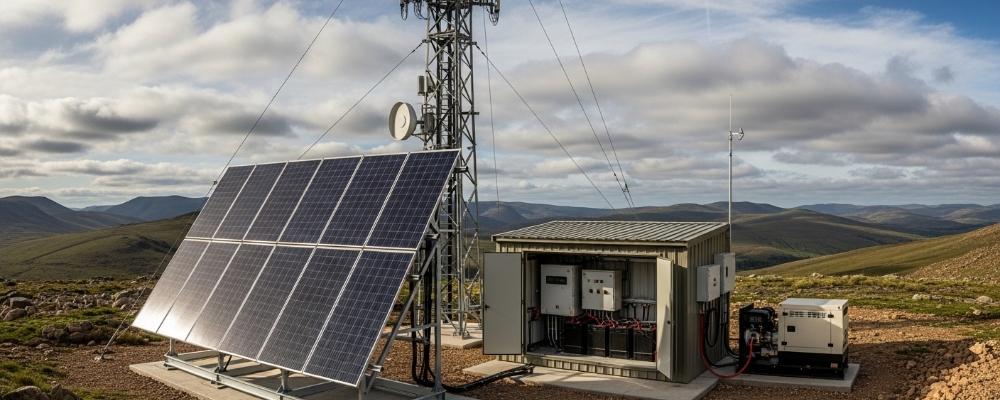
What Differentiates a Solar Server Rack Battery?
Before looking at applications of the solar server rack battery system, it is important to understand the core technology. These systems employ lithium iron phosphate (LiFePO4) batteries and fit in a standard 19-inch server rack. Compared to lead-acid batteries, LiFePO4 batteries have:
• Higher cycles: can last years with daily use at 8,000 cycles to 80% depth of discharge.
• Range of temperatures: can be used without threat of thermal run-away from -20 °C to +60 °C.
• Smaller and lighter: an entire 48V 100Ah with 8kWh of storage can be lifted by two technicians.
• Smart batteries: Includes battery management systems (BMS) that protects and monitors battery state.
The features above combined with solar panels and inverters, make system robust enough to be deployed in off grid situations.
Application 1: Mobile Clinics in Remote Areas
Mobile clinics are a solution to the lack of medical services in off-grid villages in developing regions and those affected by epidemic outbreaks. Traditional diesel generators power these clinics; however, these generators are loud and unsustainable due to the constant need for diesel. Compared to diesel generators, solar server rack batteries dominate every category.
Advantages of Solar Rack Batteries for Mobile Clinics:
• Total power supply for medical devices: Medical devices need constant power supply to the battery. Medical devices are also loaded with the capability of high-current output responds quickly to loads.
• Silent operation: Exhaust and noise are the output of generators. The mobile clinic and its solar server rack create a disturbance-free spot for medical teams.
• Easy scalability: An 8 kWh battery is able to power a mobile clinic for 8-10 hours of operation. To increase the battery capacity to 16 kWh, one lets the two modules be identical. This increased capacity would be able to power more medical devices for longer operating hours.
• Solar recharging: During daylight, solar panels on the clinic’s roof top up the battery, creating a self-sustaining microgrid. Even on cloudy days, the battery’s wide voltage range (40–57.6V) allows partial charging from limited sunlight.
“With a solar server rack battery, a mobile clinic can operate continuously for days without refueling, drastically reducing logistics costs,” notes field engineers from aid organizations.
Application 2: Disaster Recovery Centers After Hurricanes or Earthquakes
When a major disaster strikes, the electrical grid can be down for weeks. Emergency response teams set up temporary command posts, communication relays, and shelters — all of which need power. Solar server rack battery systems are inducted more often nowadays due to their ruggedness and ease of transport.
Key responsibilities of Disaster Recovery:
There are a variety of satellite and radio communication methods integrated within this process. First responders use satellite telephones, VHF radios, and Starlink communications terminals. Smart battery connectivity (RS485, CANBus, Modbus) enables the remote monitoring of battery status at command posts in order to avoid the risk of unexpected battery shutdowns. With the advancement of smart batteries, unexpected disconnections or shutdowns can be avoided.
• Providing power to field hospitals: Triage tents, surgical lights, patient monitors, and CPAP machines all require power. Vibration-resistant battery frames allow transportation of the battery in off-road (or even airdropped) vehicles.
• Providing power to water purification systems: Reverse osmosis pumps and UV sterilizers require stable DC power. A 48V 100Ah battery is sufficient to run a small water purification unit and produce thousands of liters of potable water.
• Connecting to temporary microgrids: It is possible to create a robust microgrid for an entire recovery camp by connecting multiple batteries in parallel along with portable solar panels and a small wind turbine.
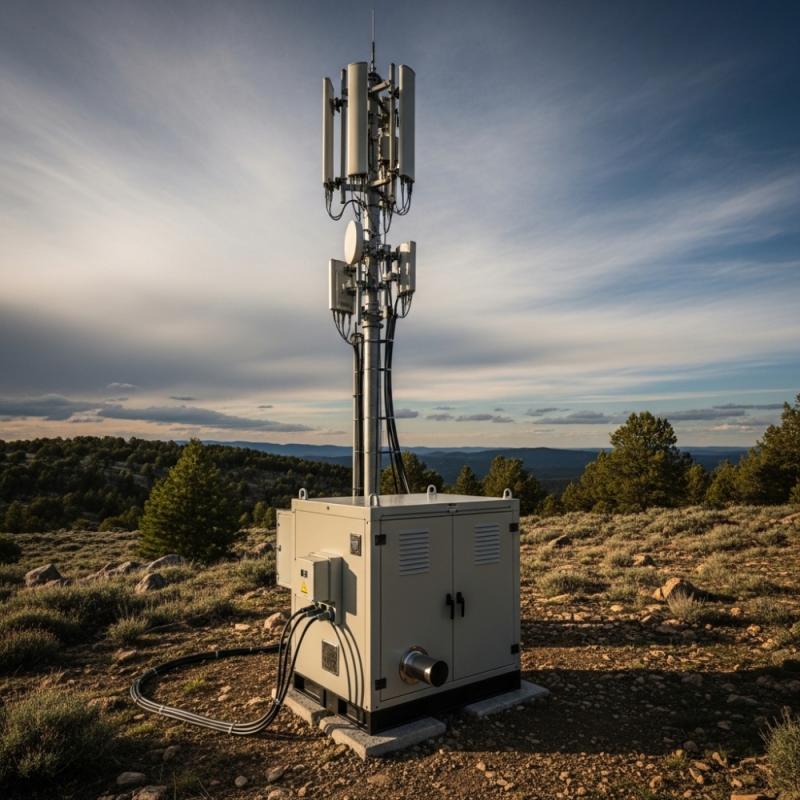
VoltaLink‘s Design and its Technical Edge for Mobile & Emergency Use
Solar server rack battery designs for field use are a balance of form and function. For temporary, mobile, harsh use applications, VoltaLink’s design gives the following features its competitors do not:
1. Rack Modules that Maximize Space
• A slim 480×442×133.2 mm design fits in any standard 19-inch IT rack, while being easily stackable in custom field cases or vehicle cargo areas.
• Maximizes usable space inside ambulances, trailers or disaster supply containers
2. Improved Vibration Resistance
• Cells are protected internally and within the frame from shocks and vibrations. This is particularly important for transport over bumpy roads or via helicopter sling loads.
• Vibration tests are more than sufficiently passed (similar to MIL-STD-810) and ensure no connections are loose after transit.
3. Integrated Thermal Sensors
• These monitors take temperature and charge/discharge assessments to prevent exposure related damage.
• Useful in sub-freezing mountain camps or summer field work in the desert.
4. Rapid Load Response
• Supplies high current output (up to 100A sustained with higher allowed for short peaks) the instant medical equipment or communication devices are powered up.
• Avoids a drop that would reset the medical devices.
5. Smart Connectivity Options
• Offers SNMP for remote monitoring of devices with CANBus and Modbus protocols. A disaster command center can remotely monitor the SOC, the estimated remaining time, and fault alerts for all deployed batteries.
• Also offers an optional GPS module for real time asset tracking.
6. Eco-Friendly and Safe Materials
Because there are no lead, no acid, and no other toxic substances, the LiFePO4 battery is a safe choice to use where patients and first responders are present.
The casing is brunt-proof, impact-resistant, and constructed with a combination of recyclable materials. The overall design minimizes environmental impact, an even higher priority in a disaster environment.
7. Parallel Scalability Without Complex Wiring:
• Just perform a parallel communication cable interconnection between multiple units. The BMS handles load sharing automatically.
• Start with 8 kWh for a small triage tent; scale up to 80 kWh (10 units) for a full-scale field hospital — all using the same modules.
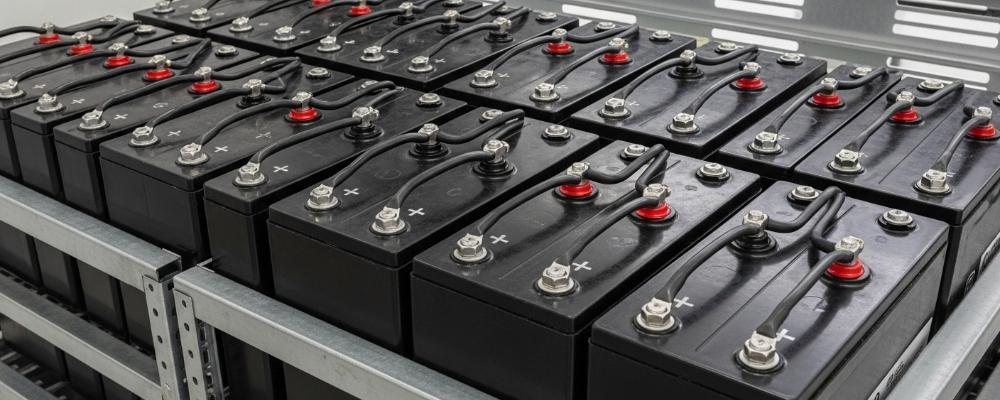
Practical Considerations for Field Deployment
To maximize the usefulness of a solar server rack battery in mobile clinics and disaster recovery, keep these tips in mind:
• Choose appropriate solar charge controllers: MPPT controllers compatible with 48V LiFePO4 profiles are recommended for efficient solar harvesting.
• Use proper cabling and circuit breakers: VoltaLink offers an optional built-in circuit breaker; otherwise, use DC rated breakers between battery and loads.
• Plan for transportation: The battery’s 45 kg weight requires two persons to lift, but built-in handles (standard on VoltaLink units) make manual handling easier.
• Train local staff: Basic BMS indicator lights (optional power display) help field workers understand remaining capacity without needing a smartphone or app.
Conclusion
While the primary market for solar server rack battery systems remains telecom and data centers, their true potential shines in unconventional, life-saving roles. A mobile clinic delivering vaccines and a hurricane ravaged coastal town needing battery-operated means of communication are two examples of the types of humanitarian missions where these batteries will perform remarkably. VoltaLink’s LiFePO4 server rack battery has the vibration resistance, thermal sensing, rapid load response, and smart monitoring to be a reliable battery choice to be used in emergency situations. As batteries and renewable energy resources become even more affordable, reliable power solutions will be more creatively used in greater number of humanitarian situations.
FAQs
Q1: How many solar server rack batteries can be used at larger disaster sites?
A: More than ten; the batteries are designed to be scalable in parallel.
Q2: Will the battery be too hot or too cold in extreme temperatures?
A: Unlikely. The battery can retain thermal stability for the range of –20°C to +60°C.
Q3: How will I be able to see the battery status in the middle of a disaster?
A: Battery management has monitoring systems such as RS485, CANBus, and Modbus. Battery status can be monitored with SNMP and the position can be tracked via GPS.
Q4: Which medical devices can utilize a solar server rack battery?
A: Some devices are low voltage direct current (DC) 48V LED surgical lights, ultrasound machines, and vaccination fridges.
Q:5 Is there a safety circuit breaker with VoltaLink’s battery?
A: Yes, circuit breakers with power display and GPS, can be supplied.

-

 OEM Residential Energy Storage Solutions: Passive vs. Active Cell Balancing
2026-09-30
-
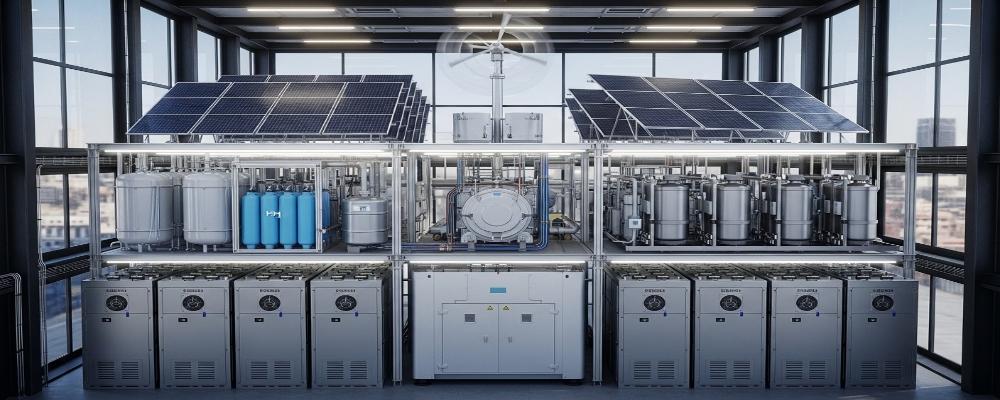 Smart Home Battery with BMS Communication: Cybersecurity and BMS Safety
 -
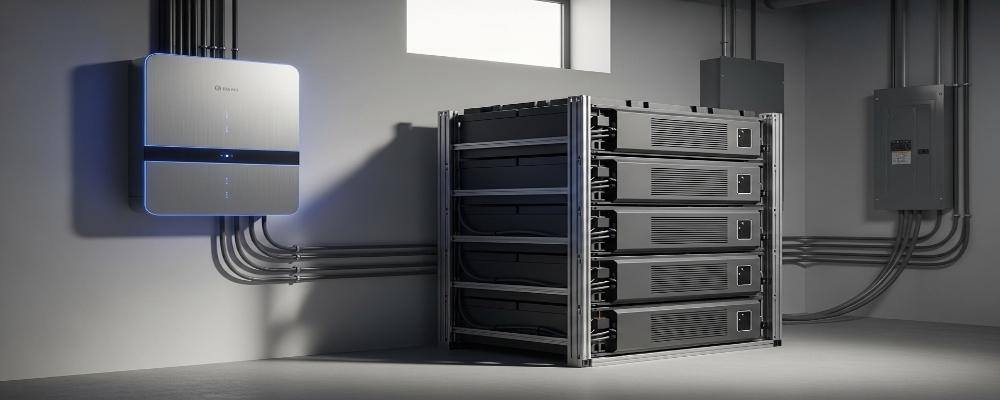 10kWh Home Battery Backup System: Is 90% DoD Better for Daily Solar Storage?
2026-09-29
-
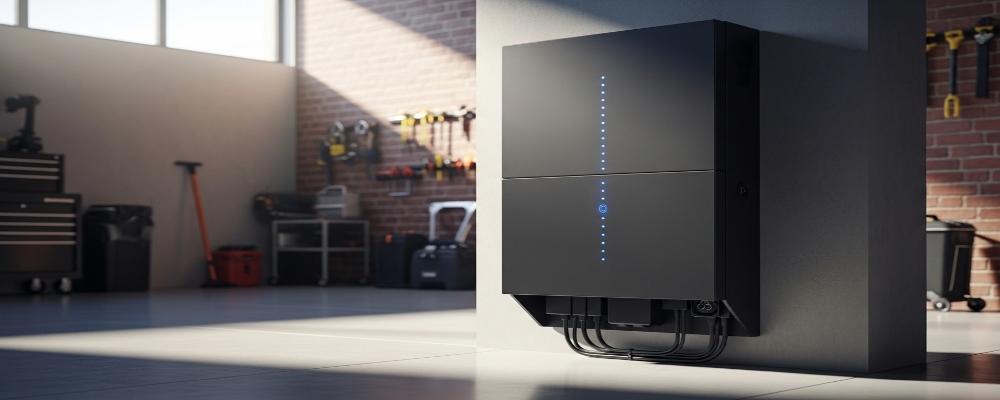 Integrated Home Energy Storage System 150–430V MPPT Design
2026-09-28
-
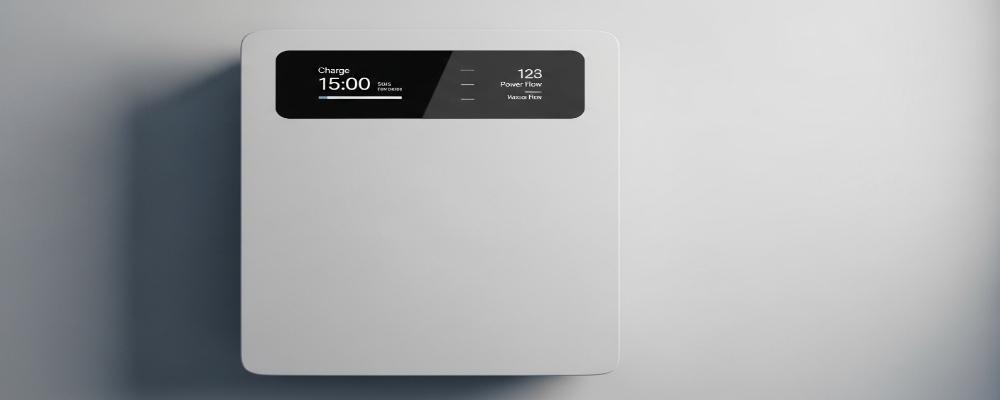 LiFePO₄ Residential Backup Battery SOC Accuracy in Parallel Systems
Share this:





.svg)






-899.svg)


