




10kWh Home Battery Backup System: Is 90% DoD Better for Daily Solar Storage?
For a 10kWh Home Battery Backup System, depth of discharge is not simply a specification to maximize. It is an operating decision that affects usable energy, outage reserve, daily solar utilization, thermal stress, and long-term battery aging.
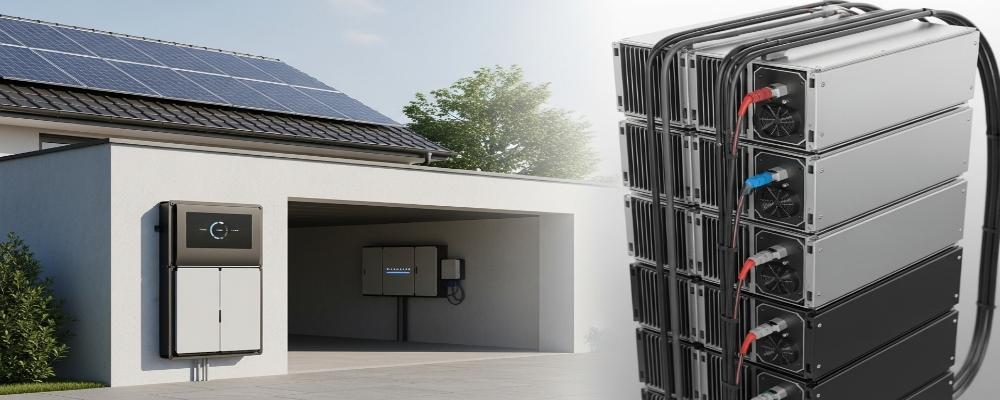
VoltaLink’s stacked LiFePO₄ system is rated at 51.2V, 200Ah and 10.24kWh, with up to 90% DoD, ≥6,000 stated cycles, 5.5kW continuous AC output and 11kW surge power. For installers and homeowners, the important question is therefore not whether 90% DoD is technically available, but when it is the right operating window.
From 10.24kWh Nominal Capacity to Real Usable Energy
A 10kWh Home Battery Backup System should always be evaluated using usable capacity rather than nameplate capacity.
Usable DC Energy = Nominal Energy × DoD
| Operating DoD | Approx. Usable DC Energy | Remaining SOC Reserve | Typical Strategy |
| 70% | 7.17kWh | 30% | Backup-first |
| 80% | 8.19kWh | 20% | Balanced solar + backup |
| 90% | 9.22kWh | 10% | High solar self-consumption |
Moving from 80% to 90% DoD releases about 1.02kWh more energy per cycle.
That additional 1.02kWh can be meaningful for evening loads, but it reduces the stored reserve available if the grid fails before the battery recharges.
Also, 9.22kWh is theoretical usable DC energy. AC appliances receive less because conversion efficiency varies with inverter load, temperature, wiring losses and operating point.
VoltaLink specifies peak inverter efficiency, but peak efficiency should not be treated as round-trip battery efficiency.
Why 90% DoD Does Not Automatically Mean Better Performance
For LiFePO₄ batteries, cycle degradation depends on more than discharge depth.
Important aging variables include:
• DoD and average SOC;
• Charge and discharge C-rate;
• Battery temperature;
• Time spent near very high or very low SOC;
• Cell matching and capacity consistency;
• Balancing behavior;
• Equivalent full-cycle count;
• Calendar aging.
This means a 10kWh Home Battery Backup System operated at 90% DoD under moderate temperature and moderate current may behave very differently from the same system exposed to high temperature, repeated high-rate discharge and long periods at low SOC.
For this reason, buyers should separate two specifications:
• Maximum permitted DoD
• Recommended daily operating DoD
They are not always the same.
70%, 80% or 90% DoD: Which Fits the Application?
90% DoD for Solar Self-Consumption
A 90% operating window is most attractive where the objective is to store daytime PV generation and use as much of that energy as possible overnight.
Typical conditions include:
• Reliable utility grid;
• Strong daytime PV generation;
• Relatively predictable evening demand;
• Low requirement for overnight emergency reserve.
In this case, a VoltaLink 10kWh Home Battery Backup System can theoretically provide about 9.22kWh of usable DC energy from its 10.24kWh nominal capacity.
80% DoD for Balanced Daily Operation
An 80% operating window reduces usable energy to about 8.19kWh but retains roughly 20% battery reserve.
This often suits grid-connected homes that need both:
• Solar self-consumption;
• Meaningful backup capability.
For many residential systems, this is a more balanced engineering choice than simply maximizing daily discharge.
70% DoD for Backup-Oriented Homes
A 30% reserve may be appropriate where grid interruptions are frequent or critical loads must remain available.
Typical protected loads may include:
• Refrigerators;
• Lighting;
• Routers and communications;
• Circulation pumps;
• Security systems.
The trade-off is lower daily energy utilization.
Deep Cycling or More Battery Capacity?
A key procurement question is whether to discharge a 10.24kWh battery more deeply or install more nominal capacity.
At 90% DoD:
10.24kWh × 90% = 9.22kWh usable DC energy
To obtain roughly the same usable energy at 80% DoD:
9.22 ÷ 0.80 ≈ 11.52kWh nominal capacity
| Strategy | Advantage | Trade-Off |
| 10.24kWh at 90% DoD | Lower installed capacity, more energy used per cycle | Smaller reserve margin |
| Larger battery at 80% DoD | More reserve and operating margin | Higher initial battery cost |
| Modular expansion | Capacity can follow future demand | Requires compatible BMS/inverter architecture |
This comparison is more useful than simply asking whether “90% DoD is good.”
VoltaLink’s stacked architecture is relevant here because capacity planning does not need to remain fixed at the original installation size.
Capacity Is Not the Same as Power
A 10kWh Home Battery Backup System must also be checked against power demand.
VoltaLink specifies:
• Rated AC output: 5.5kW
• Surge power: 11kW
• Battery energy: 10.24kWh
These parameters solve different problems.
• kWh determines how long loads can run.
• kW determines how many loads can run at the same time.
• Surge power determines whether short startup peaks can be supported.
A battery may still contain several kilowatt-hours of energy while the inverter reaches its power limit.
This matters for:
• Air conditioners;
• Water pumps;
• Compressors;
• Induction cooking;
• Electric heating;
• Other motor-driven loads.
A technically correct 10kWh Home Battery Backup System assessment therefore needs both a daily energy profile and a peak-load profile.
Match DoD to PV Recharge Capability
Deep discharge only works well if the solar array can restore the battery reliably.
VoltaLink’s system supports up to 6kW MPPT power with a 60–360VDC MPPT range. PV string design, local irradiation and seasonal weather therefore affect how practical daily 90% cycling will be.
For example, installers should evaluate:
• Expected daily PV yield;
• Morning battery SOC;
• Daytime household consumption;
• Available surplus PV;
• Winter charging margin;
• Cloudy-day recovery time.
A 90% DoD strategy that works in summer may be too aggressive in winter.
Use Dynamic SOC Reserve Instead of One Permanent Setting
For many homes, the best solution is not a fixed DoD.
A dynamic reserve strategy can be more practical:
• 10% reserve: High PV availability and stable grid;
• 20% reserve: Normal solar-plus-backup operation;
• 30%+ reserve: Poor weather or elevated outage risk.
Advanced EMS strategies may also adjust SOC reserve according to weather forecasts, time-of-use tariffs and expected household demand.
This gives a 10kWh Home Battery Backup System more operational flexibility than a fixed “always discharge to 10%” rule.
BMS, Installation and Thermal Conditions Matter
Operating near the lower SOC limit increases the importance of system control.
Installers should verify:
• Battery-to-inverter communication;
• Cell balancing;
• Over-discharge protection;
• Overcurrent protection;
• Temperature monitoring;
• Cable and fuse sizing;
• Disconnect protection;
• Installation temperature;
• Charging recovery capability.
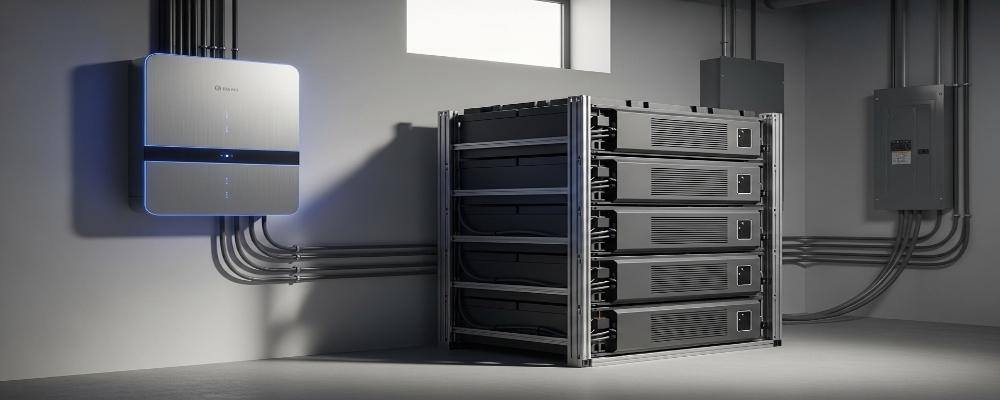
VoltaLink states that its production process includes cell sorting, welding, capacity verification, insulation-resistance testing and thermal evaluation, while the integrated BMS monitors battery conditions and provides electrical and temperature protection.
These manufacturing controls are important because deep daily cycling depends heavily on cell consistency.
Verify the Data Behind the Cycle-Life Claim
A cycle-life figure should never be evaluated alone.
For a 10kWh Home Battery Backup System, buyers should request the test conditions behind any cycle specification, including:
• Test DoD;
• Charge/discharge rate;
• Ambient temperature;
• End-of-life capacity threshold;
• Cycle-test method;
• Warranty period;
• Warranty energy throughput.
VoltaLink lists ≥6,000 cycles, but buyers should not automatically assume that this means 6,000 cycles at 90% DoD unless the relevant test conditions confirm it.
Safety documentation should also be checked against the target market. Depending on the project, buyers may need to verify applicable IEC, UL, CE, RoHS and transport documentation at battery, inverter and complete-system level.
Is 90% DoD Right for a 10kWh Home Battery Backup System?
The correct answer depends on the operating objective.
For priority usage of maximum daily solar, go with a deeper DoD.
Keep more battery reserve for resilience purposes. Avoid specialized stabilization needs.
Get more battery capacity if the household needs a greater emergency margin and high usable energy reserves.
The correct selection sequence is:
Household Load → Usable kWh → Required Reserve → DoD → Nominal Capacity → Inverter Power → PV Recharge Capability → Safety and Cycle-Data Verification.
From VoltaLink’s perspective, the value of its 10kWh Home Battery Backup System is not simply the availability of 90% DoD. The more important advantage is the combination of a 10.24kWh LiFePO₄ battery, 5.5kW continuous output, 11kW surge capability, integrated BMS and modular stacked architecture that can be matched to different residential solar and backup strategies.
For project-specific sizing and configuration, review the VoltaLink 10kWh LiFePO₄ stacked home energy storage system and compare its operating window with your actual household load, PV production and backup requirements.
FAQs
Q1. What Is the Rated Capacity of VoltaLink’s 10kWh Home Battery Backup System?
VoltaLink’s stacked LiFePO₄ system is rated at 10.24kWh, using a 51.2V, 200Ah battery configuration. The actual usable capacity depends on the selected depth of discharge and system operating conditions.
Q2. How Much Usable Energy Is Available at 90% DoD?
At 90% DoD, a 10.24kWh battery provides approximately 9.22kWh of theoretical usable DC energy. Actual AC energy delivered to household loads will be lower because of conversion and system losses.
Q3. Does VoltaLink Recommend Using 90% DoD Every Day?
A 90% DoD can maximize solar self-consumption, but it is not automatically the best setting for every installation. Homes requiring stronger outage protection may benefit from keeping a 20–30% SOC reserve.
Q4. What Battery Chemistry Does VoltaLink Use?
The VoltaLink 10kWh Home Battery Backup System uses LiFePO₄ battery chemistry, commonly selected for residential storage because of its cycle performance, thermal stability and suitability for repeated charging and discharging.
Q5. What Is the Continuous Output Power of the System?
The system provides up to 5.5kW rated AC output. This determines how much continuous household load can be powered at one time and should be evaluated separately from the 10.24kWh energy capacity.

-

 OEM Residential Energy Storage Solutions: Passive vs. Active Cell Balancing
2026-09-30
-
 Smart Home Battery with BMS Communication: Cybersecurity and BMS Safety
 -
10kWh Home Battery Backup System: Is 90% DoD Better for Daily Solar Storage?
2026-09-29
-
 Integrated Home Energy Storage System 150–430V MPPT Design
2026-09-28
-
 LiFePO₄ Residential Backup Battery SOC Accuracy in Parallel Systems
Share this:





.svg)






-899.svg)


