




Smart Home Battery with BMS Communication: Cybersecurity and BMS Safety
A Smart Home Battery with BMS Communication is no longer an isolated DC battery pack. In a modern residential energy storage system, the BMS may continuously exchange SOC, SOH, pack voltage, temperature, alarms, Charge Current Limit (CCL), and Discharge Current Limit (DCL) with an inverter, EMS, gateway, or monitoring platform.
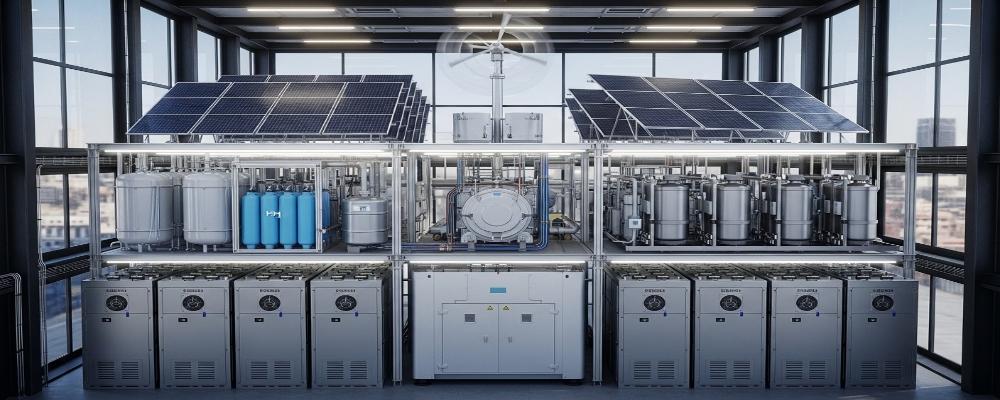
This communication improves charging control and system visibility, but it also creates a larger cybersecurity boundary.
For installers, distributors, and OEM buyers, the important question is not simply “Does the battery support CAN or RS485?” It is:
Which devices can read or change battery behavior, how are those devices trusted, and what happens if communication is interrupted or compromised?
Where Cybersecurity Risk Enters the Battery System
A typical Smart Home Battery with BMS Communication may follow this architecture:
Cells → BMS → CAN/RS485 → Inverter → EMS/Gateway → Ethernet/Wi-Fi → Cloud/App
Each layer introduces a different risk.
| Communication Layer | Typical Data or Control | Main Engineering Concern |
| CAN | SOC, limits, alarms, inverter commands | Message integrity and trusted nodes |
| RS485 | Battery data, Modbus registers, configuration | Device addressing and access |
| Ethernet | EMS/gateway communication | LAN access and segmentation |
| Wi-Fi | Monitoring and commissioning | Credentials and wireless access |
| Cloud/API | Remote monitoring or control | Authentication, permissions, updates |
CAN and RS485 normally provide the transport path; they should not automatically be treated as encrypted or authenticated security channels.
That distinction matters because BMS communication can affect actual power operation rather than merely displaying battery percentage.
BMS Data Can Change How the Inverter Operates
In a Smart Home Battery with BMS Communication, common real-time variables include:
• SOC and SOH
• Cell and pack voltage
• Battery current
• Cell or pack temperature
• CCL — Charge Current Limit
• DCL — Discharge Current Limit
• Charge voltage limit
• Alarm and protection status
• Contactor state
• Fault codes
Consider CCL as an example.
When cell voltage, temperature, or SOC approaches a limit, the BMS may reduce the allowable charging current. The inverter should respond accordingly. If communication data is incorrect, stale, or interpreted incorrectly, system-level control can become unreliable.
For this reason, cybersecurity must be viewed together with functional safety and control architecture.
The local BMS should still enforce essential protections such as overvoltage, undervoltage, overcurrent, short circuit, and temperature limits even when higher-level communication fails.
Authentication, Encryption and Authorization Are Different
These terms are often mixed together in residential energy storage specifications.
• Encryption prevents communication from being easily read in transit.
• Authentication verifies who or what is communicating.
• Authorization determines what that user or device may change.
Encryption alone is not sufficient. An authenticated installer account with excessive permissions could still alter operating settings.
For cloud-connected systems, buyers should therefore examine the entire chain:
Device identity → Account authentication → User permissions → Command validation → BMS protection
CAN vs. RS485 vs. Networked Communication
A Smart Home Battery with BMS Communication should not be selected based on interface count alone.
| Factor | CAN | RS485 | Ethernet / Wi-Fi |
| Typical role | Battery-to-inverter | Battery, gateway, EMS | Network/cloud access |
| Real-time control | Strong | Application dependent | Application dependent |
| Remote exposure | Low directly | Low directly | Higher |
| Main issue | Protocol/profile matching | Registers/addressing | Accounts, APIs, network access |
| Native security | Limited | Limited | Depends on implementation |
A wired connection reduces certain remote attack paths, but wired does not mean automatically secure.
Likewise, proprietary protocols should not automatically be considered safer than documented protocols.
Same CAN Port Does Not Mean System Compatibility
This is one of the most important engineering checks when selecting a Smart Home Battery with BMS Communication.
Two products may both have CAN ports and still fail to communicate correctly because of differences in:
• CAN message IDs
• Baud rate
• Pin definition
• Protocol version
• Battery profile
• Firmware version
• Master/slave configuration
• Alarm and current-limit mapping
VoltaLink residential battery platforms use smart BMS control and support communication interfaces including CAN and RS485 on applicable products. Its 51.2V 400Ah stackable system, for example, combines LiFePO₄ modules, smart BMS control, CAN/RS485 communication, and parallel expansion.
From a system-engineering perspective, VoltaLink treats interface availability and inverter compatibility as separate questions: protocol, firmware, pin definition, battery profile, and master/slave settings still need to be checked before commissioning.
Parallel Batteries Add Another Communication Layer
Cybersecurity and communication management become more complicated when several battery modules operate together.
A scalable system must manage:
• Module identification
• Master/slave communication
• SOC aggregation
• Charge/discharge current allocation
• Fault isolation
• Firmware consistency
• New-module detection
A large SOC difference between existing and newly added batteries may also produce equalization current. Different internal resistance, aging, cable resistance, and BMS current limits can further affect current sharing.
VoltaLink’s OEM/ODM approach includes BMS configuration, SOC management, protection thresholds, CAN/RS485 protocols, module control, and inverter matching for residential storage projects.
This is why adding another battery is not simply an additional-kWh decision.
Internet Loss Should Not Equal Battery Protection Loss
For backup applications, buyers should ask what remains operational when:
• Wi-Fi disconnects
• The cloud platform is unavailable
• The EMS loses communication
• CAN or RS485 communication times out
Essential battery protection should be handled locally rather than depend unnecessarily on cloud connectivity.
A project specification should clearly define the fallback state:
Continue with fixed limits? Reduce power? Stop charging? Open contactors?
There is no universal answer—the correct behavior depends on the system architecture—but it should be documented.
Cybersecurity Must Continue After Commissioning
Installation is only the beginning of the security lifecycle.
Good commissioning practice should include:
• Changing default or shared credentials
• Separating homeowner and installer permissions
• Disabling unused remote interfaces where possible
• Recording BMS and inverter firmware versions
• Checking communication timeout settings
• Controlling remote-service access
• Maintaining event and fault logs
Firmware updates require particular attention. Buyers should ask whether updates are authenticated, whether failed updates can be recovered, and how long the supplier maintains firmware compatibility.
ETSI EN 303 645, for example, addresses secure communication, protection of sensitive security parameters, and software-update integrity for connected consumer IoT products.
Do Not Confuse Battery Safety With Cybersecurity
Certifications and cybersecurity evidence answer different questions.
Battery and ESS standards may demonstrate electrical, thermal, or system safety, but they should not automatically be presented as cybersecurity certification.
For connected residential products, buyers may also need to consider cybersecurity requirements applicable to their destination market. In the EU, Cyber Resilience Act reporting obligations for actively exploited vulnerabilities and severe security incidents began on September 11, 2026.
Therefore, a serious procurement review should request both battery safety evidence and digital-security documentation.
What Buyers Should Verify Before Ordering
Before approving a Smart Home Battery with BMS Communication, verify four areas:
Communication
• Supported inverter models
• CAN/RS485 protocol
• Firmware requirements
• Parallel-module limits
Control
• CCL/DCL behavior
• Communication timeout response
• Local protection logic
• EMS permissions
Cybersecurity
• Account and access-control method
• Firmware update process
• Remote-access architecture
• Vulnerability support policy
Lifecycle
• Protocol documentation
• Firmware support
• Expansion compatibility
• Technical support
A reliable Smart Home Battery with BMS Communication is therefore not the system with the most connected features. It is one where the battery, BMS, inverter, protocol, protection logic, and expansion strategy remain coordinated throughout the product lifecycle.
For residential, distributor, or OEM projects, VoltaLink’s residential energy storage portfolio combines LiFePO₄ battery platforms with smart BMS communication, CAN/RS485 integration, modular capacity options, and system-level inverter matching. Buyers can review the VoltaLink Residential Energy Storage range and discuss battery capacity, communication protocol, expansion architecture, and inverter compatibility before finalizing a system configuration.
FAQs
Q1. What communication interfaces does a VoltaLink smart home battery support?
Applicable VoltaLink residential battery systems support communication interfaces such as CAN and RS485 for BMS-to-inverter and system-level integration. Interface availability should be confirmed for the specific battery configuration.
Q2. Does CAN support guarantee that a VoltaLink battery will work with any inverter?
No. CAN hardware alone does not guarantee compatibility. Protocol version, message mapping, baud rate, pin definition, firmware, battery profile, and master/slave settings must also match.
Q3. Why is BMS communication important in VoltaLink residential battery systems?
BMS communication allows the battery and inverter to exchange operating data such as SOC, voltage, temperature, alarms, and charge/discharge limits for coordinated energy management.
Q4. Can VoltaLink batteries communicate through RS485?
RS485 is available on applicable VoltaLink residential battery platforms. It may be used for battery, inverter, gateway, or energy-management communication depending on the system architecture.
Q5. Can VoltaLink help verify inverter compatibility before ordering?
For residential and OEM projects, inverter matching should be confirmed before system configuration. Buyers should provide the inverter model, protocol requirements, voltage range, and intended battery architecture.

-

 OEM Residential Energy Storage Solutions: Passive vs. Active Cell Balancing
2026-09-30
-
Smart Home Battery with BMS Communication: Cybersecurity and BMS Safety
-
 10kWh Home Battery Backup System: Is 90% DoD Better for Daily Solar Storage?
2026-09-29
-
 Integrated Home Energy Storage System 150–430V MPPT Design
2026-09-28
-
 LiFePO₄ Residential Backup Battery SOC Accuracy in Parallel Systems
Share this:





.svg)






-899.svg)


