




Integrated Home Energy Storage System 150–430V MPPT Design
Solar array sizing for an Integrated Home Energy Storage System is not simply a matter of matching a 5kW PV array with a 5kW MPPT. The real engineering task is to keep the PV array within the inverter’s allowable voltage, current and power envelope under changing temperature, irradiance and household load conditions.
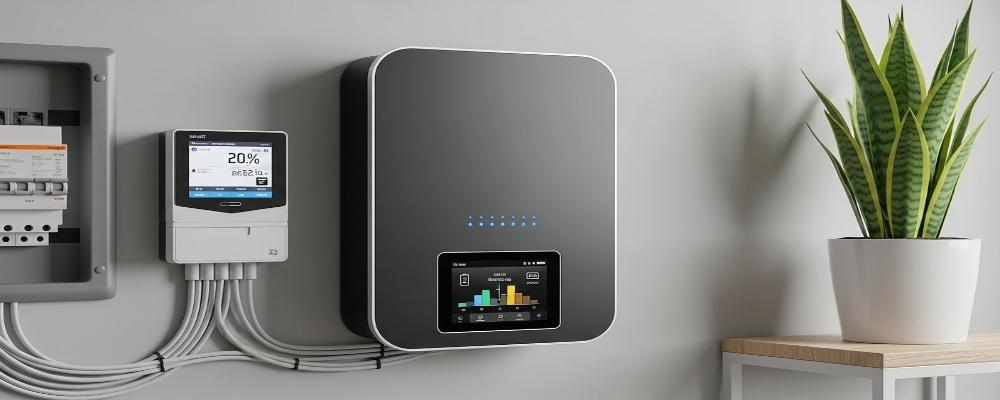
For VoltaLink’s 51.2V 300Ah residential storage configuration, the electrical parameters include:
• Battery: 51.2V / 300Ah LiFePO₄
• Rated energy: approximately 15kWh
• Rated AC output: 5200W
• Surge power: 10,400W
• MPPT power: 5000W
• MPPT operating range: 150–430VDC
• Maximum PV open-circuit voltage: 450VDC
• Maximum MPPT input current: 27A
These figures define the starting point for engineering an Integrated Home Energy Storage System, but they must be evaluated together rather than as isolated specifications.
Why PV Wattage Alone Is Not Enough
Two solar arrays can both be rated at 5kWp but behave very differently electrically.
A correctly matched Integrated Home Energy Storage System must satisfy four conditions:
| Design Parameter | VoltaLink Value | Engineering Function |
| MPPT voltage range | 150–430VDC | Normal PV operating window |
| Maximum PV Voc | 450VDC | Upper safety boundary |
| Maximum MPPT current | 27A | Limits parallel-string current |
| MPPT power | 5000W | Limits PV power conversion |
A 4.8kW array may still be unsuitable if its combined string current exceeds 27A. Likewise, an array below 5kW can create an overvoltage condition if too many high-Voc modules are connected in series.
For this reason, VoltaLink recommends evaluating voltage first, current second and power third when checking PV compatibility.
150–430V MPPT Range vs. 450V Maximum Voc
The two voltage limits serve different purposes.
150–430V: Operating Window
The PV string should normally operate within this voltage range so the MPPT can continuously track the array’s maximum power point.
450V: Maximum Open-Circuit Voltage
This is the upper PV voltage limit published for the system. It is especially important during cold, high-irradiance conditions when module Voc rises.
The design objective is therefore not to operate as close as possible to 430V. A professional Integrated Home Energy Storage System design should maintain sufficient margin on both sides of the MPPT window.
Cold Weather Determines Maximum String Length
PV module open-circuit voltage increases as cell temperature falls.
The engineering check is:
String Voc at minimum temperature < 450V
Installers therefore need more than the module’s STC Voc. They should also obtain:
• Voc temperature coefficient
• Lowest expected site temperature
• Number of modules per string
• Manufacturer-specified voltage tolerance
For example, simply calculating:
450V ÷ module Voc
does not provide a reliable maximum string length because it ignores low-temperature voltage rise.
This is one of the most important safety checks when integrating rooftop PV with an Integrated Home Energy Storage System.
Hot Roof Conditions Determine Minimum String Length
High module temperature creates the opposite effect: Vmp decreases.
A short PV string that operates at 165V under STC conditions could move much closer to the 150V MPPT threshold when modules heat up on a summer roof.
Therefore, PV string design should satisfy two boundaries:
• Cold condition: Do not exceed maximum allowable Voc.
• Hot condition: Keep operating Vmp above the MPPT minimum.
This is why VoltaLink system matching should be based on the selected module datasheet and actual project temperature range rather than only nominal panel wattage.
Series and Parallel Connections Create Different Constraints
Series and parallel design should not be treated interchangeably.
| Configuration | Electrical Effect | Main Design Risk |
| More modules in series | Voltage increases | Approaching 430V/450V |
| More strings in parallel | Current increases | Exceeding 27A |
| Longer series string | Higher DC voltage, same string current | Cold-weather overvoltage |
| Multiple parallel strings | Similar voltage, higher total current | MPPT current limitation |
Series Connection
Series modules increase string voltage while current remains approximately equal to one module/string current.
This helps move the array comfortably above the 150V MPPT threshold.
Parallel Connection
Parallel strings increase available current.
For an Integrated Home Energy Storage System with a published 27A MPPT current limit:
Total operating current ≈ Number of parallel strings × String Imp
This must be checked before adding additional strings.
The module Isc should also be reviewed for protection-device sizing, although the exact maximum allowable PV short-circuit current should be confirmed with VoltaLink for the final project.
A Practical PV Module Compatibility Check
Before connecting a PV array, installers should obtain these module parameters:
• Pmax
• Voc
• Vmp
• Imp
• Isc
• Voc/Vmp temperature coefficients
Then work through the following sequence:
- Calculate cold-corrected string Voc and verify it stays below 450V.
- Calculate hot-condition string Vmp and confirm it remains above 150V.
- Keep normal operating voltage within the 150–430V MPPT window.
- Calculate combined parallel-string current against the 27A input limit.
- Verify total installed PV power against the permitted array rating.
- Confirm MPPT tracker quantity when using multiple roof orientations.
This sequence prevents a common mistake: selecting a PV array by wattage while ignoring its electrical operating envelope.
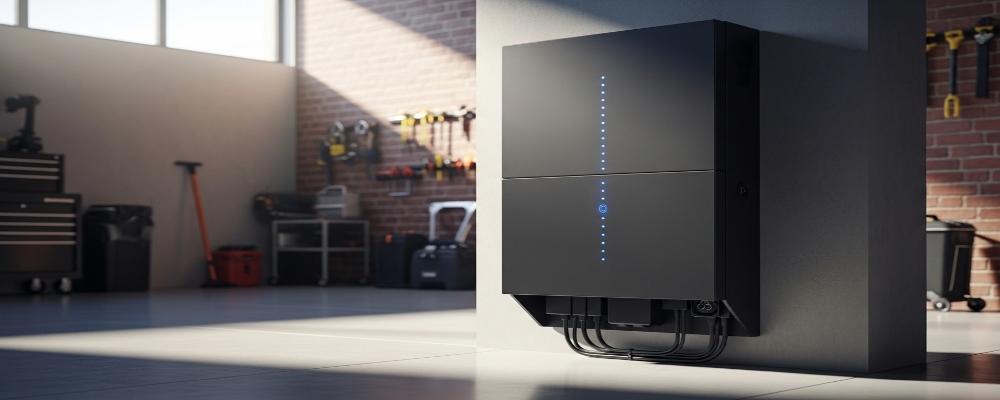
How 5kW PV Relates to a 15kWh Battery
At first glance:
15kWh ÷ 5kW = 3 hours
However, this should not be interpreted as a guaranteed three-hour charging time.
Real battery charging depends on:
• Available solar irradiance
• PV module temperature
• Household consumption
• Conversion efficiency
• Battery SOC
• BMS charge limits
• Battery temperature
• Charge-current control
If the PV array produces 5kW while household loads consume 2kW, only the remaining power is potentially available to charge the battery.
For VoltaLink, the 15kWh battery, 5kW MPPT and 5.2kW AC output should therefore be treated as an interconnected energy-flow architecture rather than three separate selling specifications.
Split Roofs and Shading Need Additional MPPT Planning
PV arrays facing east and west, or strings with different shading conditions, may operate at different maximum power points.
Before designing such an Integrated Home Energy Storage System, buyers should confirm:
• Number of independent MPPT trackers
• Number of available PV inputs
• Maximum PV short-circuit current
• Whether unequal strings can be connected
• Approved PV oversizing ratio
These parameters can materially affect system performance and should be confirmed before procurement.
Installation and Standards Verification
Before commissioning, installers should verify:
• PV polarity
• Measured string Voc
• String current
• DC cable sizing
• Connector compatibility
• DC protection
• Battery and inverter communication
• Grounding and isolation requirements
Depending on the market, system design may also need to consider standards such as IEC 62548-1 for PV array design, IEC 62109 for power conversion equipment, and IEC 62619 / IEC 63056 for stationary lithium battery safety. Grid-connected systems must additionally meet local interconnection requirements.
Selecting an Integrated Home Energy Storage System
A well-engineered Integrated Home Energy Storage System should provide enough information to evaluate the complete PV-to-battery-to-load energy path.
VoltaLink’s 150–430V MPPT window, 450V maximum PV voltage, 27A MPPT current limit, 5000W MPPT, 15kWh LiFePO₄ battery and 5200W AC output give installers a practical basis for system sizing.
For projects involving specific PV modules, unusual roof orientations or extreme temperatures, final string design should be verified against the actual module datasheet and project conditions.
For a closer look at the system configuration and published specifications, explore the VoltaLink 51.2V 300Ah Integrated Home Energy Storage System solution.
FAQs
Q1. What MPPT voltage range does VoltaLink’s Integrated Home Energy Storage System use?
The VoltaLink 51.2V 300Ah system offers an MPPT operating range of 150–430VDC, which should be considered when determining the minimum and maximum PV modules per string.
Q2. What is the maximum PV open-circuit voltage for this VoltaLink system?
VoltaLink offers a 450VDC maximum PV open-circuit voltage. Cold-weather Voc should therefore be calculated before finalizing the number of modules connected in series.
Q3. Why is the 430V MPPT limit different from the 450V maximum Voc?
The 430V value defines the upper MPPT operating range, while 450V is the published maximum open-circuit voltage. They should not be treated as the same design limit.
Q4. What is the maximum MPPT input current of the VoltaLink system?
The published maximum MPPT input current is 27A. This parameter is especially important when two or more PV strings are connected in parallel.
Q5. Can a 5kW solar array always be connected to VoltaLink’s 5kW MPPT?
Not automatically. PV compatibility also depends on string Voc, Vmp, Imp, temperature coefficients and total parallel current, not only total installed wattage.

-

 OEM Residential Energy Storage Solutions: Passive vs. Active Cell Balancing
2026-09-30
-
 Smart Home Battery with BMS Communication: Cybersecurity and BMS Safety
 -
 10kWh Home Battery Backup System: Is 90% DoD Better for Daily Solar Storage?
2026-09-29
-
Integrated Home Energy Storage System 150–430V MPPT Design
2026-09-28
-
 LiFePO₄ Residential Backup Battery SOC Accuracy in Parallel Systems
Share this:





.svg)






-899.svg)


