




BESS Container Fire Suppression Systems: Tests, Controls and Buyer Questions
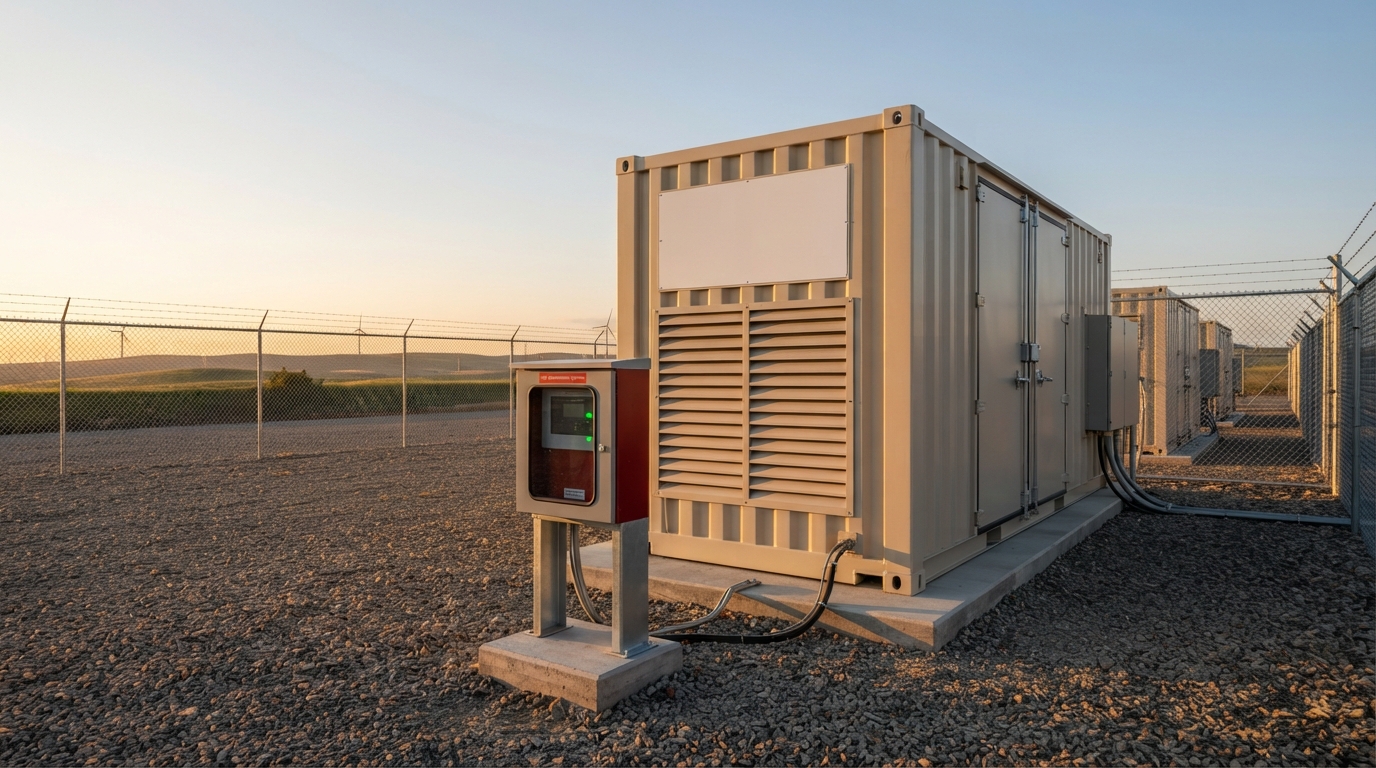
A BESS container fire suppression system is not one extinguishing device mounted inside a box. It is an integrated set of detection, alarm, electrical shutdown, ventilation, cooling and suppression, and post-event monitoring functions designed to reduce the consequences of thermal runaway in a containerized battery energy storage system.
If you are evaluating a BESS container, the important question is not simply “does it have fire suppression?” The more useful questions are: What does the system detect? What happens after detection? What test evidence supports the design? And does that evidence match the exact container you are planning to buy? This guide walks through those questions and gives you a practical checklist for comparing suppliers.
Why BESS Fire Protection Is More Than a Fire Extinguisher
A lithium-ion battery fire behaves differently from a normal fire. The hazard is not only flame. It is heat, flammable off-gas, and the possibility that the reaction will continue even after visible flames are out.
Thermal Runaway and Propagation: The Real Battery Hazard
Thermal runaway is a self-heating chain reaction inside one or more battery cells. It can release heat, smoke, and flammable off-gas before any visible flame appears. Inside a container, that off-gas can accumulate unless the enclosure is designed to manage it.
As Sandia National Laboratories explains in its grid-scale energy storage hazard analysis, off-gas from a failing cell can create deflagration pressure and serious responder-safety concerns. That is why fire protection for a BESS container has to be designed around the battery’s thermal behavior, not only around the fire itself.
Lithium iron phosphate (LFP) cells are widely used in BESS containers because they are thermally more stable than some other lithium-ion chemistries. LFP is not immune, however. A thermal event can still spread from one cell to a module and then across a rack.
What “Suppression” Can and Cannot Do
A suppression system can knock down visible flame and cool the surrounding area. It does not necessarily stop the chemical reaction inside a damaged cell.
This is a crucial distinction for buyers. Extinguishing the flame is not the same as eliminating thermal runaway. The battery may continue to release heat and off-gas, and re-ignition is possible after the suppression system has discharged.
A credible BESS fire protection strategy therefore includes suppression as one layer, but it also depends on early detection, electrical isolation, ventilation, deflagration control, and post-event monitoring.
How a Complete BESS Fire Protection System Works
A complete container-level fire protection system works as a sequence of layers. The exact sequence varies by manufacturer and project, but the common architecture looks like this:
- Detection identifies an abnormal condition.
- The fire alarm or control logic validates the signal.
- The BMS and PCS begin electrical shutdown or isolation.
- HVAC and ventilation systems change state according to the design.
- Suppression or cooling is activated if required.
- Alarms are sent to the site EMS, facility management, and responders.
- Post-event monitoring checks for re-ignition and continued off-gassing.
Each layer has a specific job.
Detection: Smoke, Heat, Gas, and Flame Sensors
Detection is the first layer and often the most important one. A system that detects an event early gives the rest of the protection sequence more time to work.
Common detection inputs include:
- Smoke detectors for combustion aerosols.
- Heat detectors for abnormal temperature rise.
- Gas detectors for off-gas such as carbon monoxide, carbon dioxide, hydrogen, or electrolyte vapors.
- Flame detectors for open flame, where the design allows line-of-sight installation.
Gas detection can provide earlier warning in some BESS designs because off-gas may be released before smoke reaches a detector. The DOE’s BESS fire safety summary highlights gas detection and thermal detection as important elements of container protection.
Control Sequence: From Detection to Shutdown, Ventilation, and Suppression
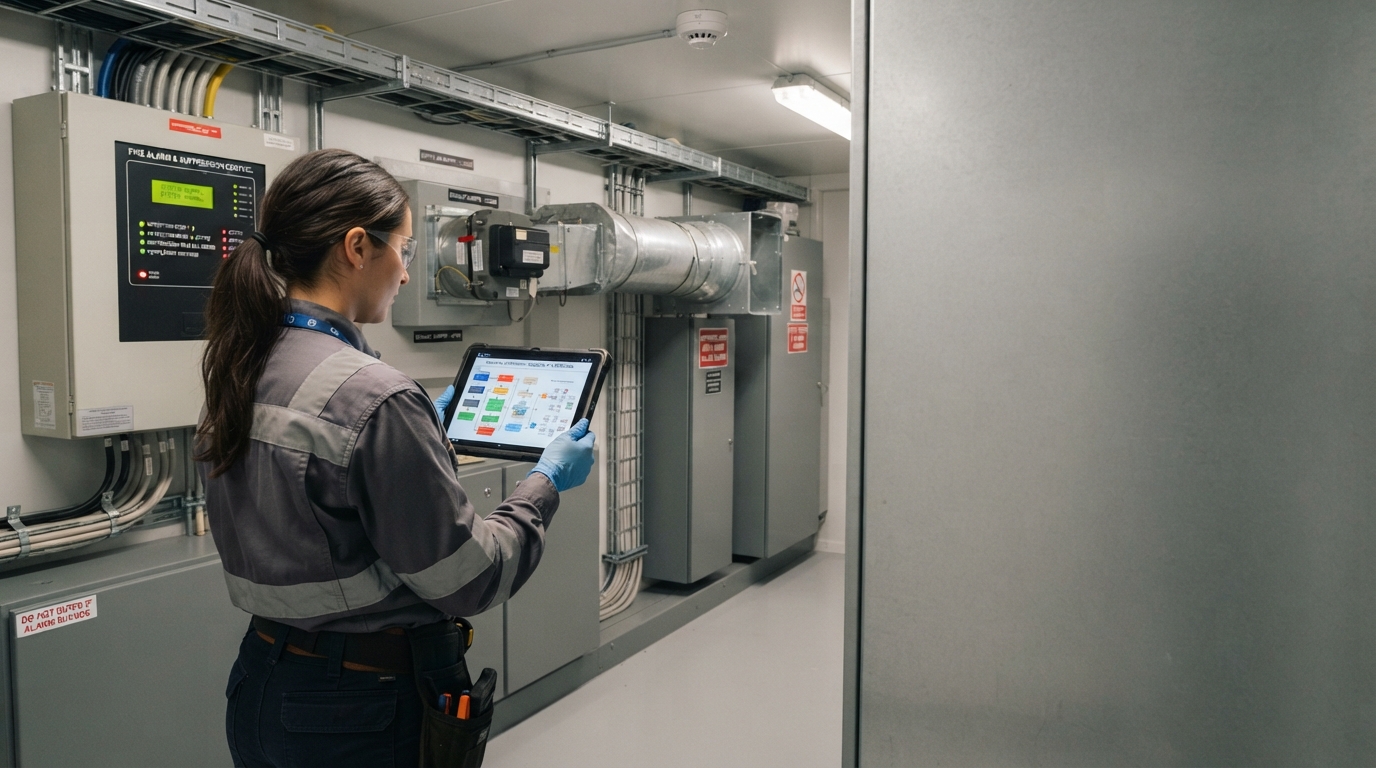
The value of a fire suppression system depends on how it is controlled. A detector alone is not enough. The control logic must decide what happens next.
A typical sequence is:
- A gas, smoke, or heat detector reaches its alarm threshold.
- The fire alarm control panel confirms or processes the signal.
- The BMS initiates battery-level protection.
- The PCS disconnects or isolates AC and DC power.
- HVAC dampers or fans change state according to the design.
- Ventilation may shut off, switch to exhaust mode, or remain active, depending on the hazard analysis.
- The suppression or cooling system discharges if the design conditions are met.
- The alarm is sent to the site EMS and remote monitoring.
- Responders and operators monitor for re-ignition and gas accumulation.
This sequence must be coordinated. If the control logic is poorly designed, a suppression system can discharge at the wrong moment, or ventilation can feed a fire that should have been starved of oxygen.
Ventilation and Deflagration Control
Ventilation and deflagration control are sometimes treated as separate from fire suppression, but they are part of the same safety function.
Flammable off-gas can accumulate inside the container. If it ignites, the pressure rise can be dangerous. Ventilation helps manage gas concentration, while deflagration panels or vents provide a controlled path for pressure to escape.
The design must account for where the vent opens and what is around the container. A deflagration panel is not a fire extinguisher. It is an explosion-pressure relief device that helps protect the structure and nearby personnel.
HVAC Interlocks and Thermal Management
Thermal management affects the fire system in two ways. First, cooling helps keep cells within their intended temperature range, reducing the likelihood of a thermal event. Second, HVAC and ventilation must be interlocked with the fire control sequence.
If the HVAC system is controlled by the same logic as the fire alarm panel, it may shut down, switch to exhaust, or maintain a particular airflow mode depending on the event. The exact behavior should be documented in the sequence of operations.
For a fuller explanation of enclosure thermal management, see VoltaLink’s article on BESS container HVAC systems.
Fire-Suppression Options for Containerized BESS
No single suppression technology is universally best for BESS containers. The right choice depends on the battery configuration, container design, expected failure scenario, local codes, AHJ expectations, and the evidence available from testing.
The comparison below focuses on function and limitation, not marketing language.
Water-Based Suppression and Water Mist
Water-based systems are primarily cooling systems. When water is applied to a battery fire, it absorbs heat and can slow thermal propagation to adjacent racks.
Published full-scale container tests, such as the UL-authored BESS container fire test data, have examined how water suppression affects heat release and temperatures in a real container layout.
Water does not turn off the chemical reaction inside a damaged cell. It reduces the spread of heat and protects surrounding equipment. Water-based designs also need planning for electrical safety, drainage, runoff containment, and safe application to energized equipment after shutdown.
Water mist uses finer droplets and can provide effective cooling with less water volume, but the nozzle layout and droplet distribution must be matched to the enclosure.
Clean Agents
Clean agents are designed to extinguish fire in enclosed spaces without leaving residue. They are often used in electrical and electronic environments for that reason.
The limitation is cooling. Clean agents can knock down visible flame, but they do not remove heat from the battery the way water does. If the battery remains hot enough, re-ignition or continued off-gassing is possible.
Enclosure integrity and hold time are critical. The agent must remain at the required concentration for the designed period, which means the container must be reasonably sealed during discharge.
Aerosol and Dry-Chemical Systems
Aerosol systems are compact and can be installed near racks. Their effectiveness depends on the container volume, agent distribution, and the manufacturer’s test evidence. They may leave some residue, and they provide limited deep cooling of the battery.
Dry-chemical systems provide rapid flame knockdown and are familiar to many fire-protection teams. However, they leave significant residue, can obscure visibility, and provide limited cooling. A dry-chemical discharge may control flame in the short term without preventing re-ignition.
Comparison: Suppression Options by Function and Limitation
| Suppression approach | Primary function | Cooling effect | Residue or runoff | Main limitation | Evidence to request |
|---|---|---|---|---|---|
| Water sprinkler or water mist | Flame control and heat absorption | High | Runoff possible | Electrical equipment must be de-energized or protected; drainage and containment needed | Full-scale test report for the proposed container layout |
| Clean agent | Flame extinguishing in enclosed spaces | Low | None | Re-ignition possible if battery remains hot; enclosure integrity and hold time matter | Discharge test and configuration-specific fire test report |
| Aerosol | Compact flame suppression | Low | Some residue | Agent distribution depends on container volume and geometry | Manufacturer test data for the exact enclosure |
| Dry chemical | Rapid flame knockdown | Low | Significant residue | Limited cooling; residue can obscure visibility and complicate cleanup | Third-party test report and cleanup plan |
A responsible supplier should be able to explain why a particular method was selected for their container and what test data supports that choice.
BESS Fire-Safety Standards and Tests: What They Actually Prove
Standards create a common language for buyers, suppliers, and authorities, but they do not remove the need for site-specific engineering review.
Three references appear frequently in BESS specifications: UL 9540A, UL 9540, and NFPA 855.
UL 9540A: What the Fire Test Shows
UL 9540A is a large-scale fire test method for evaluating thermal runaway fire propagation in battery energy storage systems. It is not a simple product sticker.
The test is performed at increasing scales: cell, module, unit, and installation. The results show how a thermal event behaves in the tested configuration, including heat release, off-gas, and propagation to nearby components.
UL Solutions’ explanation of UL 9540A and NFPA 855 describes how large-scale fire testing is used to understand installation performance.
The key limitation is matching. A UL 9540A test report is only directly relevant if it describes the same cell chemistry, module layout, rack arrangement, enclosure, state of charge, cooling approach, and suppression system as the proposed product.
UL 9540: What System Listing Means
UL 9540 is a safety listing standard for energy storage systems and equipment. It evaluates the complete system’s electrical, mechanical, and environmental safety, and it includes fire-related evaluation criteria.
A UL 9540 listing is valuable, but it is not the same thing as a UL 9540A fire propagation test. Buyers should ask for both when both are relevant to the project.
NFPA 855 and the Role of the AHJ
NFPA 855 provides installation-level fire-safety requirements for energy storage systems. It covers spacing, detection, suppression, ventilation, gas detection, and emergency response.
Adoption of NFPA 855 varies by jurisdiction. In the U.S., the authority having jurisdiction (AHJ) determines what applies to a specific installation, and local amendments are common. In other countries, equivalent national or local codes may apply.
The U.S. EPA’s BESS safety guidance describes NFPA 855 and UL 9540A as central considerations for safe installation while emphasizing the importance of site-specific requirements.
The AHJ will typically expect a submittal package that includes the system design, test reports, control sequence, and emergency response information. Fire-system design cannot be separated from the approved BESS container installation requirements.
Does the Test Report Match Your System?
A test report is only useful if it matches the system you are buying. Before accepting a supplier’s fire-safety claim, verify the following:
- Exact cell chemistry and cell format.
- Module and rack configuration, including the number of racks.
- State of charge used during the test.
- Container or enclosure geometry.
- Cooling method: air-cooled or liquid-cooled.
- Detection types and placement.
- Suppression agent and discharge design.
- Report number, test laboratory, and date.
If any major element differs from the proposed system, the report is not direct evidence for that configuration. Ask the supplier for a matching report, a gap analysis, or an explanation of why the difference does not change the safety conclusion.
Buyer Questions and Documentation Checklist
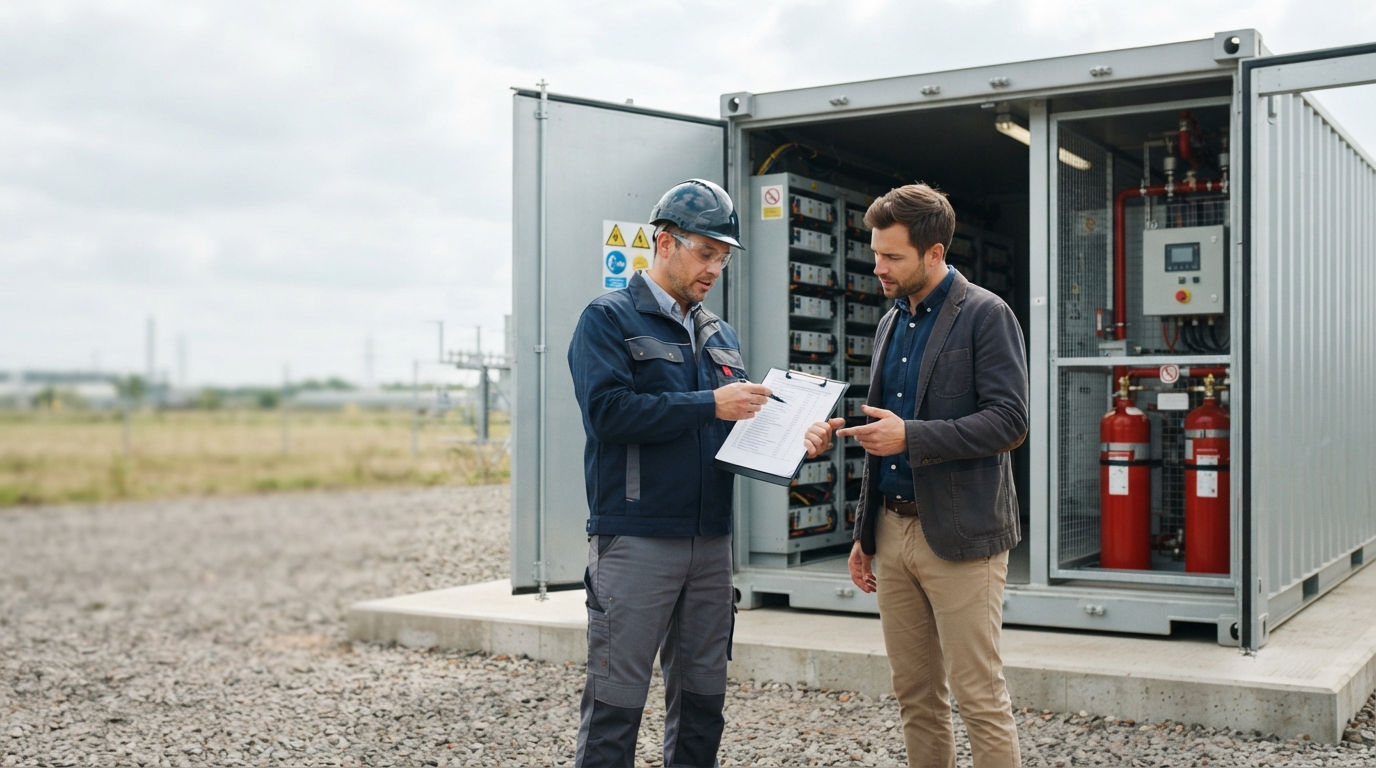
When you evaluate a BESS container supplier, the goal is to move from claims to evidence. The following questions will help.
Questions to Ask Before You Specify or Buy
- Which detection inputs are used, and where are the sensors located?
- What is the exact control sequence after an alarm?
- Which suppression or cooling method is installed, and why was it selected?
- What does the UL 9540A report describe, and does it match this container configuration?
- How does the fire system interact with the BMS, PCS, EMS, HVAC, and ventilation?
- Who is responsible for AHJ review and approval support?
- What commissioning tests are performed on the installed system?
- What maintenance, inspection, and calibration are required?
- What happens after a discharge? How is re-ignition monitored, and who can re-enter the container?
These questions are not meant to catch suppliers out. They are meant to confirm that the fire protection system is a designed, coordinated solution rather than a generic add-on.
Documentation Checklist
Request the following documents and review them as part of your supplier evaluation:
- Fire-protection system datasheet.
- Control narrative or sequence of operations.
- Single-line diagram and layout drawings showing detectors, suppression, and ventilation.
- UL 9540A test report matching the proposed configuration.
- UL 9540 certificate or listing, if claimed, tied to the exact system.
- NFPA 855 or AHJ submittal package where applicable.
- Commissioning records and function test results.
- Maintenance and calibration schedule.
- Safety data sheets and emergency response information.
- Post-discharge monitoring and re-ignition procedure.
A supplier that is willing to share these documents is more likely to have a system that can be properly evaluated and approved.
Installation, Commissioning, and Maintenance
A fire protection system is only credible if it is installed and maintained as designed.
Commissioning should verify that detectors respond, alarms are sent, BMS and PCS shutdown functions work, ventilation changes state, and the suppression system activates correctly. Function tests should be documented and shared.
After commissioning, the system needs a maintenance plan. Sensors may drift or fail. Agent quantities can drop through leakage. Enclosure integrity can change after work inside the container. Fire dampers, ventilation paths, and deflagration panels can be blocked by later modifications.
The installation and site approval process is covered in more detail in the guide to BESS container installation requirements.
Post-incident planning matters too. After suppression has discharged, the container may remain hazardous. Off-gas can continue, re-ignition can occur, and the battery may need to be monitored from a safe distance before personnel enter.
Use the questions and checklist above when you compare BESS providers. If you are evaluating VoltaLink’s containerized systems, the BESS container supplier page is a useful starting point for requesting system-specific fire-protection documentation and reviewing the overall container offering. For commercial or industrial project context, the C&I energy storage system page explains how containerized storage fits into larger installations.

-

 OEM Residential Energy Storage Solutions: Passive vs. Active Cell Balancing
2026-09-30
-
 Smart Home Battery with BMS Communication: Cybersecurity and BMS Safety
 -
 10kWh Home Battery Backup System: Is 90% DoD Better for Daily Solar Storage?
2026-09-29
-
 Integrated Home Energy Storage System 150–430V MPPT Design
2026-09-28
-
 LiFePO₄ Residential Backup Battery SOC Accuracy in Parallel Systems
Share this:





.svg)






-899.svg)


