




Commercial Battery Storage Financing: Ownership, Lease and Energy-Service Models
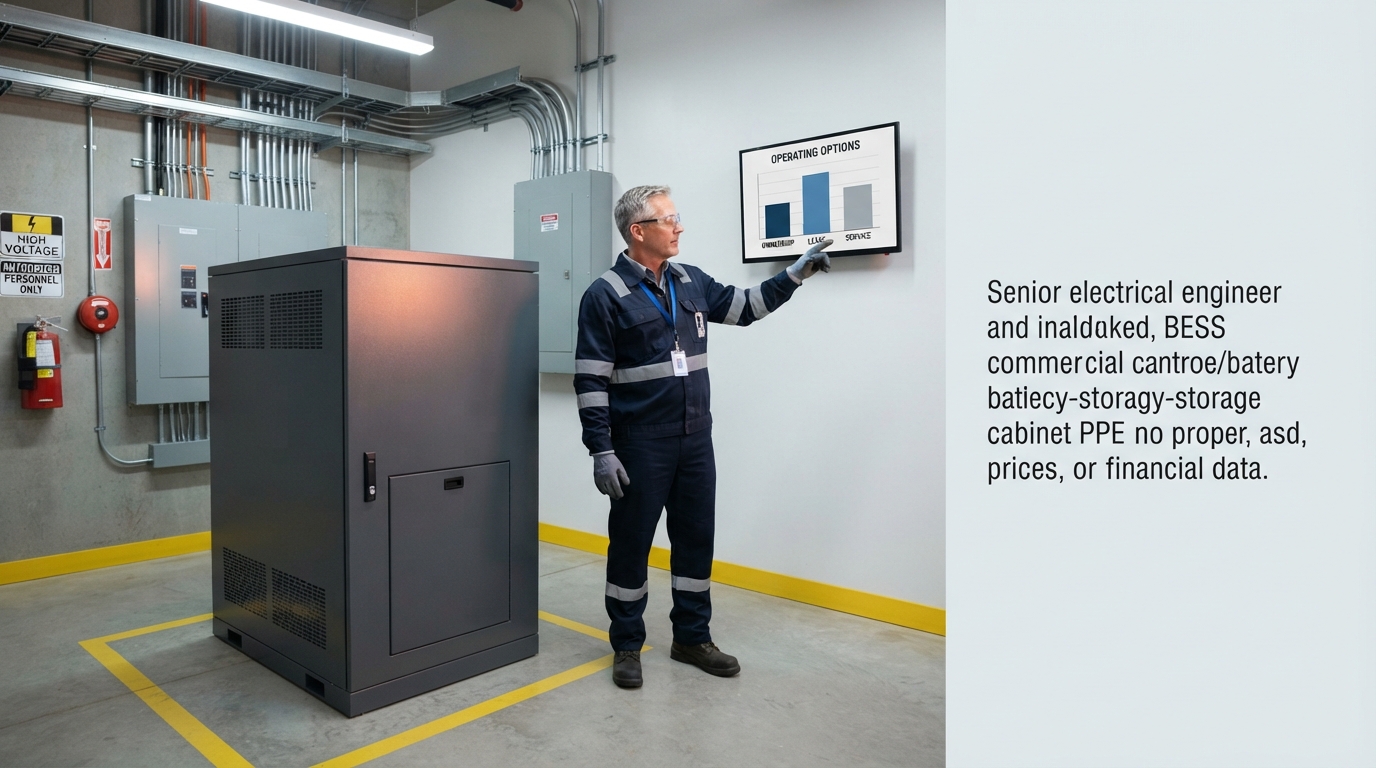
Commercial battery storage financing is the way a business pays for a commercial battery energy-storage system (BESS). The decision involves more than finding a way to avoid the upfront cost. It determines who owns the asset, who operates it, who maintains it, who carries the degradation risk, and what happens when the contract ends.
This guide compares the main financing models for commercial and industrial buyers: direct purchase, commercial debt, capital leases, operating leases, third-party ownership, energy-as-a-service, and performance-based arrangements. It also explains the technical information lenders and service providers will expect in a credible proposal.
What Is Commercial Battery Storage Financing?
Commercial battery storage financing is the set of structures used to fund a commercial BESS. The right structure depends on how much capital the business wants to commit, how it prefers to manage cash flow, whether it wants operational control, and how much technical and performance risk it is willing to carry.
A commercial BESS can create value in several ways, including:
- Reducing demand charges by limiting peak grid draw.
- Shifting energy use to lower-cost periods.
- Increasing solar self-consumption.
- Providing backup power during outages.
- Participating in grid or market programs where those programs exist.
These value streams affect the financing decision because lenders and service providers underwrite the project based on expected savings or revenue. A system that is too small or poorly matched to the facility’s load profile will not support a strong financing case.
For more detail on backup applications, see VoltaLink’s commercial backup energy storage solutions.
The Main Commercial Battery Storage Financing Models
Most financing structures fall into four groups: buying the system, borrowing to buy it, leasing it, or paying for it as a service. Each model changes who owns the asset, who maintains it, and who carries the performance risk.
Direct Purchase and Commercial Debt
Direct purchase is the simplest model. The facility owns the BESS outright, pays the full capital cost, and receives all of the economic benefits. The owner also keeps the residual value of the equipment at the end of its useful life.
The trade-off is clear: the business takes on the full upfront capital requirement, the maintenance burden, and the risk that system performance may not match expectations.
Commercial debt makes direct ownership possible without paying the full capital cost immediately. A lender provides the funds, and the business repays the loan over an agreed term. Once the loan is repaid, the business owns the system free of liens.
Debt-financed ownership works best when the project can support its own repayment from verified savings or revenue. Lenders will want to see:
- A realistic load profile and tariff analysis.
- A system design that matches the site’s operating requirements.
- Performance projections with clear assumptions.
- Warranty and maintenance arrangements.
- Interconnection and permitting status.
Capital Leases and Operating Leases
Leases are commonly confused because the names are used inconsistently across markets. The practical difference comes down to who carries the benefits and risks of ownership.
A capital lease, sometimes called a finance lease, usually gives the customer most of the risks and benefits of ownership. The customer may be treated as the owner for accounting purposes, depending on the applicable accounting standards. At the end of the lease, the customer may have the option to buy the system at a residual value.
An operating lease is closer to renting. The leasing company keeps ownership of the system, and the customer pays for its use over the lease term. Operating leases can reduce upfront capital and simplify end-of-life disposal, but the customer does not build equity in the asset.
The accounting treatment of a lease depends on the rules in the customer’s jurisdiction, not only on the name used in the contract. Buyers should have local finance and legal advisers review the lease classification before signing.
End-of-term conditions matter as much as the monthly payment. Review:
- Whether there is a buyout option.
- Whether the customer is responsible for removing the system.
- Who pays for decommissioning.
- What performance or condition the system must meet when it is returned.
Third-Party Ownership and Energy-as-a-Service
In a third-party ownership model, a separate provider funds, owns, and often operates the system. The host facility receives the energy services but does not own the battery.
Energy-as-a-service (EAS) is a common form of this model. The provider may bundle hardware, software, monitoring, maintenance, and performance obligations into a single monthly fee or a per-kilowatt-hour charge. The customer avoids the upfront capital cost and gains a predictable operating expense.
The trade-off is significant: the customer gives up ownership, operational control, and often the right to claim incentives or residual value. Service contracts also tend to be long, which means the customer may be committed to the site for a decade or more.
EAS can be attractive when a business wants storage benefits without the engineering and maintenance burden, but the contract must clearly define:
- Who maintains and replaces equipment.
- Who pays for augmentation if the battery degrades faster than expected.
- What performance level is guaranteed.
- What happens if the provider goes out of business.
- Whether the host can buy the system at the end of the term.
Power Purchase Agreements and Performance-Based Contracts
A power purchase agreement (PPA) for battery storage typically charges the customer for energy delivered by the battery at an agreed rate. Instead of paying for the equipment, the customer pays for measured output.
A performance-based contract, by contrast, ties payment to a verified outcome, such as the amount of energy shifted, the demand reduction achieved, or the cost savings generated. This model gives the customer more protection against underperformance, but it requires strong measurement, monitoring, and verification.
These arrangements may or may not be available in a given market. Grid rules, interconnection policies, and market structures differ by country and utility. Buyers should confirm that a PPA or performance contract is practically deliverable at their site before spending time on negotiation.
Comparing Capital, Control, Maintenance, and Risk
The table below summarizes how the main financing models differ. Actual contract terms vary, and tax, accounting, and incentive treatment depends on the jurisdiction.
| Model | Upfront capital | Ownership | Maintenance and performance risk | Contract length and exit |
|---|---|---|---|---|
| Direct purchase | Full system cost | Customer | Customer | No contract; customer sells or keeps the asset |
| Commercial loan | Partial or no down payment | Customer after repayment | Customer | Loan term; ownership remains with customer |
| Capital lease | Low upfront cost, if any | Customer in substance, depending on jurisdiction | Customer in most cases | Lease term; buyout or return options |
| Operating lease | Low upfront cost, if any | Leasing company | Leasing company, depending on contract | Fixed lease term; return or renew |
| Third-party ownership / EAS | Low or no upfront cost | Service provider | Service provider | Long service term; buyout or removal clauses |
| PPA / performance contract | No upfront cost | Provider | Provider | Term based on delivered energy or verified outcomes |
The best model depends on the buyer’s priorities. A business with strong capital and a long site horizon may prefer ownership. A business that wants predictable operating costs and no operational burden may prefer a service model.
The financing choice should not be made separately from the project economics. Review the commercial battery storage ROI guide to understand how payback, net present value, and internal rate of return are evaluated before you compare financing structures.
How Battery Sizing and Specifications Affect Financing
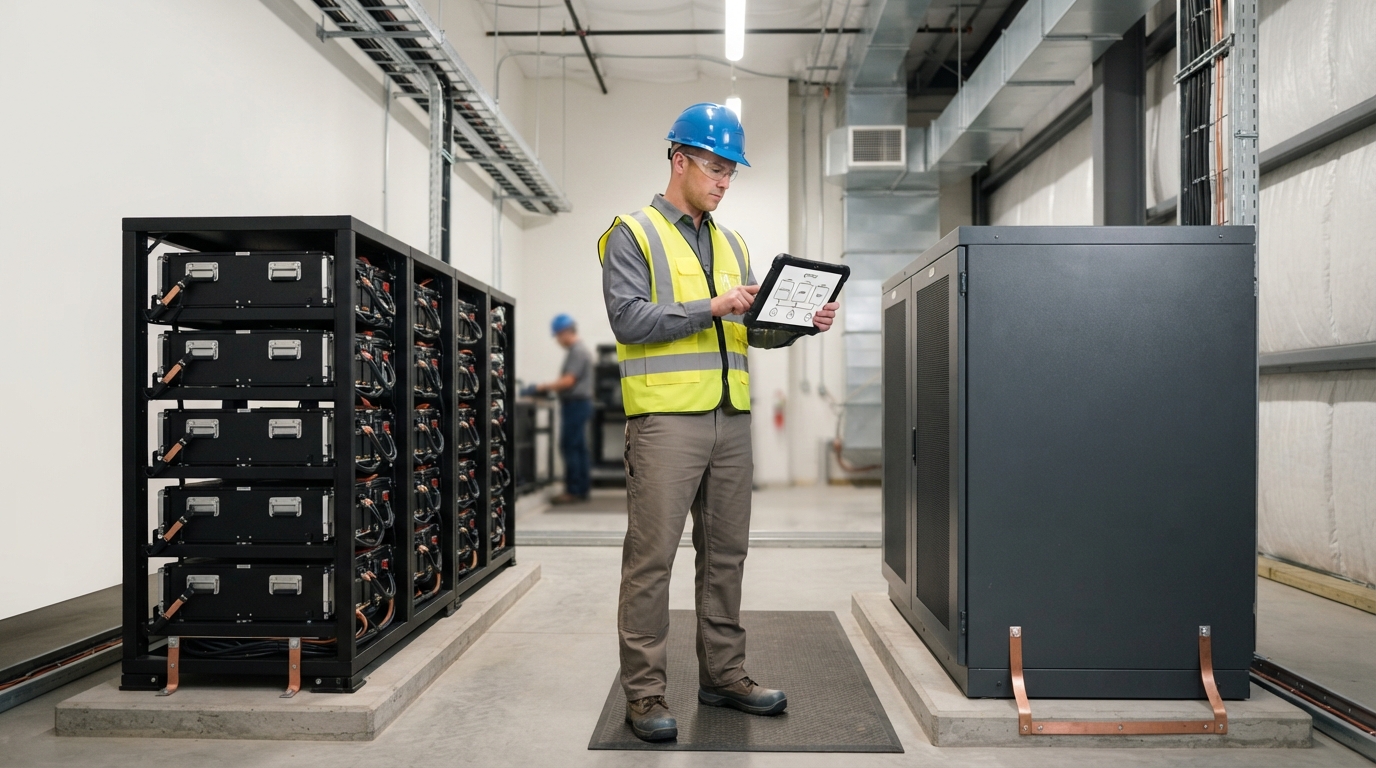
Lenders and service providers do not underwrite vague proposals. They evaluate the technical details of the proposed system, because those details determine whether the project can deliver the savings or revenue needed to repay capital and service the contract.
Key specifications that matter for financing include:
| Term | What it tells the financier |
|---|---|
| kW | The system’s power rating; how much load the battery can support at one time. |
| kWh | The battery’s stored energy capacity. |
| Usable kWh | The amount of energy the system can actually deliver under normal operating conditions. |
| Depth of discharge | How much of the battery can be used per cycle without shortening its life. |
| Round-trip efficiency | How much energy is lost during charging and discharging. |
| Cycle life | How many charge-discharge cycles the battery can deliver under expected conditions. |
| Degradation rate | How quickly capacity declines over time, and when augmentation or replacement will be needed. |
These specifications affect the financial model. A system with excellent kW ratings but poor usable energy may not support a long backup load. A system with high degradation may require capacity augmentation that should be planned and funded in advance.
The financed asset should also be clearly defined. A complete commercial BESS typically includes battery modules, racks or cabinets, a battery management system (BMS), an energy management system (EMS), a power conversion system (PCS) or inverter, controls, monitoring, installation, and commissioning. When this scope is not defined clearly, the buyer can face costly extras later.
For a practical explanation of what a complete C&I battery storage system includes, see the ci energy storage system page.
What Lenders and Energy-Service Providers Need to See in a Proposal
A good financing submission shows that the project has been designed around real site data, not generic assumptions. Most proposals should include the following:
Site and load information
- Electricity tariff structure.
- Load profile, including peak periods and seasonal variation.
- Operating hours and critical loads.
- Outage risk and backup requirements.
System design
- Battery power in kW.
- Stored energy in kWh.
- Usable energy and depth of discharge assumptions.
- Expected charging and discharging strategy.
- Expansion or parallel configuration plans, if relevant.
Equipment scope
- Battery modules, racks, or cabinets.
- BMS and EMS.
- PCS or inverter.
- Monitoring and communication.
- Enclosure, thermal management, and fire-safety design.
Financial projections
- Expected savings and revenue streams.
- Degradation and efficiency assumptions.
- Maintenance and replacement costs.
- Insurance and ongoing operating costs.
Risk and performance protections
- Warranty terms and what they actually cover.
- Performance guarantee, if one is offered.
- Augmentation or replacement obligations.
- End-of-term buyout, removal, or renewal conditions.
A performance guarantee is not the same as a savings guarantee. A performance guarantee may promise that the battery will deliver a certain amount of energy. A savings guarantee promises a specific financial result. The second is much harder to verify and depends on tariff changes, usage patterns, and operational decisions.
How to Choose Between Buying, Leasing, and Energy-as-a-Service
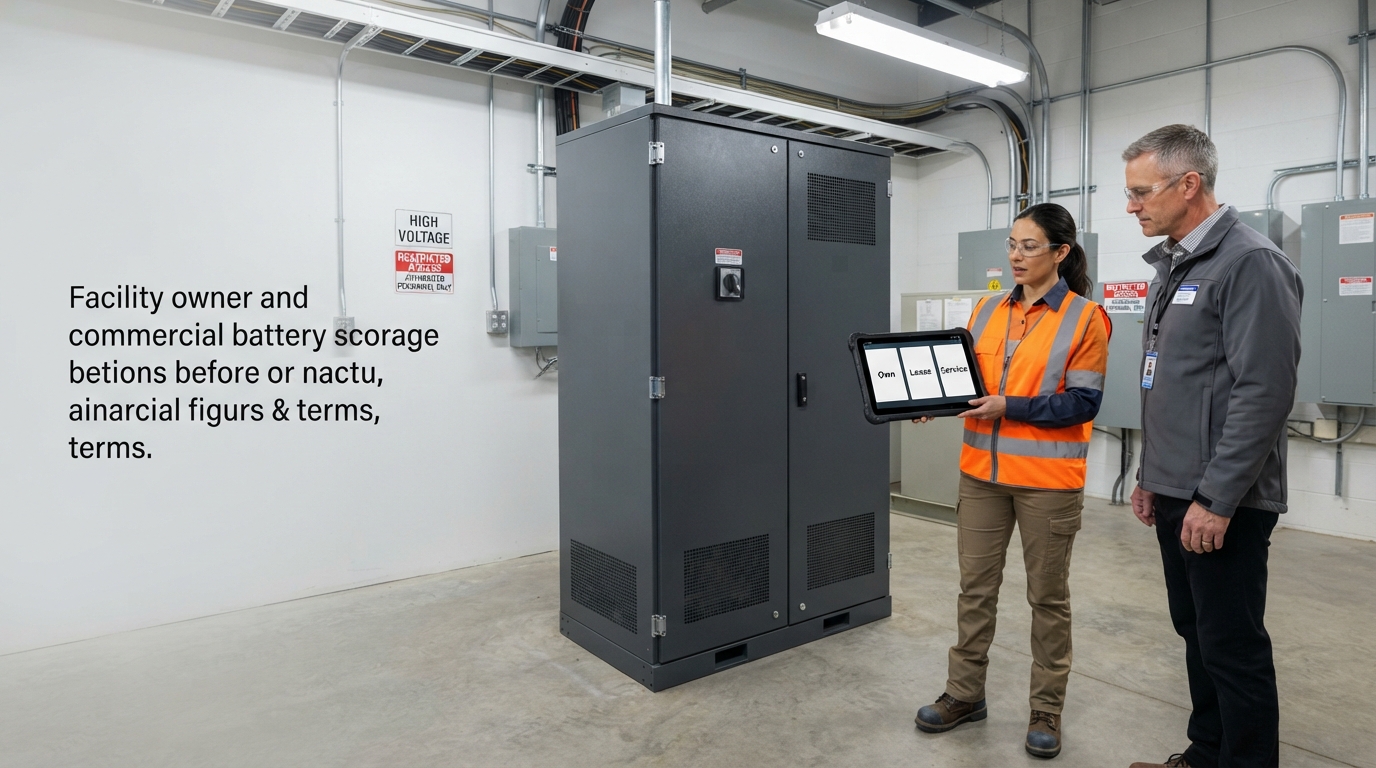
There is no universal winner. The right model depends on the business’s capital position, operational capacity, and time horizon.
Use the following questions to narrow the choice:
- Can the business fund the capital cost from its own balance sheet? If yes, direct purchase may offer the lowest long-term cost and full control.
- Can the project support debt service from verified savings? If yes, a commercial loan may preserve ownership while spreading the cost.
- Does the business want operational control of the asset? If yes, ownership models are more suitable than service models.
- Does the business want to avoid maintenance and degradation risk? If yes, a lease or service model may transfer that risk to the provider.
- How long does the business expect to remain at the site? A long contract can become expensive if the facility changes use or is sold.
- Does the business want the right to expand the system later? Some ownership models make expansion simpler than provider-owned contracts.
A few general patterns are useful:
- Direct purchase suits owner-operators with available capital and a long planning horizon.
- Commercial loans suit businesses that want ownership but prefer to pay over time.
- Operating leases suit businesses that want lower payments and do not need to own the asset.
- Energy-as-a-service suits businesses that want a fully managed solution with predictable operating costs.
- PPA and performance contracts suit businesses that want to pay for outcomes, where those structures are available.
Before signing anything, compare the complete cost of each option over the expected life of the system. Monthly payment size matters, but total cost, residual value, and contract obligations matter more.
Important Caveats for Worldwide Buyers
Financing structures are shaped by local rules. The information in this guide is general, and the following points may require professional advice in your country:
- Tax treatment of battery ownership, depreciation, and energy savings varies by jurisdiction.
- Accounting classification of leases depends on the applicable accounting standards, such as IFRS or local GAAP. The same contract may be classified differently in different countries.
- Incentives and grants may attach to the owner, the operator, or the site. The financing structure can determine who receives them.
- Grid interconnection and market participation rules differ by utility and by country.
- Fire and electrical codes affect system placement, enclosure requirements, and emergency response planning.
- Security interests and contract enforcement depend on the local legal system.
These variables can change the economics of one financing model versus another. Buyers should ask local legal, tax, and energy advisory professionals to review any contract before signing.
Next Steps for Your Commercial Battery Storage Project
Commercial battery storage financing is not a single product. It is a decision framework that balances capital, control, maintenance, risk, and contract terms. The right model for one business may be wrong for another, and the correct comparison requires real site data, a realistic system design, and honest performance assumptions.
To move forward:
- Gather your tariff, load profile, and operating requirements.
- Check the system design and equipment expectations in the ci energy storage system guide.
- Use the commercial battery storage ROI guide to evaluate project economics before comparing financing structures.
- Ask at least two suppliers to provide a complete proposal, including equipment scope, warranty, performance guarantees, and end-of-term options.
- Have a local adviser review the tax, accounting, and legal implications of each structure.
A well-prepared buyer may be able to access better financing terms — and avoid the expensive surprises that come from comparing monthly payments instead of total project value.

-

 OEM Residential Energy Storage Solutions: Passive vs. Active Cell Balancing
2026-09-30
-
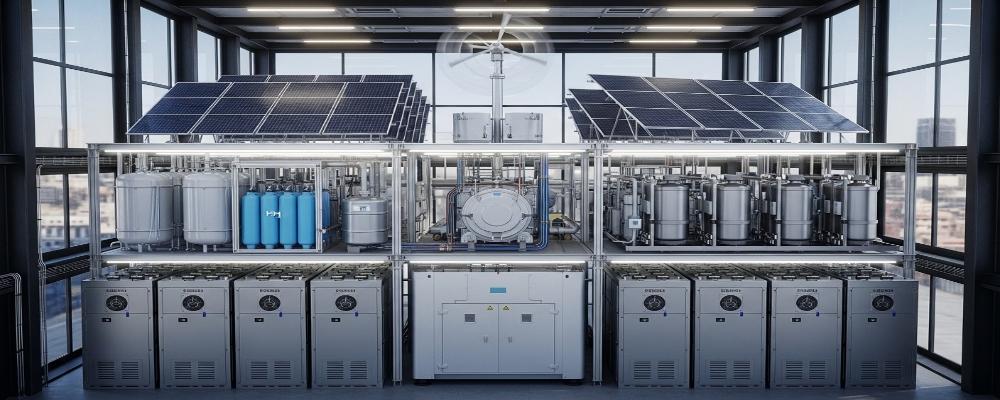 Smart Home Battery with BMS Communication: Cybersecurity and BMS Safety
 -
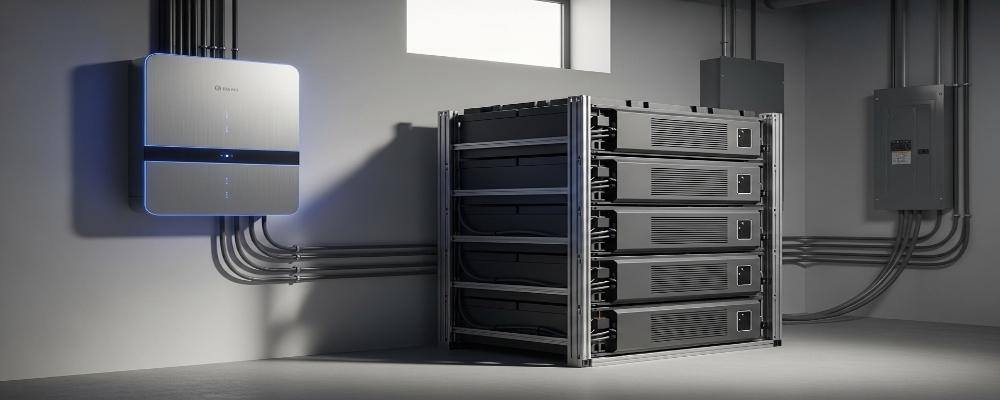 10kWh Home Battery Backup System: Is 90% DoD Better for Daily Solar Storage?
2026-09-29
-
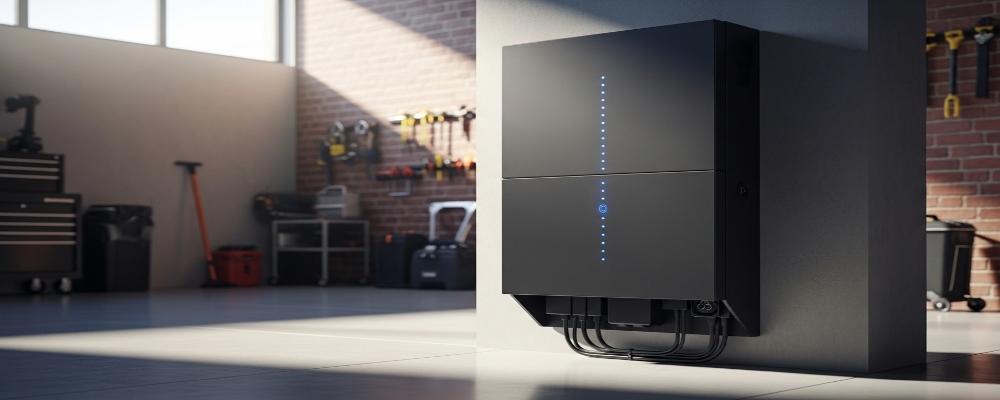 Integrated Home Energy Storage System 150–430V MPPT Design
2026-09-28
-
 LiFePO₄ Residential Backup Battery SOC Accuracy in Parallel Systems
Share this:





.svg)






-899.svg)


