




C&I Energy Storage System: Lower LCOS with Precision Liquid Thermal Management
For commercial and industrial facility owners, the real cost of an energy storage asset is not the upfront price tag. It is the Levelized Cost of Storage (LCOS)—the total expense divided by total usable energy delivered over the system’s lifetime. A C&I Energy Storage System that lowers LCOS must balance efficiency, cycle life, thermal stability, and maintenance needs.
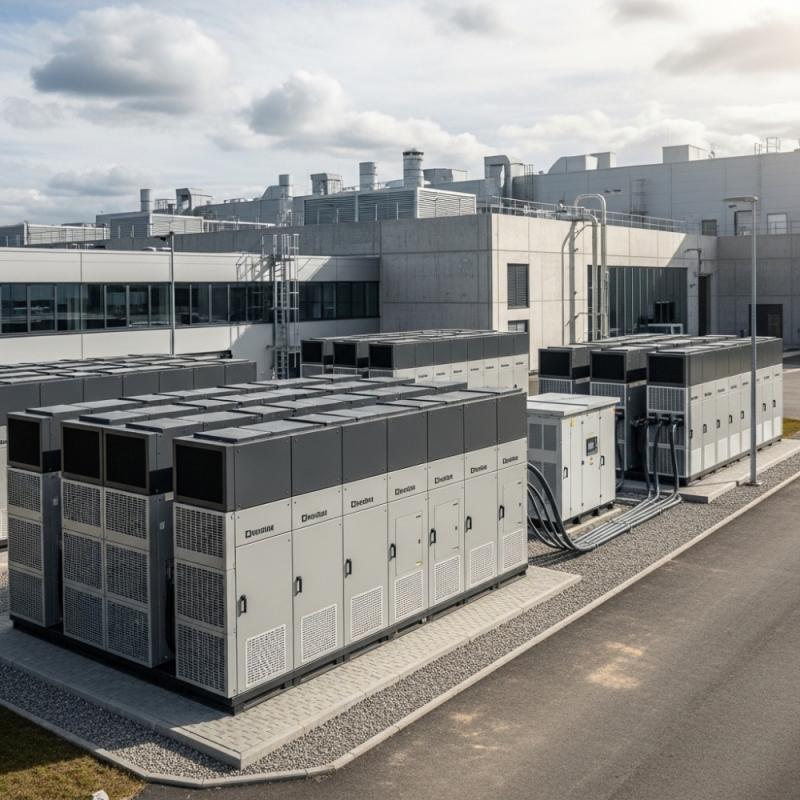
Precision liquid thermal management directly addresses the three biggest drivers of high LCOS: premature capacity fade, uneven cell degradation, and cooling-related energy waste. This article explains how VoltaLink’s liquid cooling architecture helps commercial buyers achieve lower LCOS without sacrificing safety or reliability.
Why LCOS Is More Important than Initial Price
There is often a focus on initial dollar cost per kilowatt-hour offered on C&I Energy Storage Systems. LCOS includes initial input, plus the dollar per kilowatt-hour going-forward. Residual cash flows for the system include peak shaving, demand charge avoidance, and ancillary services. The metric for cost per dollar cash flow LCOS is more favorable.
The individual components comprising LCOS include:
• Cycle life: The upfront cost is amortized per kilowatt-hour used because life is extended with more cycles.
• System efficiency: The operating cost per dollar output is lower with less round trip loss.
• Thermal-related degradation: The battery life is negatively impacted by inadequate cooling and thus the replacement frequency increases.
• Liquid cooling improves the resolution of all three. Liquid cooling provides even cooling of all cells preserving the cycles and improving efficiency.
Improving LCOS with Precision Liquid Thermal Management
The system needs to include the capacity to quickly and efficiently deal with heat removal. Air cooling is especially poor for vertical cooling at high density. Control liquid cooling with closed circuit coolant. The coolant is a chemically treated liquid, i.e. ethylene glycol : water = 50:50.
The individual characteristics that positively impact LCOS:
• Uniform impact of cooling liquid circulation to reduce/decelerate the rate of differential impacts on the cells at their end and impacts on the cells, increasing the unit life at > 8,000 cycles at a derate capacity of 70%.
• Stable thermal conditions for 0.5 charge and discharge cooling ensures the cell liquid is not derated, increasing the system capacity for energy.
• More efficiency is achieved from the system liquid cooling units due to the efficiency of low flow liquid pumps vs. high flow forced cooling, and lower input from pumps is more than offset by increased flow from the system.
• Precision liquid thermal management enables more lifetime kWh delivery per dollar invested.
VoltaLink‘s Technical Approach: Built for Industrial-Grade LCOS Reduction
VoltaLink designs its C&I Energy Storage System around LFP (LiFePO4) 3.2V/280Ah cells, configured in a 672–864V DC bus. The liquid cooling loop is integrated into each battery rack (215.04 kWh per rack, 1P240S configuration). This architecture provides measurable LCOS benefits.
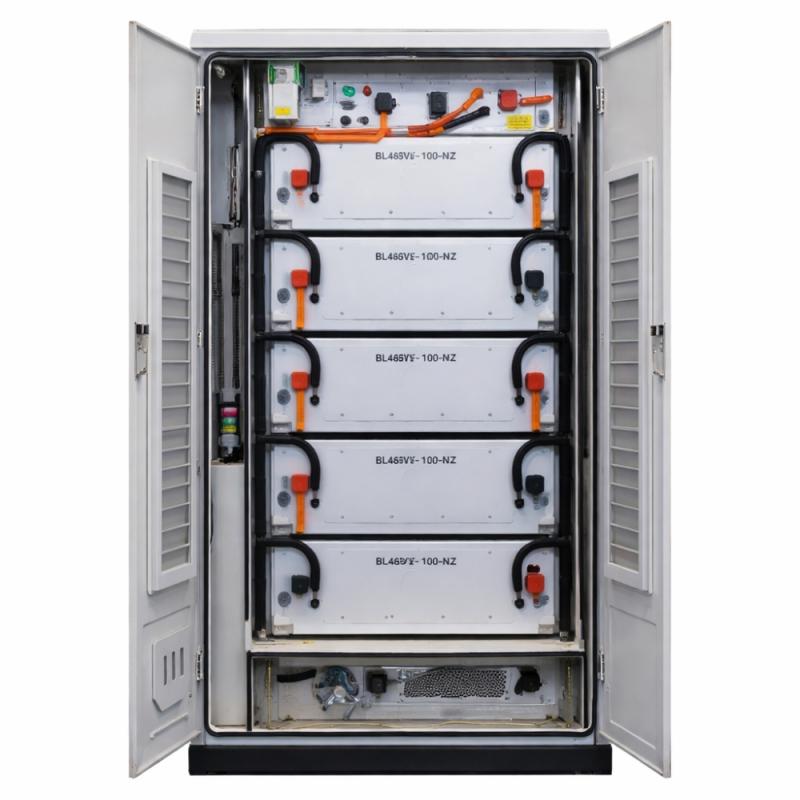
Cycle Life and Depth of Discharge
• Rated cycle life: >8000 cycles at 70% end-of-life capacity.
• Depth of discharge (DOD): 0–99% usable, no artificial restrictions.
• Expected service life: over 10 years in daily peak shaving applications.
Longer cycle life directly lowers LCOS by amortizing capital cost over more operating years.
System Efficiency and Power Quality
• System efficiency: ≥89% (excluding internal consumption).
• Rated AC power: 100 kW continuous, 120 kW peak.
• Harmonic distortion: <3% at rated power.
• Power factor: >0.99 at >20% load.
Greater efficiency means an energy loss reduction in each charge-discharge cycle, improving LCOS.
Thermal and Environmental Resilience
• Operating temperature range: -30°C to 50°C (derating above 45°C).
• Protection rating: IP54, acceptable for indoor and protected outdoor placements.
• Corrosion resistance: C4 level for industrial environments.
• Consistent thermal performance across temperature extremes avoids forced derating which protects revenue.
Key Design Features That Drive Lower LCOS
We see the following positive effects from the design choices made in VoltaLink’s C&I Energy Storage System on the LCOS:
• Liquid cooling vs. air cooling: provides a specific heat capacity and a more consistent cell temperature, yielding a decrease in capacity fade about 15–20% over 6000 cycles.
• Industrial-grade LFP cells: decrease in resistance and increased thermal stability leads to decreased calendar aging and reduced creation of unregulated heat.
• Scalable rack architecture: partial capacity expansion of each independent 215.04 kWh rack can be done, eliminating the need for a comprehensive redesign of the thermal system.
• Integrated BMS with real-time monitoring: controls the conditions that can lead to accelerated system degradation as it checks the voltage, current, and temperature of each cell.
• Active fire protection + aerosol + pack immersion: Fire-related safety events are rare but lead to significant losses; a multi-layer system lowers operational risk and costs due to unplanned downtime.
All of the bullet points above refer to aspects of the LCOS equation that are directly controllable.
Avoiding Common LCOS Pitfalls in C&I Projects
The following are the common pitfalls to be avoided as they can lead to a technically advanced C&I Energy Storage System with poor LCOS.
Liquid thermal management with precision ensures the following:
• The risk of thermal runaway in air-cooled, high-density cabinets: liquid cooling is more effective as it controls the range and keeps cells within thresholds even under extended sustained loading of 0.5C.
• VoltaLink has designed a channel where the maximum expected wetted thermal spread is approximately 3 degrees Celsius. This reduces potential cell aging disparity effects. This is useful for cell-to-cell temperatures exceeding 5 degrees Celsius.
• Liquid pumps can also efficiently optimize system cooling performance at partial loads with the Given the trade-off between system cooling performance and energy consumption. Fans, on the other hand, draw nearly full power at all times.
Buyers should ask potential suppliers for temperature uniformity test data and cycle life curves at relevant C-rates.
Real-World LCOS Calculation Example
A typical commercial facility installs a 500 kW / 1 MWh C&I Energy Storage System for daily peak shaving. Assuming two cycles per day (one charge, one discharge), an air-cooled system with 15% higher annual degradation would lose approximately 3% more capacity per year. Over a 10‑year horizon, the liquid-cooled system delivers roughly 12–15% more cumulative kWh output.
When multiplied by local energy arbitrage or demand charge savings (e.g., $15–25 per kW monthly), the LCOS advantage of precision liquid cooling becomes substantial—often reducing LCOS by 8–12% compared to baseline air-cooled designs.
Conclusion: Lower LCOS Starts with Thermal Precision
For commercial and industrial energy buyers, lowering LCOS is the most direct path to a positive investment case. A C&I Energy Storage System equipped with precision liquid thermal management delivers longer cycle life, higher usable throughput, and more stable operating costs than conventional air-cooled alternatives.
VoltaLink’s liquid cooling solution—combining LFP chemistry, modular rack architecture, and intelligent BMS—is engineered to meet 2026’s demand for high-density, low-risk energy storage. When every percentage point of efficiency and every thousand cycles matter, precision thermal control is not a luxury. It is a financial necessity.
To learn more about technical specifications (CE, UL, IEC compliant) and project customization, consult VoltaLink’s engineering team for site-specific LCOS modeling.
Frequently Asked Questions (FAQ)
Q: In what ways are lower Levelized Cost of Storage (LCOS) achieved via liquid cooling in contrast to air cooling?
A: Though air cooling systems operate at lower initial tiers, liquid cooling systems operate at a higher level of cooling which yields a more uniform thermal profile of the cells. This leads to lower capacity loss and longer cycle lifetimes. Overall LCOS is decreased from 15‐20%.
Q: In what timeframe is liquid cooling likely to become cost/benefit justified in commercial and industrial energy storage systems?
A: The development of the liquid cooling systems shows that the economic viability will likely be achieved over timeframes of 3 to 6 years, depending on the local conditions of demand charges, energy arbitrage, and the number of daily cycles. Liquid cooling and longer cycle life predict better returns for years beyond the first 6.
Q: Will coolant need to be added to VoltaLink’s liquid cooling system?
A: The closed-loop cooling systems that mix ethylene glycol and water are considered very maintenance-friendly and require coolant checks every 2–3 years and coolant replacement every 6–8 years.
Q: What is the compatibility of this system with existing solar PV or diesel generators?
A: The system can integrate completely with PV inverters and generators by using an external energy management system (EMS) because of its support for RS485, CAN, and Ethernet interoperability.
Q: What certifications does VoltaLink’s C&I Energy Storage System have?
A: CE, UL (where applicable), IEC 62619, and UN38.3 certifications along with C4 corrosion resistance and IP54 enclosure for industrial environments are in the design.

-

 OEM Residential Energy Storage Solutions: Passive vs. Active Cell Balancing
2026-09-30
-
 Smart Home Battery with BMS Communication: Cybersecurity and BMS Safety
 -
 10kWh Home Battery Backup System: Is 90% DoD Better for Daily Solar Storage?
2026-09-29
-
 Integrated Home Energy Storage System 150–430V MPPT Design
2026-09-28
-
 LiFePO₄ Residential Backup Battery SOC Accuracy in Parallel Systems
Share this:





.svg)






-899.svg)


