




Battery Energy Storage Container: Smart Energy Control for Real-Time Grid Response
For households wanting to achieve energy independence without considerable amounts of time and effort, the technology of Battery Energy Storage Containers has become indispensable. However, many of these systems act as a passive backup, and remain “dumb” to any real-time changes to the grid or to the pricing fluctuations of electricity.
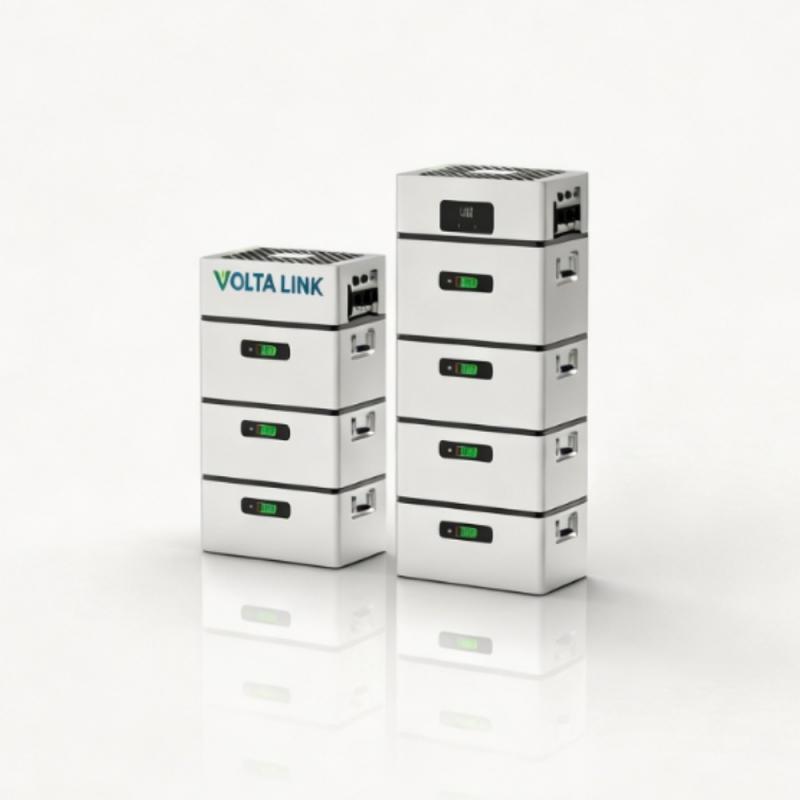
VoltaLink fills this gap with a Modular Balcony Energy Storage System centered on a 2.4kW intelligent control framework. This system tracks the grid and prices and then recalibrates charge/discharge cycles on the order of milliseconds, making VoltaLink systems some of the most advanced on the market. This paper will show how intelligent energy control will change from a standard inactive backup energy storage system to an active, intelligent, and money saving unit for the average city dwelling.
The Benefits of an Agile Battery Energy Storage System
A number of common areas of concern drive changes to intelligent Battery Energy Storage Containers (iBESC). First, iBESC provides real-time alternative to backup operations. Secondly, the systems participate in energy market which benefits not only the end-user, but the grid as a whole. Lastly, the system has the potential to revolutionize a user”s approach to energy consumption.
• Agility leads to savings: due to the ability to take a multiply value approach to energy consumption while utilizing arbitrage, users have lower energy costs and don”t have to concern themselves with the time of trade schedules.
• Grid-aware operation improves stability: The system can temporarily reduce charging power when local grid demand is high, avoiding unnecessary strain on neighbourhood infrastructure.
• Seamless backup switching protects daily life: When an outage occurs, the unit transitions to island mode in ≤10 milliseconds, keeping routers, fridges, and lights running.
VoltaLink”s solution achieves these outcomes through a combination of high-performance hardware and open software integration.
Smart Control Architecture Based on 2.4kW Platform
The core of this Battery Energy Storage Container is a hybrid inverter unit rated at 0.8kW nominal output with a peak capability of 2.4kW. The 2.4kW architecture is deliberately selected to match the typical power demand of a balcony or small apartment: it can simultaneously support a refrigerator (150W), a router (20W), several LED lights (50W), and a laptop (100W) while leaving reserve capacity for short surges from kitchen appliances.
Key control features include:
• Dynamic load detection: The inverter continuously samples output current and voltage, adjusting the power draw from battery modules to match real-time consumption changes.
• Grid-parallel operation with anti-islanding protection: When the public grid is present, the system synchronises to the 230V / 50Hz waveform with less than 3% total harmonic distortion (THDv). If the grid becomes unstable, the unit disconnects within 2 seconds to protect utility workers.
• Programmable time-of-use logic: Users (or installers) can set up to four daily periods for charging, discharging, or standby using the companion smart meter interface.
All these functions run on a DC48V battery platform, where each lithium module provides 2400Wh of usable capacity. The platform supports one to five modules, allowing total storage from 2.4kWh to 12kWh without replacing the inverter or control board.
Under 10ms Backup Switching: Measured Performance
One of the most quantifiable benefits of this Battery Energy Storage Container is its ultra-fast transfer time. Many basic backup systems require 100ms to 500ms to switch from grid to battery, which is long enough to reset digital clocks, interrupt a computer, or cause a router reboot. VoltaLink“s system achieves ≤10ms interruption time.
• 10ms is shorter than one full cycle of 50Hz AC (20ms per cycle): Most sensitive electronics see no interruption at all.
• The fast switch relies on a solid-state relay plus a dedicated backup control loop that keeps the inverter output voltage and frequency pre-synchronised to the grid.
• After switching, the 2.4kW peak output (10.43A) ensures that motor-driven loads like a small refrigerator compressor or a ventilation fan can start without stalling.
This performance level is particularly valuable for work-from-home setups, home medical devices, and network equipment.
Open Ecosystem Integration for Real-Time Pricing
Hardware alone cannot deliver real-time grid response without data. VoltaLink has therefore made its Battery Energy Storage Container compatible with leading smart energy platforms, including:
• Tibber Pulse: Directly acquires dynamic electricity prices and sends them to the inverter every minute.
• HomeWizard P1: Reads the utility meter”s data via the Dutch P1 port, providing live household consumption and grid export information.
• EverHome Smart Meter and Smart Plug: Enable granular appliance-level monitoring.
• With these integrations, the system automatically shifts charging to the cheapest hours (often overnight) and can even discharge stored energy during very expensive peak hours — without any user programming. The control logic respects battery cycle life, so deep discharges are avoided.
• Smart meter compatibility means lesser dependence on cloud servers: smart meter Local processing executes 95 percent of control decisions. Local processing guarantees control even when the internet is down.
Open API means that if the client is more technically knowledgeable, they can connect their own systems (Home Assistant, etc.) to set their own rules.
Practical Applications and Buyer Benefits
For purchasing managers and distributors, smart-enabled Battery Energy Storage Container allows the buyer to build simple marketing campaigns because the end-users will realize the following tangible benefits:
• Reduced electricity costs due to automated peak shaving: the system reduces customer off peak grid consumption by 20 to 35 percent (dynamic pricing, and European market energy)
• Improved energy resilience without generator”s noise: with peak sustained output of 2.4Kw, the system can cover essential load lines for several hours, depending on the number of battery modules.
• Designed to evolve: The control board and the inverter doesn”t have to be replaced when expanding the modules on the system.
VoltaLink is an integrated company that builds everything from a DC48V battery management system to an AC inverter, all from the same place and with the same quality management process. Due to vertical integration, all the components that will support the grid-response capabilities will be tested and implemented as new versions of the firmware.
Conclusion: Smart Control as a Standard, Not an Add-On
The market for Battery Energy Storage Container solutions is moving away from dumb backup boxes toward intelligent, grid-aware systems. VoltaLink”s Modular Balcony Energy Storage System meets this demand with a 2.4kW architecture, ≤10ms switching, open meter integration, and DC48V modular expansion. Buyers receive a product that actively reduces energy costs, supports local grid stability, and adapts to future tariff structures — all in a compact, silent, and safe package.
For complete technical datasheets, certification documents, and wholesale inquiries, contact the VoltaLink sales team directly. Visit [HERE] to request a sample or schedule a technical webinar.
Frequently Asked Questions (FAQ)
Q1: Can I use this Battery Energy Storage Container without solar panels?
Yes. This system charges from the AC grid. This system targets users looking for backup power and peak shaving without rooftop solar.
Q2: How long does the backup switching last (≤10ms)?
The system performs transfer switching of ≤10ms from the grid to battery. This transfer switching time is long enough to maintain the power supply for computers, routers, and electronics.
Q3: Is an internet connection needed for the smart grid response?
Basic scheduling of time bases is performed offline. Real time dynamic pricing, such as Tibber Pulse, does require internet connection to obtain prices. The system performs local grid monitoring and backup switching offline.
Q4: Can I scale it from 1 to 5 battery modules in the future without purchasing a new inverter?
Yes. Scaling it from 1 to up to 5 battery modules on the same inverter unit is allowed on the platform. You scale it by adding more modules as your needs and/or budget increase.
Q5: Is an installation of an expert or a certified electrician for permanent grid connection needed?
No. The system is designed to be installed, as is, on wall or balcony, with standard plugs. However, it is legally required to and in the end, we recommend a certified electrician.

-

 OEM ODM Home Energy Storage Manufacturer for Stackable Home Battery Solutions
2026-08-20
-
 High-Rate Discharge in Data Center UPS Battery Backup Systems Explained
 -
 LiFePO₄ RV Battery 48V System Design: Battery, Inverter, Solar and DC Load Integration
2026-08-19
-
 51.2V LiFePO₄ Server Rack Batteries: 100Ah Capacity, Energy Output and Runtime
2026-08-18
-
 51.2V 100Ah LiFePO₄ Battery for Inverter in Solar Energy Storage Systems
2026-08-17
Share this:





.svg)






-899.svg)


