




1MWh Containerized Battery Storage: A Commercial Buyer’s Guide
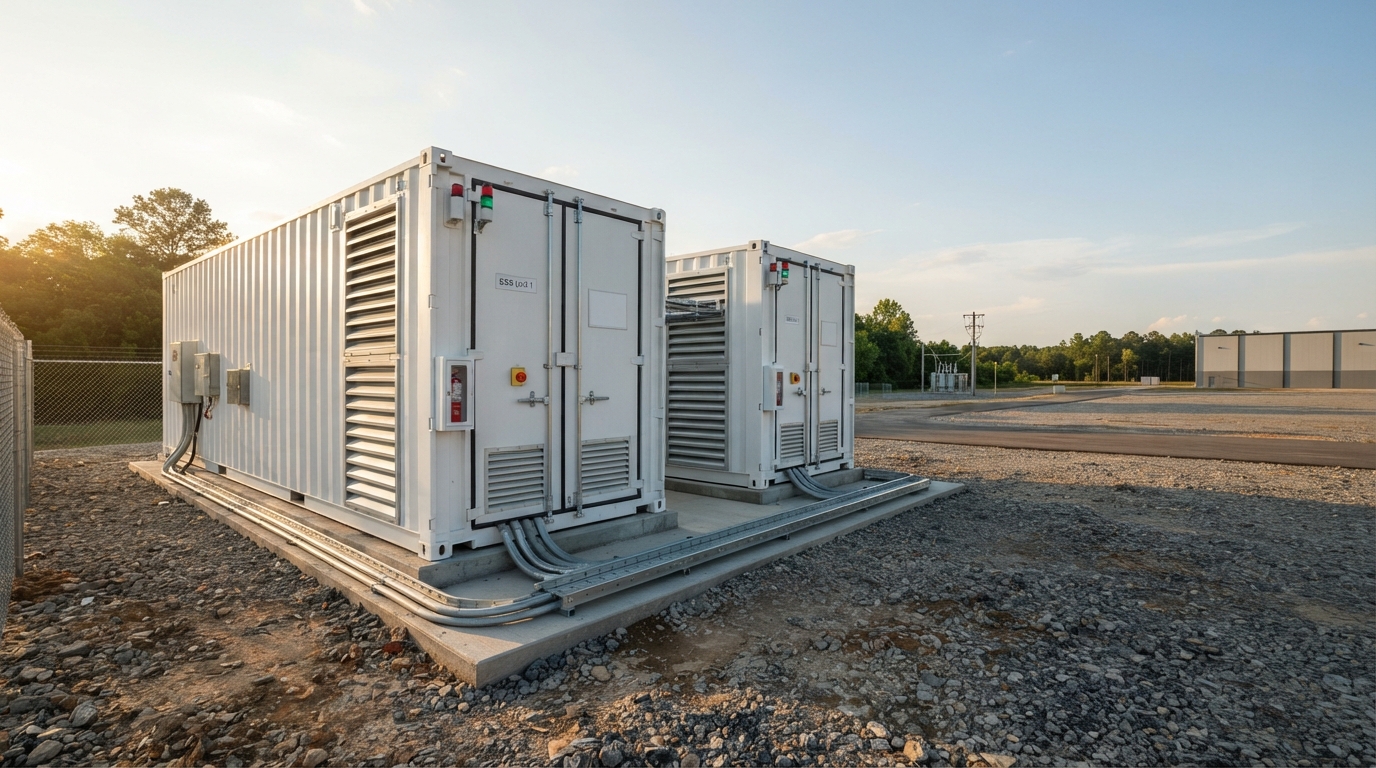
A 1MWh containerized battery storage system stores one megawatt-hour of electrical energy in a factory-integrated container. It is a common configuration for commercial, industrial, solar, and microgrid projects because it provides meaningful energy capacity while remaining practical to transport and install as a single unit.
This guide explains what “1MWh” actually means, how it differs from power, what is included inside the container, and what you should verify before requesting a quotation.
For a broader look at containerized battery technology and grid response, see Battery Energy Storage Container: Smart Energy Control for Real-Time Grid Response.
What Does “1MWh” Mean in Containerized Battery Storage?
MWh stands for megawatt-hour, a unit of electrical energy. One megawatt-hour equals 1,000 kilowatt-hours (kWh).
In simple terms, a 1MWh battery can deliver 1MW of power for one hour, 500kW for two hours, or 250kW for four hours — before losses and operating limits are considered.
The figure that matters for your project is usable energy, not just nominal energy. A battery may have a nominal rating of 1MWh, but the usable energy may be lower because of:
- Depth of discharge limits;
- Operating reserve maintained by the BMS;
- Efficiency losses during charging and discharging;
- Temperature-related performance limits.
Always ask the supplier for both the nominal and usable energy values in a written datasheet. Comparing only nominal ratings can lead to undersizing.
Energy vs. Power: Why a 1MWh System Is Not Necessarily a 1MW System
Energy and power are different specifications.
- Energy (MWh) describes how much electricity the battery can store.
- Power (MW or kW) describes how quickly that energy can be delivered or absorbed.
The same 1MWh battery can be paired with different power conversion systems. A 500kW PCS gives longer discharge duration at rated output; a 1MW PCS gives shorter duration at higher output.
| Battery Energy | Rated Power | Approximate Duration at Rated Output |
|---|---|---|
| 1MWh usable | 500kW | About 2 hours |
| 1MWh usable | 1MW | About 1 hour |
These are illustrative values. Actual duration depends on usable energy, efficiency, depth-of-discharge limits, and how the EMS manages the system.
Once you define the load and required runtime, the PCS rating and battery energy are selected together. For a deeper discussion, see bess container pcs sizing.
What Is Inside a 1MWh Containerized BESS?
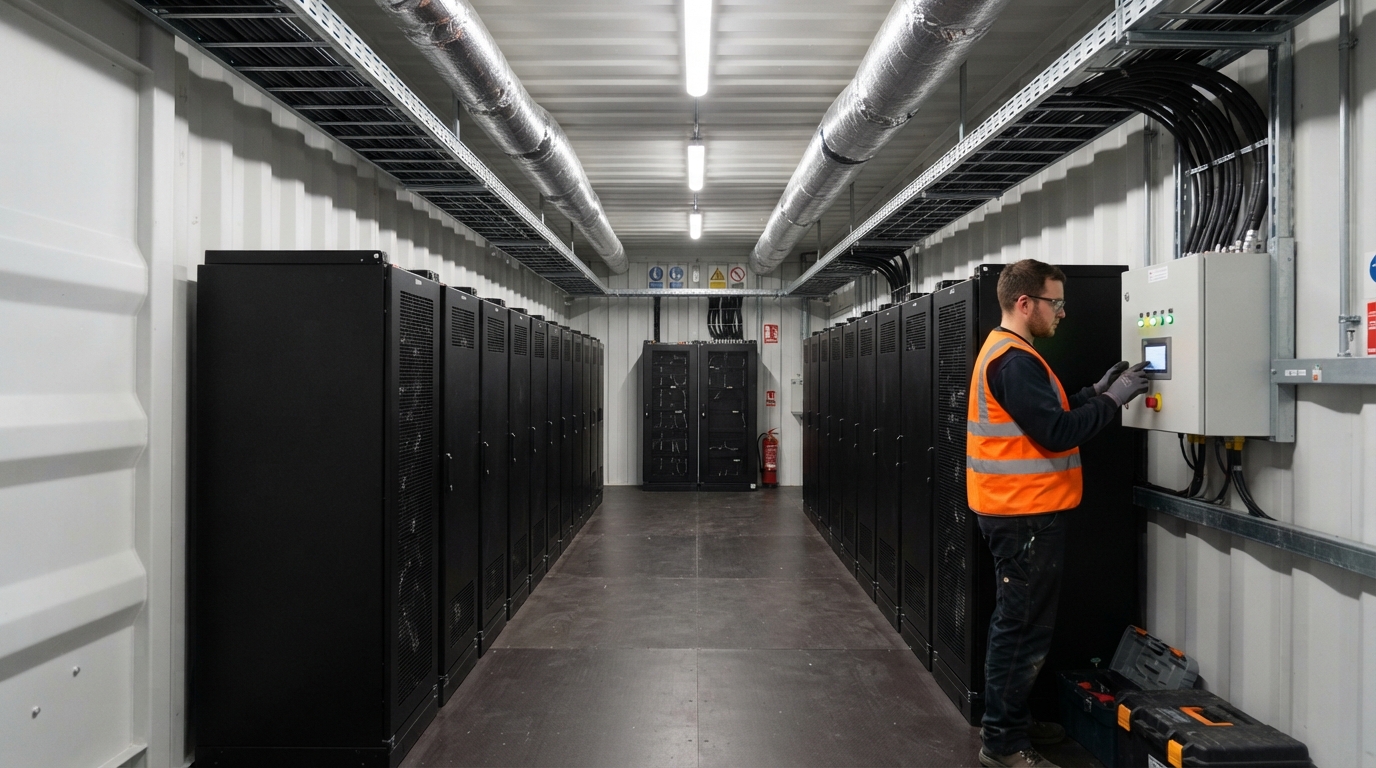
A containerized battery energy storage system (BESS) is more than a battery in a box. It is an integrated package that includes the battery itself plus the systems needed to protect it, convert its power, and control its operation.
The exact architecture varies by supplier, but a complete 1MWh container typically includes the following.
Battery Racks, Modules, and Cells
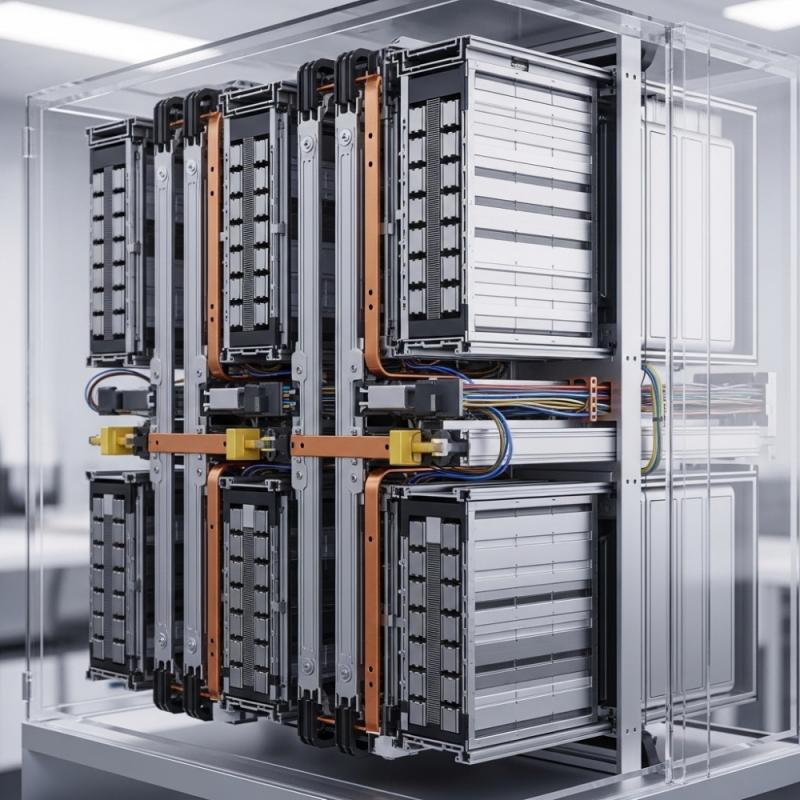
The battery is built in layers. Cells are assembled into modules, modules are grouped into racks, and racks are installed inside the container.
Many containerized systems in this size range use lithium iron phosphate (LFP) chemistry because of its cycle life and thermal stability. The exact chemistry, cell format, and cell grade should be confirmed in the supplier’s datasheet.
Battery Management System (BMS), Power Conversion System (PCS), and Energy Management System (EMS)
Three control systems work together:
- The BMS monitors the battery and protects it from voltage, current, and temperature problems. It also supports cell balancing.
- The PCS converts DC battery power into AC power for the grid or building loads, and it manages charging.
- The EMS coordinates the overall system. It decides when to charge and discharge based on the operating mode, time-of-use rates, grid signals, or site demand.
The communication between these systems affects how cleanly the container integrates with solar, generators, building controls, or utility systems.
Thermal Management, Fire Detection and Suppression, and Enclosure
Batteries perform best within a defined temperature range. The container may use air cooling or liquid cooling depending on the design, discharge profile, and climate.
Fire detection and suppression are critical. Lithium-ion batteries can experience thermal runaway, a condition in which increasing temperature creates more heat and can lead to fire or gas release. The container’s fire-safety design should be evaluated as part of the overall project, not treated as an afterthought.
The enclosure itself is usually rated by an IP code that indicates its resistance to dust and water. IP54 is common for outdoor cabinets, but the right rating depends on the installation site.
It is also important to understand what the container does not include. Many proposals exclude the transformer, switchgear, grid interconnection equipment, site civil works, and installation labor. Ask the supplier to state the exact scope of supply in writing.
Commercial and Industrial Applications for a 1MWh Container
A 1MWh container can support several commercial operating modes. The right application for your site determines the PCS rating, EMS functions, and even the thermal management design.
| Application | What It Does | Configuration Impact |
|---|---|---|
| Peak shaving | Discharges during periods of high demand to reduce demand charges | Higher power rating and fast EMS response |
| Load shifting | Charges when electricity is cheap and discharges when prices are high | More energy capacity and time-based controls |
| Solar-plus-storage | Stores excess PV generation for later use | DC or AC coupling with the solar inverter |
| Microgrid backup | Supports islanded operation during grid outages | Transfer switching and advanced grid-forming controls |
| Renewable smoothing | Ramps power to reduce variability from solar or wind | Fast-response PCS and precise EMS control |
A 1MWh container can serve more than one function, but those functions must be defined before the system is configured. For example, a backup application may require a larger usable-energy reserve than a peak-shaving application.
For a deeper view of commercial and industrial system design, see ci energy storage system.
Key Specifications Every Buyer Should Confirm
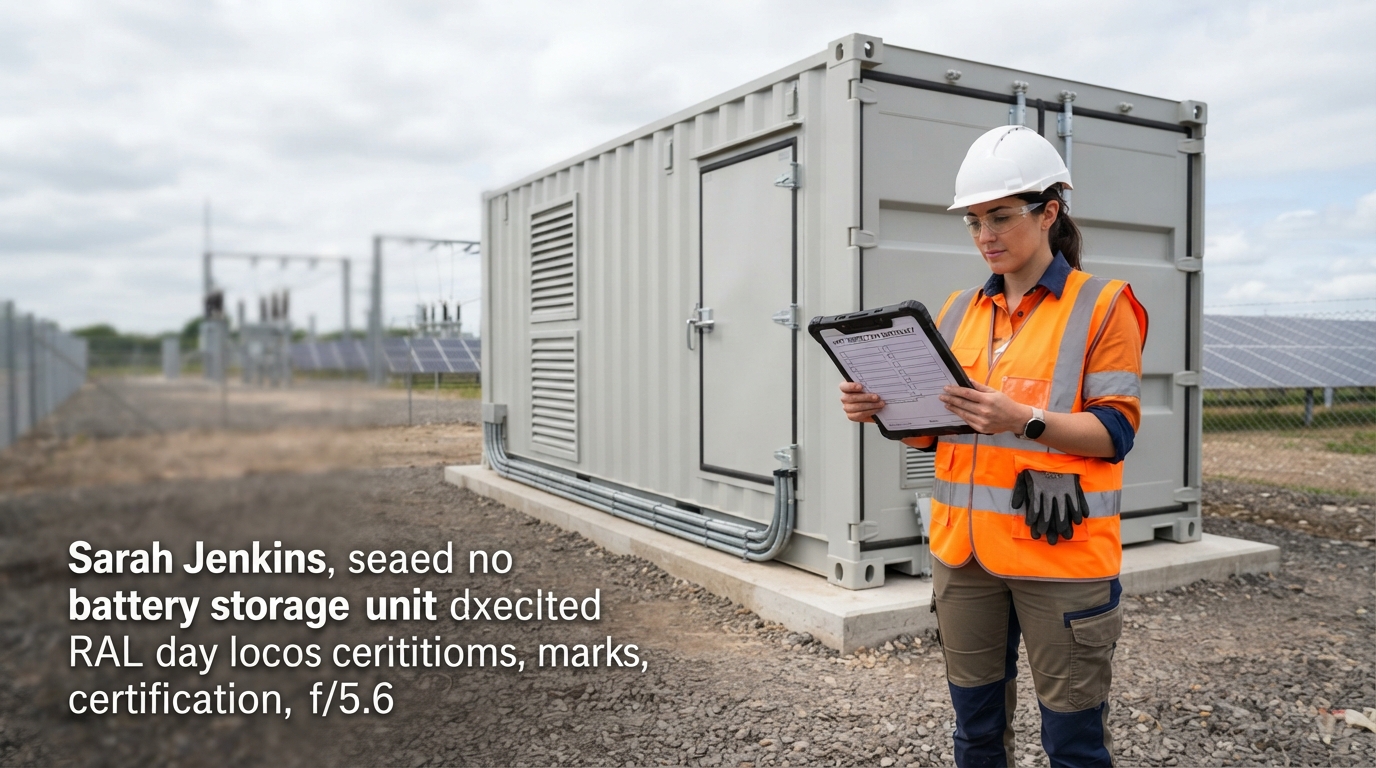
Before comparing supplier proposals, build a short specification list. The following items should appear in a written datasheet or quotation.
- Nominal energy (MWh or kWh): the battery’s rated energy capacity.
- Usable energy (MWh or kWh): the energy actually available within the BMS operating limits.
- Rated power (kW or MW): the continuous AC output your PCS can provide.
- DC voltage (V): the battery-side voltage.
- AC voltage (V): the grid-side voltage.
- Depth of discharge (DoD): how deeply the battery can be discharged without reducing life.
- Round-trip efficiency: how much energy is recovered after a full charge-discharge cycle.
- Cycle life and degradation: how the capacity changes over time and under what test conditions.
- Thermal management: air or liquid cooling, and the operating temperature range.
- IP rating: the enclosure protection level.
- Communication protocols: how the BESS connects to the EMS, SCADA, or building controls.
- Expansion capability: whether additional containers can be paralleled, and under what conditions.
Stored energy depends on both voltage and amp-hour capacity. A simple way to think about it is:
Energy (kWh) ≈ Voltage (V) × Amp-hour capacity (Ah) ÷ 1,000
For example, a 768V battery with 1,302Ah stores roughly 1MWh. A lower-voltage battery needs more amp-hours to store the same energy. When comparing batteries, compare kWh and MWh figures rather than Ah alone, especially if the voltages differ.
Safety, Compliance, and Documentation
BESS safety and compliance requirements vary by country, state, and utility. There is no single certification that covers every project worldwide. Use this section as a starting point, not as a complete approval list.
In North America, authorities often look for evidence related to:
- UL 9540, a system-level listing for energy storage systems and equipment;
- UL 9540A, a test method used to evaluate thermal runaway fire propagation;
- NFPA 855, the standard for stationary energy storage installation, which covers siting, spacing, ventilation, and fire protection.
UL Solutions explains the relationship between UL 9540A, NFPA 855, and large-scale fire testing, while Sandia National Laboratories notes that UL 9540A is a test method, not a standalone product certification. The EPA also provides an overview of safety considerations for battery energy storage systems.
Outside North America, the applicable standards may include IEC standards, national electrical codes, or utility-specific interconnection rules.
Transport is a separate requirement. Lithium batteries are regulated as dangerous goods for shipping. Ask the supplier for the transport documentation that applies to the delivery route.
Whatever the project location, request written evidence rather than marketing language:
- Model-specific datasheet;
- Test reports and certificates that name the exact model;
- Installation and commissioning manual;
- Warranty document with clear terms;
- Transport documentation.
If a supplier cannot provide model-specific documentation, treat that as a red flag.
How to Evaluate a 1MWh Containerized BESS Supplier
A strong supplier proposal should be specific. Vague descriptions such as “safe, reliable, and scalable” are not specifications.
Compare suppliers on these points:
- Scope of supply: Does the quote include the battery container, PCS, transformer, EMS, installation, and commissioning? Or is it battery-only?
- Documentation: Does the datasheet list nominal energy, usable energy, rated power, voltage, efficiency, and operating limits for the exact model?
- Certification: Are certificates issued for the model being offered, or for a similar product?
- Warranty: What is covered, for how long, and under what cycle or throughput conditions?
- Service and support: Are spare parts available? What is the supplier’s response process?
- Project experience: Can the supplier show relevant containerized BESS projects without relying on unverifiable marketing claims?
A written proposal should let you understand exactly what you are buying and who is responsible for each part of the project. If the proposal is unclear, that uncertainty will only grow during installation.
For a more detailed look at supplier selection, see bess container supplier.
Preparing Your Requirements Before Requesting a Quote
A useful quotation starts with a clearly defined project requirement. Before contacting a supplier, prepare the following information.
Load and duration
- Peak demand in kW or MW
- Average energy consumption in kWh per day or month
- Required discharge duration at a specific power level
Grid and site
- AC voltage and grid connection type
- Whether export to the grid is allowed
- Indoor or outdoor installation
- Climate and available space
Operating mode
- Peak shaving, load shifting, backup, solar-plus-storage, microgrid, or a combination
- Whether the system must operate in islanded mode during an outage
Project scope
- Battery container only
- Container plus PCS and EMS
- Full EPC support, including civil works and grid connection
Logistics
- Delivery destination
- Expected project timeline
- Any local approval requirements you are already aware of
This information allows a supplier to size the battery energy and PCS power correctly. It also prevents you from comparing quotes that are based on different assumptions.
Discuss Your 1MWh Containerized Battery Storage Project with VoltaLink
VoltaLink’s website focuses on utility-scale energy storage and integrated solar-plus-storage-plus-charging systems. Its containerized BESS page explains the system-level role of these products in real-time grid response and smart energy control.
A 1MWh container is not a one-size-fits-all product. The right configuration depends on your power profile, required duration, grid conditions, site environment, and operating strategy.
Once you have completed the requirements checklist above, the next step is a project discussion. Share your load profile, intended application, site details, and delivery timeline, and ask for a written configuration proposal. That proposal should state the nominal and usable energy, PCS rating, voltage, efficiency, cooling design, safety documentation, warranty, and scope of supply in clear terms.
The more precisely you define the project before the conversation, the more useful the supplier’s response will be.

-

 OEM Residential Energy Storage Solutions: Passive vs. Active Cell Balancing
2026-09-30
-
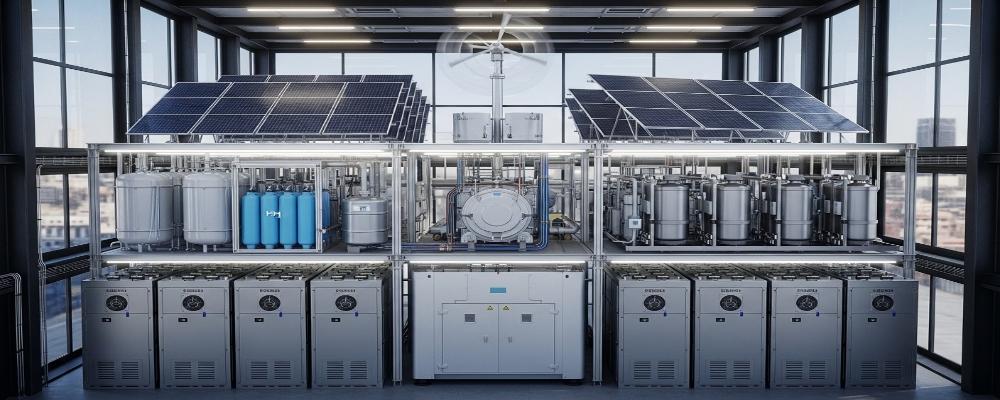 Smart Home Battery with BMS Communication: Cybersecurity and BMS Safety
 -
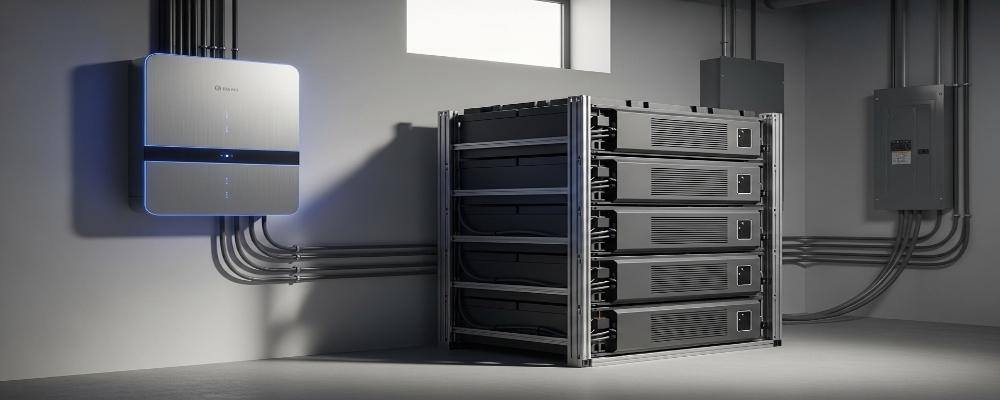 10kWh Home Battery Backup System: Is 90% DoD Better for Daily Solar Storage?
2026-09-29
-
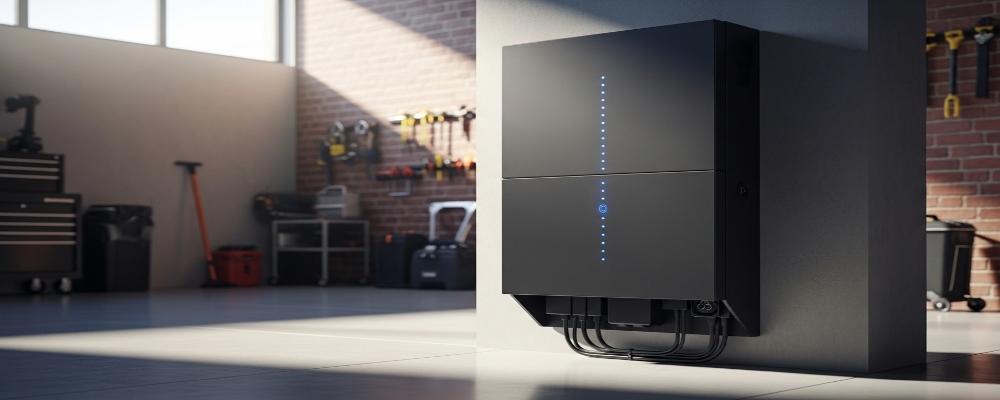 Integrated Home Energy Storage System 150–430V MPPT Design
2026-09-28
-
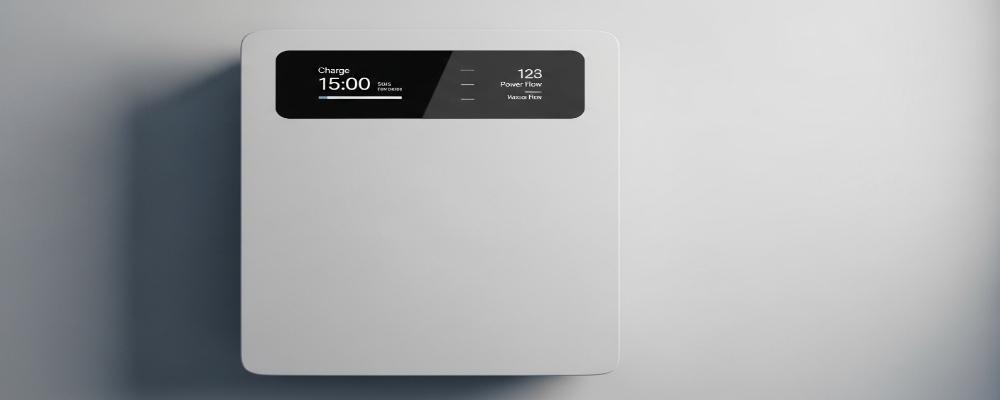 LiFePO₄ Residential Backup Battery SOC Accuracy in Parallel Systems
Share this:





.svg)






-899.svg)


