




Long Cycle Life Home Batteries: 6,000+ Cycle Math
A long cycle life home battery rated for 6,000 cycles can last about 16 years at one full cycle per day, or about 23 years at 0.7 cycles per day. That math is useful, but it is not a guarantee. Real lifespan depends on depth of discharge, temperature, charge rate, BMS protection, calendar aging, and warranty terms.
A 6,000-cycle rating sounds impressive, but most homeowners need a simpler answer: how many years does that really mean? The answer depends on how deeply and how often the battery is used. A daily solar user and a backup-only homeowner will not age a battery the same way. This guide walks through the math, then shows what can shorten or protect real service life.
What does “6,000 cycles” mean on a home battery?
A 6,000-cycle home battery is rated for about 6,000 full equivalent charge and discharge cycles before major capacity loss. Partial daily use still counts, but it adds up more slowly than a full 100% discharge.
One cycle means the battery has delivered and recharged one full equivalent amount of energy. If a 10 kWh battery delivers 5 kWh today and 5 kWh tomorrow, that can count as one full equivalent cycle over two days.
This is why cycle life is not the same as the number of times the battery turns on. Small daily discharges do not equal full cycles. The cycle rating is also not the same as a warranty promise. It is a technical endurance number that needs context.
How many years does a 6,000-cycle home battery actually mean?
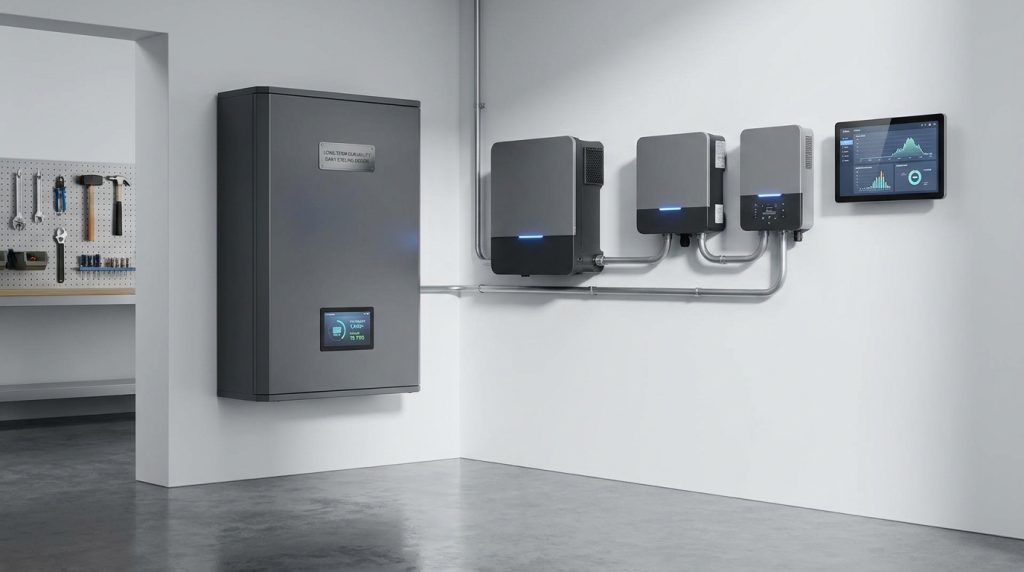
At one full cycle per day, 6,000 cycles equals about 16.4 years. At 0.7 cycles per day, it equals about 23.5 years, but calendar aging, heat, DoD, and charge settings can reduce real service life.
The basic formula is simple: divide the rated cycles by your average cycles per day, then divide by 365. For a home that uses stored solar power every night, one cycle per day is a useful planning example.
A lighter-use home may average less than one full equivalent cycle per day. That makes the cycle math look longer, but it does not stop aging from time, heat, or warranty limits.
| Average use | Calculation | Approx. cycle-based life | Realistic interpretation |
|---|---|---|---|
| 1.0 cycle/day | 6,000 / 365 | 16.4 years | Daily solar shifting or heavy daily use |
| 0.8 cycle/day | 6,000 / 292 | 20.5 years | Regular evening use with some lighter days |
| 0.7 cycle/day | 6,000 / 255.5 | 23.5 years | Moderate daily solar use |
| 0.5 cycle/day | 6,000 / 182.5 | 32.9 years | Partial daily use or mixed backup use |
| 0.3 cycle/day | 6,000 / 109.5 | 54.8 years | Cycle count will likely not be the main limit |
The last rows need careful reading. A 0.3 cycle/day pattern does not mean the battery will serve for 54 years. It means cycle count may not be the first thing that limits the system.
Is one cycle per day realistic for a normal home?
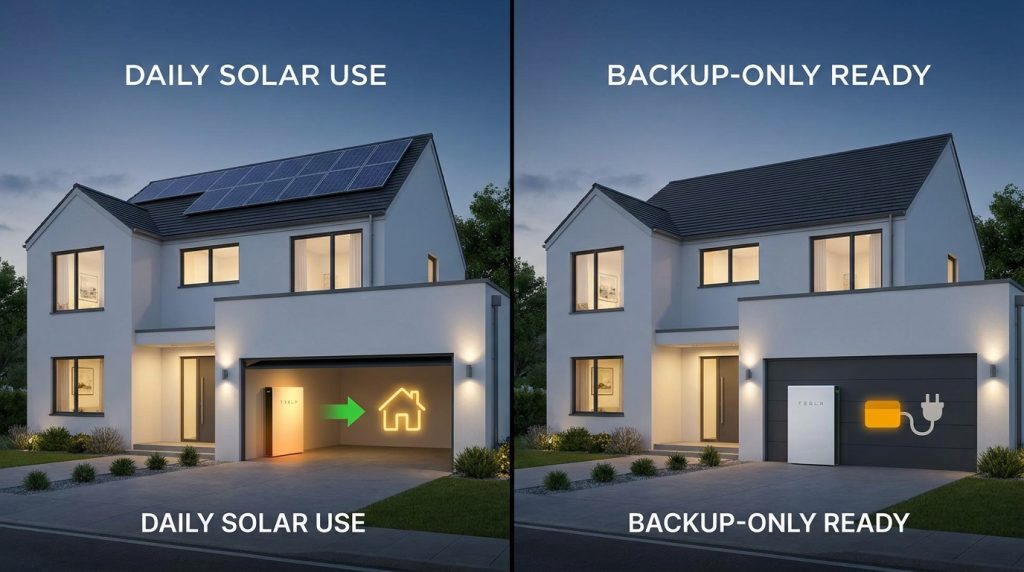
One cycle per day is realistic for homes that use stored solar most evenings. Backup-only homes may use far fewer cycles, so calendar aging and warranty terms may matter more than reaching the full cycle limit.
A home with solar panels may charge the battery during the day and discharge it in the evening. The U.S. Department of Energy explains that energy storage helps store power from intermittent sources like solar and wind for later use through its storage overview. That is the kind of daily pattern where cycle life matters.
A backup-only system is different. It may sit mostly full and discharge only during grid outages. In that case, long cycle life is still useful, but warranty years, temperature, and standby health may matter more.
| Home use pattern | Likely cycle pattern | What to focus on |
|---|---|---|
| Daily solar self-consumption | Close to 0.7 to 1.0 cycle/day | Cycle life, usable capacity, inverter match |
| Evening peak-rate use | Moderate to high cycling | Cycle life and charge settings |
| Backup-only use | Low cycle count | Warranty, calendar life, storage conditions |
| Small battery with large loads | Deep daily cycling | Sizing and DoD limits |
| Larger battery with moderate loads | Gentler cycling | Long-term capacity retention |
For broader sizing, backup-load planning, and system layout, use VoltaLink’s home storage sizing guide instead of trying to answer every system-design question from cycle life alone.
Why can real life be shorter than the cycle-life math?
Real battery life can be shorter than cycle-life math because time, temperature, deep discharge, and high charge rates also age the cells. A battery can reach calendar aging limits before all rated cycles are used.
Cycle life and calendar life run at the same time. Cycle life tracks use. Calendar life tracks aging over time, even if the battery is not fully cycled every day. This is why a backup battery can age even when it rarely discharges.
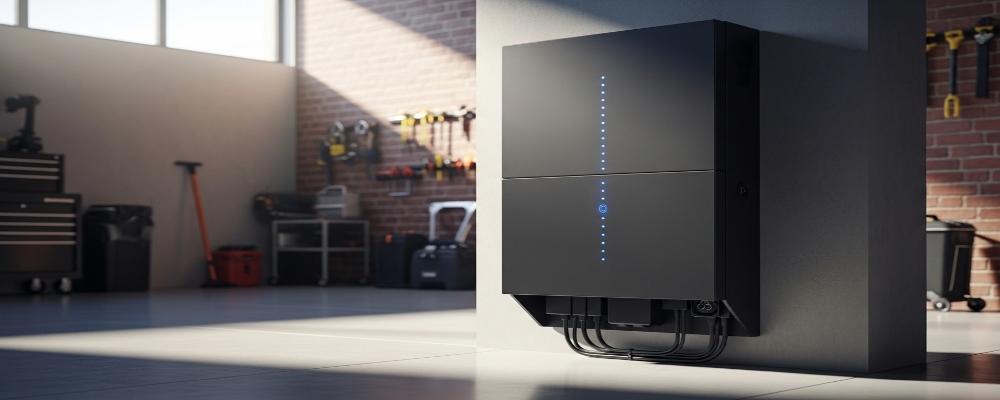
Heat is one of the biggest real-world concerns. A battery installed in a hot garage or tight utility space may lose capacity faster than the same battery installed in a cooler, stable location. Long-cycle chemistry still needs a good environment.
Use this checklist when judging the cycle-life number:
- Check the rated cycle life at a stated depth of discharge.
- Ask what capacity remains after the rated cycles.
- Confirm the recommended operating temperature range.
- Avoid settings that push constant full depletion.
- Make sure the battery management system can monitor and protect the pack.
A 6,000-cycle rating is useful, but it is not a promise that the battery will serve your home for 16 years. It works as a comparison metric when the test conditions are clear. Warranty terms are safer for financial planning.
For deeper protection details, review how BMS protection affects home energy storage systems.
How does depth of discharge change the cycle-life story?
Depth of discharge, or DoD, means how much of the battery’s capacity you use before charging again. Shallower use usually places less stress on the cells than repeated deep discharge.
For example, a 10 kWh battery discharged by 5 kWh has used 50% DoD. If it does the same thing the next day, those two half discharges can add up to one full equivalent cycle.
This is why usable capacity matters. A 5 kWh battery used deeply every night may work harder than a 10 kWh battery covering the same load more gently. Undersizing can make a long-cycle battery age faster in practice.
A good buying question is simple: will this battery be large enough to cover normal evening loads without being drained hard every day? If not, study the pack design and capacity options in VoltaLink’s LiFePO4 battery packs guide.
What shortens real cycle life in a home installation?
The biggest real-world cycle-life risks are heat, repeated deep discharge, high-current charging, poor sizing, and weak battery management. A long-cycle battery still needs the right operating environment and charge settings.
A long-life battery can still be used badly. If the pack is too small, it may be drained deeply every night. If the charging current is too aggressive, the system may create extra heat. If monitoring is weak, small cell imbalances can grow over time.
Use this installation checklist before trusting the headline cycle number:
- Place the battery in a temperature-stable location.
- Avoid direct heat, poor ventilation, or cramped spaces.
- Set charge and discharge rates within the manufacturer’s limits.
- Size the battery so daily use is not always near full depletion.
- Confirm the BMS tracks temperature, voltage, current, and cell balance.
- Keep expansion plans compatible with the original battery bank.
A hot garage example makes this clear. A homeowner may use only 0.7 cycles per day, which looks gentle on paper. But if the battery sits in high heat for years, real capacity can fade faster than the cycle table suggests.
For more detail on monitoring and control, see VoltaLink’s guide to integrated BMS units.
How should you compare cycle life with warranty years?
Cycle life tells you expected technical endurance, while warranty tells you what the manufacturer actually promises. If the math says 16 years but the warranty is 10 years, treat the extra years as possible upside, not guaranteed coverage.
A cycle rating helps compare batteries. A warranty helps judge risk. The two should support each other, but they do not mean the same thing. A battery can be rated for thousands of cycles and still have a shorter warranty period.
Pay close attention to performance warranty language. Some warranties define how much capacity should remain after a certain time or cycle count. Others focus on defects and may have exclusions for installation, temperature, misuse, or unsupported expansion.
| Spec or warranty item | What it tells you | What to ask |
|---|---|---|
| Cycle life | Technical endurance rating | At what DoD and temperature? |
| Warranty years | Coverage period | What happens after year 10? |
| Remaining capacity | End-of-life threshold | Is it 70%, 80%, or another value? |
| Usable capacity | Energy you can use safely | Is this gross or usable kWh? |
| Operating limits | Safe use range | What voids the warranty? |
Do not treat 6,000 cycles as free extra years. Treat it as a strong sign only when the warranty, DoD condition, and installation rules support the claim.
When is a long cycle life home battery worth paying for?
A long cycle life battery is worth paying for when you expect frequent cycling. Daily solar self-consumption, evening peak-rate use, and heavy backup rotation all benefit from a battery designed for repeated use.
Long cycle life is not always the first spec to chase. It matters most for daily solar cycling. Backup-only users should also care about calendar life, warranty years, usable capacity, discharge power, and whether the system can handle the loads that matter.
| Buyer situation | Is long cycle life a top priority? | Better decision focus |
|---|---|---|
| Daily solar charging and night use | Yes | 6,000+ cycles, DoD, usable capacity |
| Time-of-use rate shifting | Yes | Cycle life and inverter settings |
| Emergency backup only | Moderate | Warranty, standby health, discharge power |
| Small budget system | Depends | Avoid undersizing and deep cycling |
| Future expansion plan | Yes | Compatible modules and BMS support |
A battery used every evening needs different priorities than one used for rare outages. DOE’s advanced battery overview lists stationary storage and backup power as major use cases, but the right battery still depends on the home’s duty cycle and system design through its next-generation batteries overview.
If chemistry choice is still unclear, compare LiFePO4 vs lithium-ion before making the final call.
What should you ask before trusting a 6,000-cycle claim?
Ask for the test conditions behind the claim before you trust the number. A cycle-life rating is only useful when you know the DoD, temperature, charge rate, discharge rate, and remaining capacity at the end of testing.
Use this spec-sheet trust checklist:
| Question to ask | Why it matters |
|---|---|
| At what DoD was 6,000 cycles tested? | Deeper cycling can age cells faster |
| What capacity remains after 6,000 cycles? | End-of-life is usually based on reduced capacity |
| What temperature range applies? | Heat and cold affect real performance |
| What charge and discharge rate was used? | High current can add stress |
| Is the warranty based on years, cycles, or both? | Coverage may end before cycle life is exhausted |
| What does the BMS monitor? | Protection affects long-term reliability |
| Can the battery bank be expanded later? | Mixing old and new modules can create imbalance |
Do not confuse shipping compliance with long-term battery quality. Lithium batteries may need specific packaging and transport controls under 49 CFR 173.185, and some air transport rules involve stored-energy limits under PHMSA proposals. Those rules do not prove cycle life.
Getting the Next Step Right
A long cycle life home battery is a strong fit when your home will cycle storage often. Start with the simple math, then test the claim against your real use pattern, location, warranty, DoD, and BMS protection. A daily solar user should care deeply about cycle life. A backup-only user should weigh calendar life and warranty just as carefully.
Before buying, ask for the test conditions behind the 6,000-cycle number. Then compare the battery against your actual home load, not only the marketing sheet.
Frequently Asked Questions
What are the best home solar battery systems for long cycle life?
The best long-cycle systems usually use LiFePO4 chemistry, publish cycle-life conditions, and include a strong BMS. For daily solar use, prioritize cycle life, usable capacity, warranty terms, and inverter compatibility together.
What’s the lifespan of a home battery storage system?
A quality lithium home battery often lasts around 10 to 15 years in normal residential use, but cycle math can suggest longer under lighter cycling. Real life depends on temperature, DoD, BMS settings, and warranty limits.
Does frequent discharging hurt the battery?
Frequent discharging is not automatically bad if the battery is designed for daily cycling. The risk rises when discharge is too deep, temperatures are high, or charging current is too aggressive.
How does heat affect my solar storage?
Heat can shorten battery life by speeding up cell aging and forcing the BMS to limit charging or discharging. A shaded, ventilated, temperature-stable location helps protect long-term capacity.
Can I add more batteries to an old bank?
Adding new batteries to an old bank can create imbalance because older modules may have lower capacity or higher resistance. It is safer to plan expansion early and follow the manufacturer’s compatibility rules.
Is one cycle per day too much for a home battery?
One cycle per day is normal for many solar self-consumption homes if the battery is rated for daily cycling. It becomes risky when the system is undersized, overheated, or repeatedly drained beyond the recommended DoD.

-

 OEM Residential Energy Storage Solutions: Passive vs. Active Cell Balancing
2026-09-30
-
 Smart Home Battery with BMS Communication: Cybersecurity and BMS Safety
 -
 10kWh Home Battery Backup System: Is 90% DoD Better for Daily Solar Storage?
2026-09-29
-
 Integrated Home Energy Storage System 150–430V MPPT Design
2026-09-28
-
 LiFePO₄ Residential Backup Battery SOC Accuracy in Parallel Systems
Share this:





.svg)






-899.svg)


