




LiFePO4 Solar ESS Battery: What Makes Modular Lithium Outperform Traditional Lead-Acid
Lead-acid batteries have been the primary option for energy storage for off-grid solar systems, backup power, and industrial applications for many decades. But the LiFePO4 Solar ESS Battery is rapidly rewriting that rulebook—not because of marketing hype, but because the engineering numbers no longer lie.
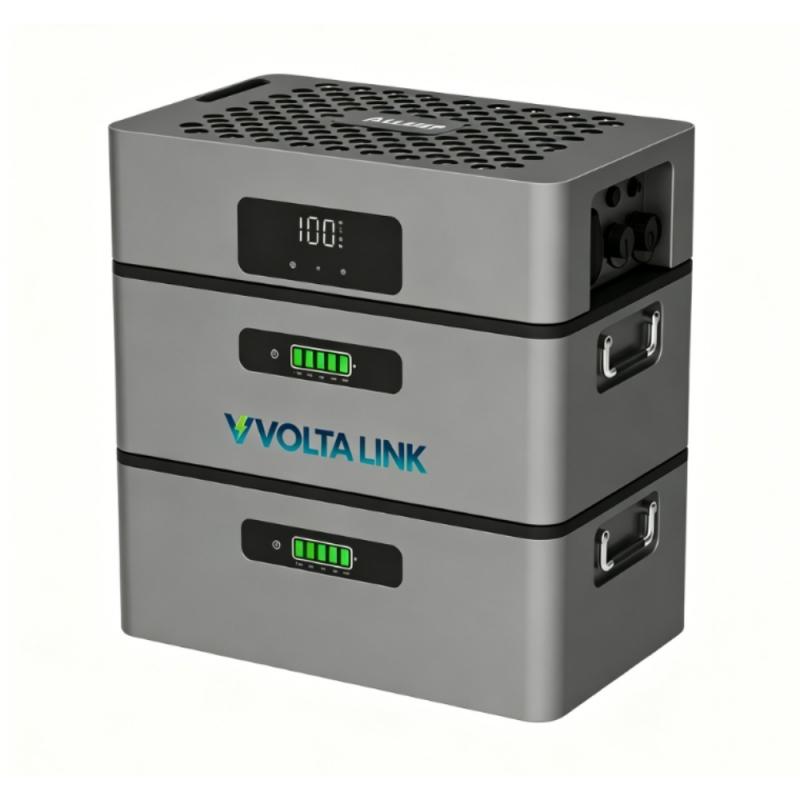
The shift isn’t subtle. Across residential solar, telecom infrastructure, and light commercial setups, the conversation has moved from “is lithium worth it?” to “how fast can we transition?” The reasons are grounded in measurable performance metrics that directly impact total cost of ownership, system reliability, and end-user satisfaction.
Below is a side-by-side analysis of how modular LiFePO4 technology actually compares to traditional lead-acid across the five dimensions that matter most for procurement and long-term deployment.
Depth of Discharge: You Only Get Half of What You Pay for With Lead-Acid
The most deceptive number on a lead-acid battery spec sheet is its rated capacity. Here’s the reality:
• Lead-acid batteries: Manufacturers universally recommend a 50% Depth of Discharge (DoD) to prevent permanent sulfation damage. A 10 kWh lead-acid bank delivers just 5 kWh of usable energy. To get 10 kWh usable, you need to buy 20 kWh of rated capacity.
• LiFePO4 Solar ESS Battery: Modern LiFePO4 chemistry safely supports 80–95% DoD without meaningful degradation. A 10 kWh lithium system delivers 8–9.5 kWh of usable energy from the same nameplate rating.
• The purchasing implication is direct: a LiFePO4 Solar ESS Battery delivers roughly twice the usable energy per rated kWh as traditional lead-acid. That means fewer modules, less space, and lower hardware cost for the same operational autonomy.
Cycle Life: Replace Three Times, or Replace Once
Batteries age by cycles, not years alone. For daily-cycling applications—solar self-consumption, backup power, peak shaving—cycle life is the single biggest driver of long-term cost.
Cycle life comparison:
• Flooded lead-acid: 300–500 cycles
• AGM / gel lead-acid: 400–1,000 cycles
• LiFePO4 Solar ESS Battery: 4,000–8,000+ cycles
Put into real-world terms: a lead-acid bank used daily may need replacement every 2–4 years. Over a 10-year project lifecycle, that means purchasing the battery system two or three times. A quality LiFePO4 system under the same conditions will run for 10–15 years on a single installation.
By the numbers: In most commercial ROI models, LiFePO4 becomes 30–50% cheaper than lead-acid over a 10-year horizon when replacement, maintenance, and downtime are factored in.
Efficiency: Every Charge Cycle Wastes Energy Differently
Round-trip efficiency determines how much of your solar generation actually reaches your appliances after passing through the battery.
• Lead-acid: 70–85% round-trip efficiency. Heat loss of 20-30% occurs on every charge and discharge cycle.
• LiFePO4 Solar ESS Battery: 90–98% round-trip efficiency. Minimal waste heat. In high-throughput storage applications, this 10–15% efficiency advantage can mean hundreds of kilowatt-hours of additional usable energy per year.
• What this means for purchasers: A LiFePO4 system effectively delivers more usable power from the same solar array size, reducing the required PV oversizing that lead-acid demands. Or, said differently, staying with lead-acid means accepting a built-in energy tax on every cycle.
Maintenance: Hidden Labor Costs Add Up Fast
Lead-acid batteries are not “set and forget.” The operational overhead is significant:
• Regular water refilling (weekly in summer for flooded types)
• Equalization charges to prevent sulfation
• Terminal cleaning and corrosion inspection
• Ventilated charging rooms due to hydrogen gas emission
• Professional watering services (averaging ~£235 per battery per year).
LiFePO4 technology eliminates virtually all of this. The battery management system (BMS) handles cell balancing automatically. There is no electrolyte to refill, no acid to leak, no hydrogen to vent. In industrial fleet operations, lead-acid systems report 18% downtime for watering and equalization versus just 2% for LiFePO4 equivalents.
For facility managers and procurement teams, those maintenance hours show up as labor costs and operational inefficiency, which is often overlooked during a price comparison focused on upfront costs.
Safety: No Acid, No Hydrogen, No Ventilation Required
Safety considerations vary greatly between the different chemistries:
• Lead-acid batteries produce hydrogen gas while charging and require forced ventilation and explosion-proof electrical fittings within the enclosure. Sulfuric acid can cause spills that are a hazard and cause corrosion which is a danger to personnel.
• LiFePO4 chemistry is inherently thermally stable. Unlike nickel-based lithium chemistries, LFP does not undergo thermal runaway under normal operating conditions. No gas emission means no ventilation requirements. No liquid electrolyte means no acid spill risk.
For indoor installations, telecom shelters, or residential energy storage, these safety distinctions often dictate which chemistry can be legally or practically deployed. The LiFePO4 Solar ESS Battery is increasingly the only permitted option for many indoor applications.
Weight and Space: Modularity Changes the Installation Equation
Energy density: LiFePO4 stores roughly the same usable capacity in one-third to one-quarter the physical volume and weight of equivalent lead-acid. A 15 kWh usable system may weigh 120–130 kg for LiFePO4 versus 300–500 kg for lead-acid.
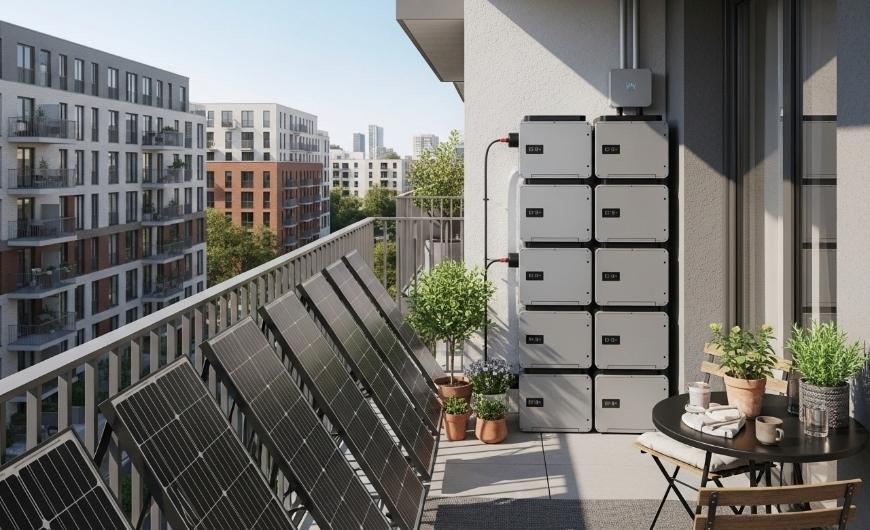
Modular design: 2026 LiFePO4 systems are built on modular architectures—stackable battery modules that scale from 2.4 kWh to over 50 kWh without replacing the core inverter or rewiring the installation.
This type of modular approach directly captures purchasing trends of 2026: customers prefer systems that add on as needed to meet energy demands rather than needing to be replaced entirely within a few years.
The 2026 Verdict
Traditional lead-acid batteries still have two advantages: lower upfront purchase price and broader compatibility with legacy charging systems.
But for any application requiring daily cycling, long service life, minimal maintenance, or indoor installation, a LiFePO4 Solar ESS Battery delivers measurably superior total value. The usable capacity advantage alone—roughly 2x the delivered energy per rated kWh—closes much of the upfront price gap. Add the 2–3x longer lifespan, 10-15% higher efficiency, and near-zero maintenance, and the economic case becomes decisive.
For B2B buyers, the transition is already happening. As 2026 modular battery solutions become the new standard across residential energy storage, telecom backup, and light commercial microgrids, lead-acid is moving from “the standard” to “a legacy option” — and the pace of that shift is accelerating.
Quick FAQs
Q: Is it true that LiFePO4 solar ESS batteries are safer for lead-acid batteries from an indoor application potential?
A. Yes. The usable LiFePO4 chemistry does not emit hydrogen gas and does not have corrosive liquids like battery acid, which means no ventilation, acid spill containment, and transport needs that are typically associated with lead-acid batteries.
Q. Can different-sized battery modules from different manufacturers be combined?
A. Absolutely. For best results and proper BMS communication, battery modules from one manufacturer should be used. VoltaLink’s modular system offers system extension with same-type modules only.
Q. A typical balcony system. How many 2400Wh modules should be used?
A. To supply power to a refrigerator, a router, lights, and other devices that run from 4 to 6 hours, one module (2400Wh) is needed. For other systems that run in the evening, 2 or 3 modules are recommended.
Q. Are the appropriate operating temperatures for a LiFePO4 system?
A. The internal heating systems are only useful for active charging of batteries if the internal temperature is kept above 0°C (32°F). The LiFePO4 system can be discharged even below cold ambient temperatures, while lead-acid systems suffer much more.
Q. What is the right inverter voltage for a scalable LiFePO4 system?
A. For 2-15kWh systems, the right configuration is 48V being Demanded and supported safety, and a higher-level inverter is the most comfortable option.

-

 OEM Residential Energy Storage Solutions: Passive vs. Active Cell Balancing
2026-09-30
-
 Smart Home Battery with BMS Communication: Cybersecurity and BMS Safety
 -
 10kWh Home Battery Backup System: Is 90% DoD Better for Daily Solar Storage?
2026-09-29
-
 Integrated Home Energy Storage System 150–430V MPPT Design
2026-09-28
-
 LiFePO₄ Residential Backup Battery SOC Accuracy in Parallel Systems
Share this:





.svg)






-899.svg)


