




5kw Server Rack Battery: What Can It Actually Power in a Base Station?
For telecom engineers and procurement professionals, 5kw server rack batteries raise an important question: what is real limit of the capacity that can be supported with 5kw of backup power?
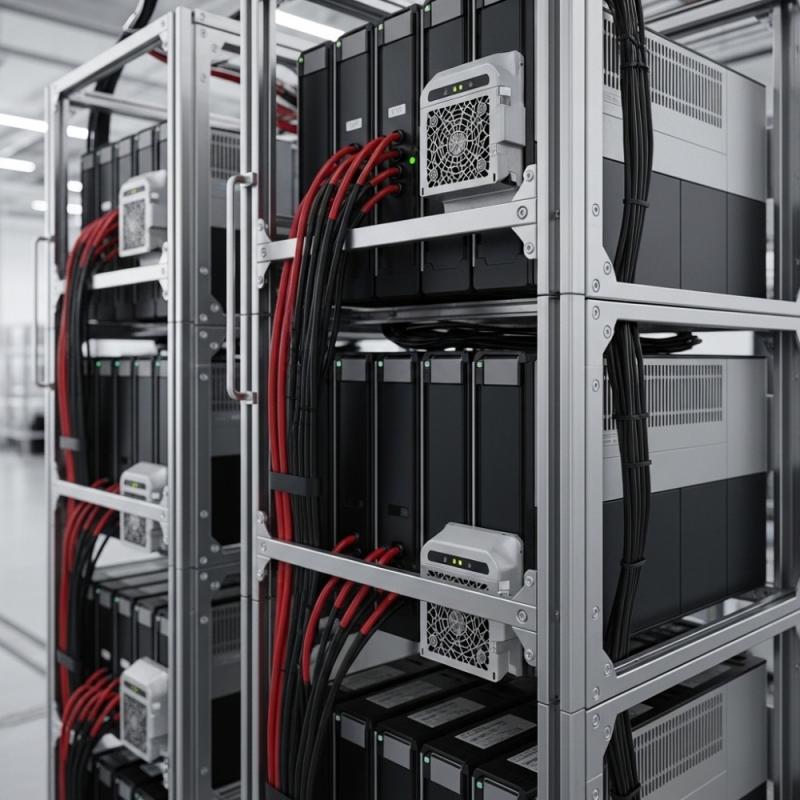
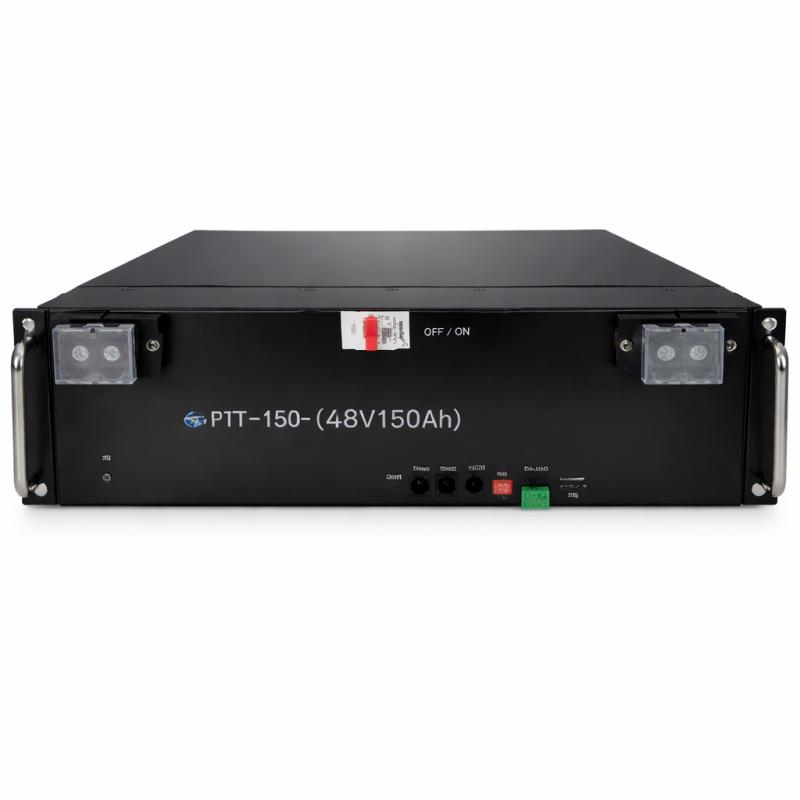
In essence, this is the case with 5G networks that require the most power across all generations for the sizing of systems, budget planning, and the fulfillment of reliability. The VoltaLink 48V 150Ah rack-mount lithium batteries are tailored for telecom and data center backup and uninterrupted power supply applications. What is the answer to this question?
Let’s breakdown the numbers.
What are Continuous and Peak Output?
Before estimating what devices and equipment 5kw of backup power can support, we need to understand the meaning of continuous rated power compared to Peak Output.
•Continuous (5kw at 48V): This is the limit of what the server rack battery is capable of supporting load empirically for an extended period. This is important for backup applications.
•Peak Output ( 150A or is going to be 5kw): The 5kw server rack battery is capable of supporting temporary load surges caused by inductive loads. These loads of the server rack battery is going to cause direct damage. VoltaLink’s BMS is engineered to accommodate these momentary demands.
For backup power planning, always rely on the continuous rating. The 5kw figure is the baseline you can count on hour after hour.
What Equipment Can 5kW Actually Run in a Base Station?
A typical telecom site contains multiple power-consuming components. Here is a realistic breakdown based on industry data.
•Remote Radio Units (RRUs) draw approximately 150 watts each in normal operation—and up to double that at peak load for newer 5G AAUs. A 3-sector 4G site typically operates 3 RRUs, totaling around 450–600W.
•Baseband Units (BBUs) consume roughly 200 watts per unit, though higher-capacity configurations may draw up to 300 W.
•Transmission equipment—such as microwave backhaul systems—typically draws around 300W, with optical transport gear requiring 100–200W.
•Site ancillary systems include DC lighting (approx. 25W) and climate control in the shelter, which can push total load significantly higher.
Add it all up. A fully loaded 4G site with three RRUs, one BBU, transmission gear, and basic ancillaries typically operates in the 1,000–1,500W range. This means a VoltaLink 5kw server rack battery could theoretically support such a site for over three hours—and that is before accounting for the superior usable capacity of LiFePO₄ chemistry (up to 90% DoD, compared to only 50% for lead-acid).
What About 5G Sites? The 5kw Server Rack Battery Still Fits
5G base stations are a different story. A single 5G AAU can draw around 1,127W at full load—nearly four times that of a 4G RRU—and a fully loaded 5G site (3 sectors, plus BBU and transmission) can reach 3,700W or more.
•On first glance, it seems 3.7kW pushes close to 5kW very quickly. But operators rarely run 5G sites at 100% load continuously. Network traffic planning follows predictable patterns, and dynamic power management features—such as automatic shut-down of idle AAU channels—have been proven to reduce AAU consumption to as low as 5W during low-traffic periods.
•Practical daily operation: A typical 5G site drawing 2,500–3,000W under normal busy-hour traffic falls comfortably within the 5kw server rack battery output capacity.
•Scalable capacity: VoltaLink’s modular design—standard 19-inch rack format with support for multiple units in parallel—means a single 5kw battery can start as your primary backup, and additional modules can be added later as site loads increase.
•A single VoltaLink 5kw server rack battery paired with one additional unit (10kw total) safely supports even the most demanding fully loaded 5G sites—with room to spare.
Calculating Backup Runtime: The Real–World Formula
The engineering formula for backup runtime is straightforward:
Runtime (hours) = (Battery Capacity (Ah) × Voltage (V) × Efficiency) / Load Power (W)
VoltaLink’s 5kw server rack battery at 48V 150Ah delivers approximately 7.2kWh of stored energy (48V × 150Ah). Applying a realistic system efficiency of 90% yields about 6.5kWh of usable energy before hitting depth of discharge limits.
•At 1,000W load: Approximately 6.5 hours of backup runtime.
•At 1,500W load: Approximately 4.3 hours of backup runtime.
•At 3,000W load: Approximately 2.1 hours of backup runtime.
These calculations assume LiFePO₄ batteries can deliver up to 90% of rated capacity, compared to just 50% for lead-acid. This is one of the biggest and most under-appreciated advantages of lithium technology.
Why Over–Specifying Backup Power Wastes Money
A common mistake among procurement teams is assuming “more power is always better.” Passive oversizing not only inflates upfront capital expenditure (CAPEX) but also introduces hidden inefficiencies.
•Higher upfront cost: Each additional kW of rated capacity adds significant per-unit expense.
•Increased footprint: Larger-capacity units may not fit standard 19-inch rack constraints.
•Extended grid outage readiness due to longer charging windows: Large batteries take longer to fully charge.
Diminishing returns: For typical hub sites requiring 4–6 hours of backup, a single VoltaLink 5kw server rack battery paired with intelligent load-shedding (prioritizing critical transmission over non-essential lighting, for instance) achieves 90% of the benefit of a much larger system at a fraction of the cost.
A 5kw server rack battery from VoltaLink hits the sweet spot: enough continuous capacity to fully support a standard telecom site through typical outage durations, without the excessive price tag and physical footprint of higher-wattage systems.
The Bigger Picture: Why 5kw Server Rack Lithium is the Industry Lens for 2026
The surge in 5G deployment has catalysed explosive growth in telecom energy storage markets. According to QYResearch, the global market for telecommunications distributed energy and storage systems—powered almost entirely by lithium batteries—is expected to grow from US 9.9billionin2025toUS48.4 billion by 2032, at a CAGR of 25.8%. Meanwhile, the global communication LiFePO₄ battery market alone reached approximately US 16.6billionin2025andisprojectedtohitUS27.8 billion by 2032.
Lithium batteries such as the VoltaLink 5kw server rack battery already command nearly 48% of new telecom backup capacity installations, rapidly displacing lead-acid as the technology of choice for mission-critical communications infrastructure. 5G base stations, in particular, demand high energy density, compact size, and light weight—all attributes where LiFePO₄ excels.
For operators migrating from legacy VRLA to modern lithium systems, the 5kw server rack battery is the ideal entry point: it delivers immediate results in power density, cycle life, and total cost of ownership without forcing a complete infrastructure redesign.
The Bottom Line
A 5kw server rack battery is not an abstract specification—it is a practical, scalable, and cost-effective backup power solution for the vast majority of telecom sites in operation today. From 3-sector 4G base stations drawing 1,500W to moderately loaded 5G macros operating under dynamic power management, 5kw provides the headroom, reliability, and long-cycle life needed to keep networks running when the grid goes down.
And when your power demands inevitably grow, VoltaLink’s modular rack design means you simply add another 5kw unit. No forklift upgrade. No site re-engineering. Just scalable, dependable backup power delivered in a standard 19-inch form factor, backed by intelligent BMS protection and global safety certifications.
The question is not whether a 5kw server rack battery can power your base station. The question is: why would you settle for anything less?
Opinions and Answer About the 5kw Server Rack Battery
Q1: Can I connect multiple 5kw server rack batteries in parallel?
Yes. The VoltaLink 5kw server rack battery allows parallel connection. You can add more batteries to meet the increasing demand.
Q2: How long does a 5kw server rack battery take to recharge?
The recharge time depends on the charger current. For a 50A charging rate, a fully discharged 150Ah unit can take around three hours to exceed 90% capacity.
Q3: Does the 5kw server rack battery work with existing lead-acid chargers?
The 5kw server rack battery does not work with lead-acid chargers. The VoltaLink 5kw server rack battery requires a lithium-compatible charger or rectifier.
Q4: What is the real-world lifespan of this battery in a base station?
The battery can cycle once a day, 80% DOD, 5kw server rack battery can last 10 to 12 years with a service life of more than 6000 cycles.
Q5: Is the 5kw rating for continuous or peak output?
The rating for VoltaLink battery is continuous, meaning it can handle surges of up to 7.2kw for peak loads without the BMS tripping.

-

 OEM Residential Energy Storage Solutions: Passive vs. Active Cell Balancing
2026-09-30
-
 Smart Home Battery with BMS Communication: Cybersecurity and BMS Safety
 -
 10kWh Home Battery Backup System: Is 90% DoD Better for Daily Solar Storage?
2026-09-29
-
 Integrated Home Energy Storage System 150–430V MPPT Design
2026-09-28
-
 LiFePO₄ Residential Backup Battery SOC Accuracy in Parallel Systems
Share this:






.svg)






-899.svg)


