




Retrofitting a Battery to Your Existing Solar PV
A hybrid solar battery retrofit lets you add storage to an existing solar PV system without always replacing the original inverter. AC-coupled batteries are usually the simplest path for healthy 2 to 7-year-old systems. Replace the inverter only when it is aging, undersized, failing, or when a DC-coupled hybrid design is clearly worth the extra permit and interconnection work.
If your solar panels still perform well, adding a battery can improve backup power, evening self-use, and energy control without rebuilding the whole system. The risk is choosing hardware before checking your inverter, utility tariff, panel space, and backup needs. For broader system planning, use VoltaLink’s home energy storage system guide after you understand the retrofit path.
Can you add a battery to an existing solar PV system?
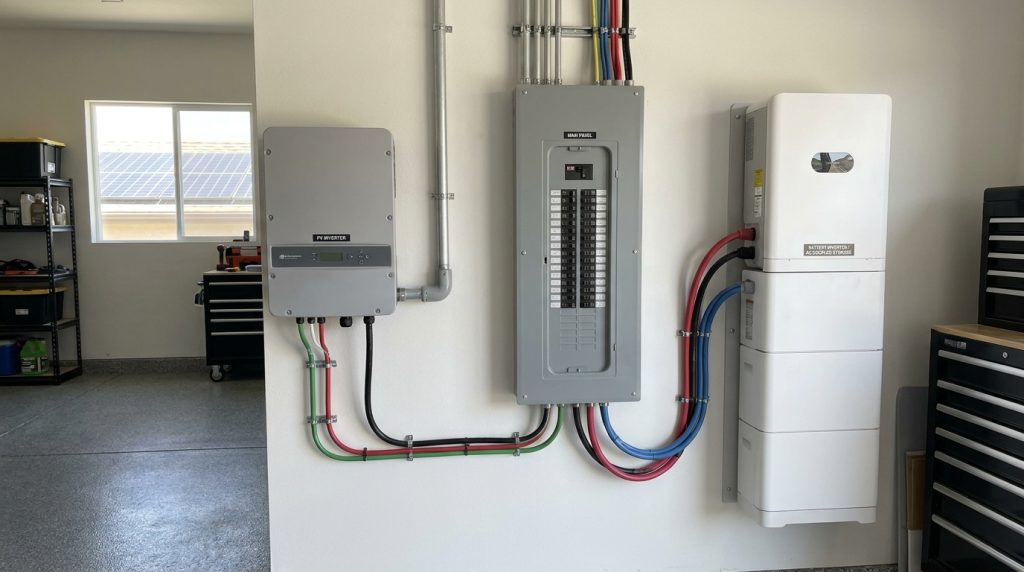
Most existing solar PV systems can add a battery, but the right method depends on the inverter, panel capacity, electrical panel space, and utility rules. AC-coupling is usually the simplest retrofit path when the original solar inverter still works.
A battery retrofit adds storage to a system that already has solar panels. In many homes, the panels and original solar inverter can stay in place. The battery is added as a separate system that charges from solar power, grid power, or both, depending on the design.
The main question is not whether a battery can be added. The better question is which path creates the least disruption. Solar Victoria explains that adding storage may use a second battery inverter or a hybrid inverter. That choice affects cost, wiring, backup options, and permits.
What should you check before choosing a retrofit path?
Start by checking the details of your existing solar system. A good installer should not quote a battery until they understand your PV array, inverter, main panel, utility tariff, and backup goals.
| What to check | Why it matters |
|---|---|
| PV installation year | A 2-year-old system is different from a 7-year-old system near inverter replacement age. |
| Solar array size | The battery should match daily solar production and evening load. |
| Inverter brand and model | This decides whether AC-coupled storage or inverter replacement makes sense. |
| Inverter warranty status | A healthy inverter under warranty is usually worth keeping. |
| Main electrical panel capacity | Limited breaker space or backfeed capacity can change the design. |
| Current net-metering plan | Legacy tariffs may need special paired-storage rules. |
| Backup circuits | A battery may protect only essential loads unless sized for whole-home backup. |
| Monitoring access | The installer may need inverter data to size storage correctly. |
For example, a homeowner with a 4-year-old 6.6 kW PV system and a stable string inverter may be a strong AC-coupled retrofit candidate. A homeowner with a 7-year-old inverter near warranty end should compare battery retrofit against hybrid inverter replacement.
Is AC-coupling the best retrofit option for your home?
AC-coupling is usually the most retrofit-friendly choice because the battery connects on the home’s AC side and can work beside the existing solar inverter. Choose it when the PV inverter is healthy and the goal is backup or evening self-consumption.
In an AC-coupled retrofit, the solar inverter keeps converting panel power into household AC power. The battery system has its own inverter, so it can charge and discharge on the home’s AC side. This setup often avoids major changes to the solar array.
AC-coupling is not the most efficient architecture, because power may convert more than once. Still, it is often the best retrofit choice when the existing PV inverter is healthy and the homeowner wants lower disruption. For a deeper system-specific view, see VoltaLink’s AC-coupled ESS guide.
| Choose AC-coupling when | Be careful when |
|---|---|
| The solar inverter still works well | The main panel has limited space |
| You have microinverters or a string inverter | You need full home backup |
| You want to avoid PV rewiring | Utility export rules are strict |
| You mainly want backup and evening self-use | The inverter is already near end-of-life |
EnergySage explains that AC-coupled batteries are often easier to add to existing systems. Solar Victoria also describes AC-coupled and hybrid inverter paths for adding storage.
When should the existing PV inverter be replaced?
Replace the existing PV inverter only when it is aging, undersized, failing, out of warranty, or when the homeowner wants a DC-coupled design. If the inverter is healthy, AC-coupled storage is usually the lower-disruption retrofit path.
Replacing the inverter just to sell a cleaner hybrid system is not always justified. It makes sense when the inverter is near end-of-life, cannot support the design, or when the homeowner wants tighter control through a hybrid inverter.
A hybrid inverter can manage solar panels, battery charging, and grid interaction in one system. That can improve system control, but it also creates a bigger electrical change. The project may need more design work, a permit update, and utility review.
| Situation | Better path |
|---|---|
| 2 to 4-year-old inverter, stable output | Keep inverter and add AC-coupled storage |
| 5 to 7-year-old inverter, warranty ending | Compare AC retrofit with hybrid replacement |
| Inverter is failing or undersized | Replace with a suitable hybrid inverter |
| Homeowner wants DC-coupled design | Plan inverter replacement |
| Roof, wiring, and panel layout are outdated | Consider full system redesign |
If replacement is on the table, review hybrid inverter sizing before accepting a quote. The inverter must match the PV array, battery power, backup load, and utility limits.
Will a retrofit battery keep the lights on during an outage?
A retrofit battery only provides outage power if the system is designed for backup operation. The battery, inverter, transfer equipment, and protected-load panel must be configured so the home disconnects safely from the grid.
A standard grid-tied solar system shuts down during a blackout for safety. This prevents solar power from feeding the grid when utility workers may be repairing lines. A battery changes the picture only when the system can isolate your home and power selected circuits.
A battery is not automatically a blackout solution. It becomes backup power only when the design includes the right inverter, islanding function, transfer setup, and protected-load plan. The U.S. Department of Energy notes that storage can help use solar energy later and support resilience, but the setup matters.
A practical backup plan should define:
- Which circuits stay on
- How many hours of backup you expect
- Whether the battery can restart during an outage
- Whether large loads like air conditioning are included
- How the system behaves after the grid returns
For most retrofit homes, an essential-loads panel is more realistic than whole-home backup. This may cover the refrigerator, lights, Wi-Fi, outlets, and a few key appliances. Learn more about backup behavior in VoltaLink’s guide to hybrid ESS modes.
Do you need a new permit or utility interconnection update?
Most battery retrofits need updated permits and utility interconnection review because the electrical system changes. Ask the installer whether the project changes export behavior, metering, inverter capacity, or tariff status before work begins.
A battery retrofit is not just a plug-in upgrade. It changes how power flows through the home, how backup circuits operate, and how the utility sees the system. That usually means a permit re-pull, updated electrical drawings, inspection, and utility paperwork.
A strong installer should explain this before you sign. If the quote skips permits, interconnection, export settings, or tariff review, pause the project. The hardware may look correct, but the paperwork can decide whether the system is approved.
Permit re-pull checklist
| Permit item | What the installer should confirm |
|---|---|
| Updated one-line diagram | Shows PV, battery, inverter, disconnects, and panel connection |
| Battery location | Meets clearance, access, and safety rules |
| Load calculation | Confirms protected circuits and panel limits |
| Main panel space | Checks breaker position, busbar rating, and backfeed limits |
| Rapid shutdown or disconnects | Confirms safe shutdown and service access |
| Inspection scope | Confirms what the authority having jurisdiction will review |
Utility interconnection checklist
| Utility item | What to verify |
|---|---|
| Export behavior | Whether the battery can export or must be limited |
| Metering | Whether meter changes are needed |
| Anti-islanding | Confirms safe grid disconnect during outages |
| Inverter capacity | Checks whether changes affect approval |
| Paired-storage form | Confirms storage is linked to the existing PV account |
| Tariff impact | Confirms whether net-metering status is protected |
GreenLancer and Duracell Power Center both point to permits, interconnection, and design review as part of storage retrofits. Treat these steps as part of the project, not as afterthoughts.
How do you protect your original net-metering status?
To protect legacy net-metering status, confirm the utility’s paired-storage rules before equipment changes. A battery may remain eligible under the existing NEM program if it meets tariff requirements, but inverter size, export behavior, and metering can matter.
Net-metering grandfathering can be more valuable than a faster installation. If your solar system is on an older tariff, changing equipment without checking the rules may create problems. Confirm your current plan, system approval date, and paired-storage rules before choosing hardware.
The CPUC has stated that its solar tariff modernization did not affect existing rooftop solar customers and maintained current compensation rates for those customers. Southern California Edison also says new storage added to a previously approved NEM generator can remain eligible under the respective NEM program if tariff requirements are met.
Questions to ask the utility or installer
| Question | Why it matters |
|---|---|
| What NEM or tariff plan am I on? | You need the exact plan before design starts. |
| Is this a paired-storage application? | It helps connect the battery to the existing PV account. |
| Will the battery export to the grid? | Export behavior can affect utility review. |
| Does inverter capacity change? | A larger inverter may trigger extra review. |
| Will the meter need replacement? | Metering changes can affect approval timing. |
| Can I get written tariff confirmation? | Verbal answers are not enough for a costly project. |
For example, a NEM 2.0 homeowner with a healthy PV system may choose an AC-coupled battery with export controls. The goal is storage without changing the approved solar generator more than needed. The installer should confirm this with the utility before installation.
Retrofit battery or full system replacement: which path makes sense?
Choose a retrofit when the existing PV system is healthy and the main goal is storage. Choose inverter replacement when the inverter is near end-of-life. Choose full replacement only when major roof, wiring, capacity, or compatibility problems make patching inefficient.
Use the decision tree below before accepting a full replacement quote. A full redesign can be the right call, but it should not be the default answer for every battery request.
| Decision point | If yes | If no |
|---|---|---|
| Is the PV array producing normally? | Keep evaluating retrofit | Inspect panels, wiring, and roof first |
| Is the inverter healthy and under warranty? | Consider AC-coupled retrofit | Compare hybrid inverter replacement |
| Do you mainly need evening self-use or essential backup? | AC-coupled battery may fit | Size for whole-home or advanced backup |
| Does the utility allow paired storage under your tariff? | Continue with retrofit design | Resolve tariff risk before hardware selection |
| Is the main panel ready for ESS connection? | Move to quote review | Plan panel work or service upgrade |
| Are roof, wiring, and equipment outdated? | Consider full replacement | Avoid unnecessary rebuild |
Here are practical outcomes:
| Homeowner scenario | Best-fit path |
|---|---|
| 4-year-old 6.6 kW PV, healthy inverter, fridge and lights backup | AC-coupled battery with critical-loads panel |
| 7-year-old inverter, warranty ending, future whole-home backup goal | Compare AC retrofit with hybrid inverter replacement |
| NEM 2.0 customer worried about tariff changes | Confirm paired-storage rules before design |
| Homeowner expects panels to run everything in a blackout | Redesign expectations around protected loads |
| Main panel has limited breaker space | Check panel upgrade or alternate connection first |
A DC-coupled storage design can make sense when the inverter is being replaced anyway. It is less attractive when the existing inverter is young, stable, and already doing its job.
What should you ask the installer before signing?
Ask direct questions before approving a battery retrofit. A good quote should explain what stays, what changes, what gets backed up, and how permits and utility paperwork are handled.
| Question | Good answer should include |
|---|---|
| Will my current inverter stay or be replaced? | Clear reason, not a generic sales preference |
| Why did you choose AC-coupled or hybrid design? | Fit with inverter age, panel layout, and backup goal |
| Which circuits will be backed up? | Named loads, not vague “whole-home ready” wording |
| Will this affect my net-metering plan? | Tariff check and paired-storage explanation |
| Who handles permit and inspection? | Installer responsibility and timeline |
| What utility forms are needed? | Interconnection or storage application details |
| What happens if the main panel is constrained? | Panel review, line-side option, or upgrade plan |
| What monitoring will I see? | Battery state, solar production, load, and backup status |
Do not approve a quote that ignores the original PV design. The installer should review the inverter model, system size, main panel, monitoring data, and utility account before giving a final recommendation.
Getting the Next Step Right
A hybrid solar battery retrofit is usually a smart path when your panels are working well and your inverter is still useful. Start with your system documents, current utility tariff, backup goals, and main panel details. Then ask installers to justify the design in writing.
Choose AC-coupling when you want a lower-disruption upgrade. Choose hybrid inverter replacement when the old inverter is the weak point. Choose full replacement only when the existing system has deeper roof, wiring, or compatibility issues.
Frequently Asked Questions
Can I add a battery to my existing solar system?
Yes, most existing solar systems can add a battery. The main choice is whether to add an AC-coupled battery beside the current inverter or replace the inverter with a hybrid model.
Do solar batteries work in blackouts?
Solar batteries work in blackouts only when the system is designed for backup power. A standard grid-tied solar system still shuts down during outages unless the battery and inverter can safely isolate the home from the grid.
How long do solar batteries last?
Most residential solar batteries are sold with long service-life expectations and warranty periods, but actual life depends on chemistry, cycling, temperature, installation quality, and software settings. Ask for the usable capacity warranty, not only the headline lifespan.
Are solar batteries worth the cost?
Solar batteries are worth it when backup power, time-of-use savings, weak export credits, or resilience matter more than simple payback. They are less useful when grid power is cheap, outages are rare, and the home exports little excess solar.
Can I keep my existing solar inverter?
You can often keep the existing solar inverter by using an AC-coupled battery with its own battery inverter. Replacement is more likely when the inverter is old, undersized, failing, or when a DC-coupled hybrid system is preferred.
Will adding a battery affect my net-metering plan?
It can, depending on your utility tariff, export settings, inverter capacity, and metering rules. Confirm paired-storage requirements before approving the design, especially if your system is on a legacy NEM or grandfathered tariff.
What if my original solar installer does not install batteries?
You can use a qualified storage installer, but they must review the original PV design, inverter, main panel, permits, utility account, and monitoring platform. Do not approve a quote that ignores the existing system details.

-

 OEM Residential Energy Storage Solutions: Passive vs. Active Cell Balancing
2026-09-30
-
 Smart Home Battery with BMS Communication: Cybersecurity and BMS Safety
 -
 10kWh Home Battery Backup System: Is 90% DoD Better for Daily Solar Storage?
2026-09-29
-
 Integrated Home Energy Storage System 150–430V MPPT Design
2026-09-28
-
 LiFePO₄ Residential Backup Battery SOC Accuracy in Parallel Systems
Share this:





.svg)






-899.svg)


