




500kW Battery Energy Storage System for Commercial and Industrial Sites
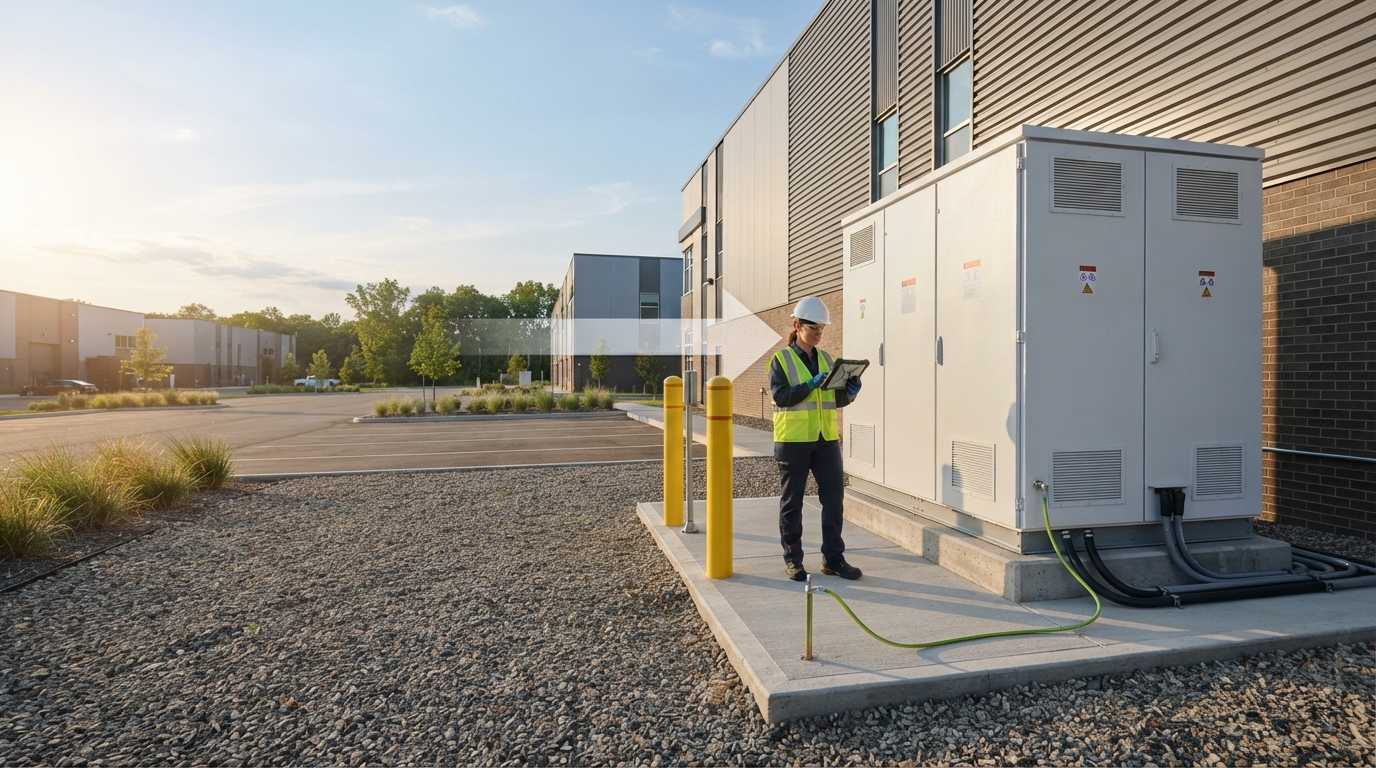
A 500 kW battery energy storage system (BESS) is a commercial-scale energy storage asset that can charge and discharge electricity at a rated power of 500 kilowatts. The power rating tells you how quickly energy can flow in or out of the battery. It does not, by itself, tell you how much energy the system can store or how long it can sustain that output. Those answers depend on the system’s energy capacity in kilowatt-hours (kWh) or megawatt-hours (MWh), the depth of discharge permitted, and the efficiency of the power conversion equipment.
For commercial and industrial facility managers, engineers, and project developers, the distinction between power (kW) and energy (kWh) is the first step toward a system that actually fits your load profile. When a 500 kW system is delivered as an integrated containerized BESS, the broader architecture and grid-response strategy are covered in our guide to Battery Energy Storage Container: Smart Energy Control for Real-Time Grid Response. This page focuses on the 500 kW configuration decision itself: what the rating means, what configurations are available, and how to evaluate a system before you buy.
What Does “500 kW” Mean in a Battery Energy Storage System?
A battery storage system has two fundamental specifications. Power, measured in kilowatts (kW), is the rate at which the system can deliver or absorb electricity. Energy, measured in kilowatt-hours (kWh) or megawatt-hours (MWh), is the total amount of electricity stored in the battery. A 500 kW rating describes the system’s power capability, but the same power rating can be paired with very different energy capacities depending on the size of the battery bank.
Energy-to-power ratio, sometimes called storage duration, is how the industry links these two values. A 500 kW system with 1,000 kWh of storage has a nominal duration of two hours at full power. The National Renewable Energy Laboratory’s commercial battery storage analysis uses this ratio as a core performance classification and models commercial systems across the 100 kW to 2,000 kW range.
Power vs Energy: Why kW and kWh Are Different
Think of power as the flow rate and energy as the tank size. A 500 kW system pushes electricity at a rate of 500 kilowatts, just as a pump pushes water at a fixed flow rate. But how long that flow can be sustained depends on how much energy is stored in the battery—the size of the tank.
A 500 kW system with a 1 MWh battery can theoretically deliver its full rated power for about two hours before the battery is depleted, before considering efficiency losses and operating limits. The same 500 kW power rating with a 2 MWh battery can sustain full output for roughly twice as long. The kW rating defines the speed; the kWh rating defines the endurance.
How Long Can a 500 kW System Run?
The basic relationship is:
Approximate runtime = usable energy (kWh) ÷ average load (kW)
Usable energy is lower than nominal capacity. Depth-of-discharge limits protect the battery from full depletion, operating reserves may be retained for control and safety, and conversion losses reduce the energy that reaches the load. The round-trip efficiency of the system—the share of input energy recovered during discharge—has a direct effect on runtime. The U.S. Department of Energy’s BESS evaluation method includes these factors as core performance considerations for any commercial battery storage project.
A system with roughly 1 MWh of usable energy serving a steady 500 kW load would provide approximately two hours of operation. At a 250 kW load, the same system would run closer to four hours. These are illustrative values; actual performance depends on the specific system design, operating conditions, and load profile.
Common 500 kW BESS Configurations and How to Compare Them
The market offers 500 kW battery systems in a range of capacities matched to different operating goals. The configurations below represent common industry patterns and are intended to illustrate how power and energy interact; they are not VoltaLink product specifications.
| System Power | Approximate Energy Capacity | Approximate Full-Power Duration | Typical Applications |
|---|---|---|---|
| 500 kW | 250 kWh | ~30 minutes | Short peak shaving, demand response events, mobile or rental power |
| 500 kW | 1,000–1,075 kWh | ~2 hours | Peak shaving, load shifting, solar self-consumption, facility backup |
| 500 kW | 2,000 kWh | ~4 hours | Extended load shifting, longer backup autonomy, heavier solar integration |
Short-duration systems make economic sense when demand peaks are brief and the tariff benefit is concentrated in a small number of high-cost hours. Two-hour systems are the most common commercial and industrial choice because most demand-charge peaks fall within a two-hour window and the battery bank cost remains manageable. Longer-duration systems are justified when load shifting must span several hours or when backup autonomy for critical loads is part of the project brief.
There is no universal best configuration. The correct choice depends on your site’s load shape, electricity tariff, solar generation, and resilience requirements.
Applications of a 500 kW Battery System in Commercial and Industrial Facilities
A 500 kW BESS can serve multiple functions, often combining them under a single energy management strategy.
Peak shaving. Commercial electricity tariffs commonly include demand charges based on the highest power draw recorded in a billing period. A 500 kW battery discharges during periods of high demand to reduce that measured peak and lower demand charges. The energy capacity determines how long the battery can hold the peak down.
Load shifting. Facilities on time-of-use rates can charge during low-price periods and discharge during high-price periods. The discharge duration is set by the length of the high-price window the facility wants to cover.
Solar self-consumption. Commercial facilities with rooftop or ground-mounted PV can store solar energy generated during daytime hours and use it after sundown. A 500 kW-class system is a practical size for mid-sized commercial and industrial PV installations.
Backup and resilience. A 500 kW battery can power critical loads during grid outages. Runtime depends on the actual load connected and the usable energy available. Backup operation also requires the system design to include transfer switching and island-capable controls. A system sized mainly for peak shaving will not necessarily have the energy capacity for extended backup unless that was part of the original design objective.
Microgrid and islanded operation. In facilities operating as microgrids, a 500 kW battery coordinates with local generators, solar, and site loads to maintain stable power, including operation independent of the utility grid. This capability depends on the PCS, EMS, and control architecture, not just the battery itself.
For a broader view of how these applications fit into a complete commercial energy-storage strategy, see our ci energy storage system overview.
Core Components of a 500 kW BESS
A 500 kW system is not simply a large battery. It is an integrated assembly of battery racks, power conversion equipment, control systems, thermal management, and safety infrastructure.
Battery Modules, Racks, and Cabinets
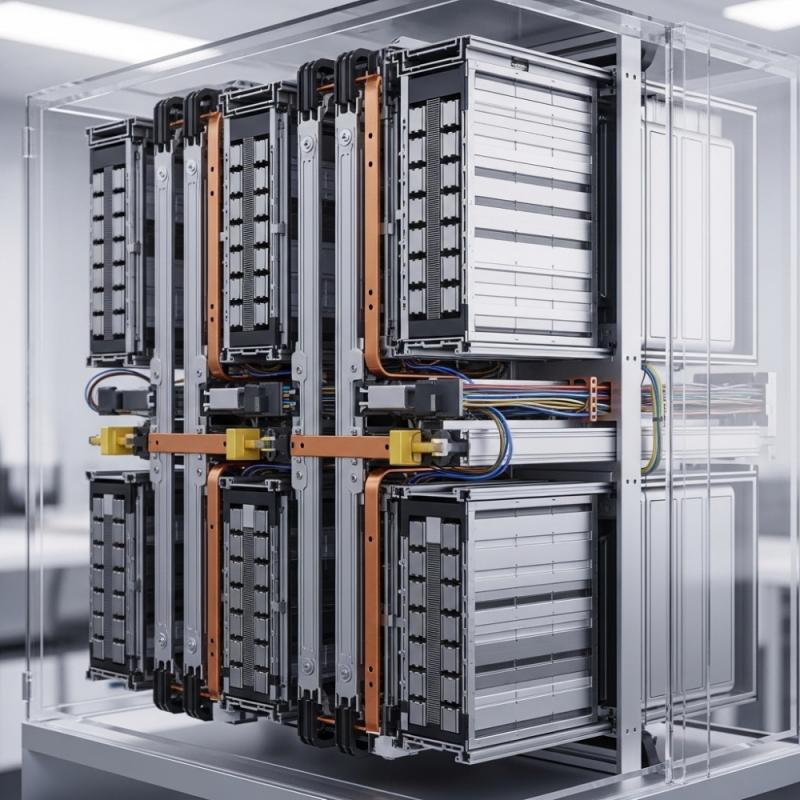
The battery bank starts with individual cells assembled into modules. Modules are grouped into racks, and racks are installed inside cabinets or a containerized enclosure depending on the system size and installation site. The nominal voltage and amp-hour capacity of the modules determine the DC electrical configuration of the battery bank.
The number of racks and the capacity of each rack determine total stored energy in kWh. Two 500 kW systems may share the same power rating but differ significantly in duration because one has a larger battery bank behind the same power conversion hardware.
BMS, EMS, and PCS: How the System Controls Power
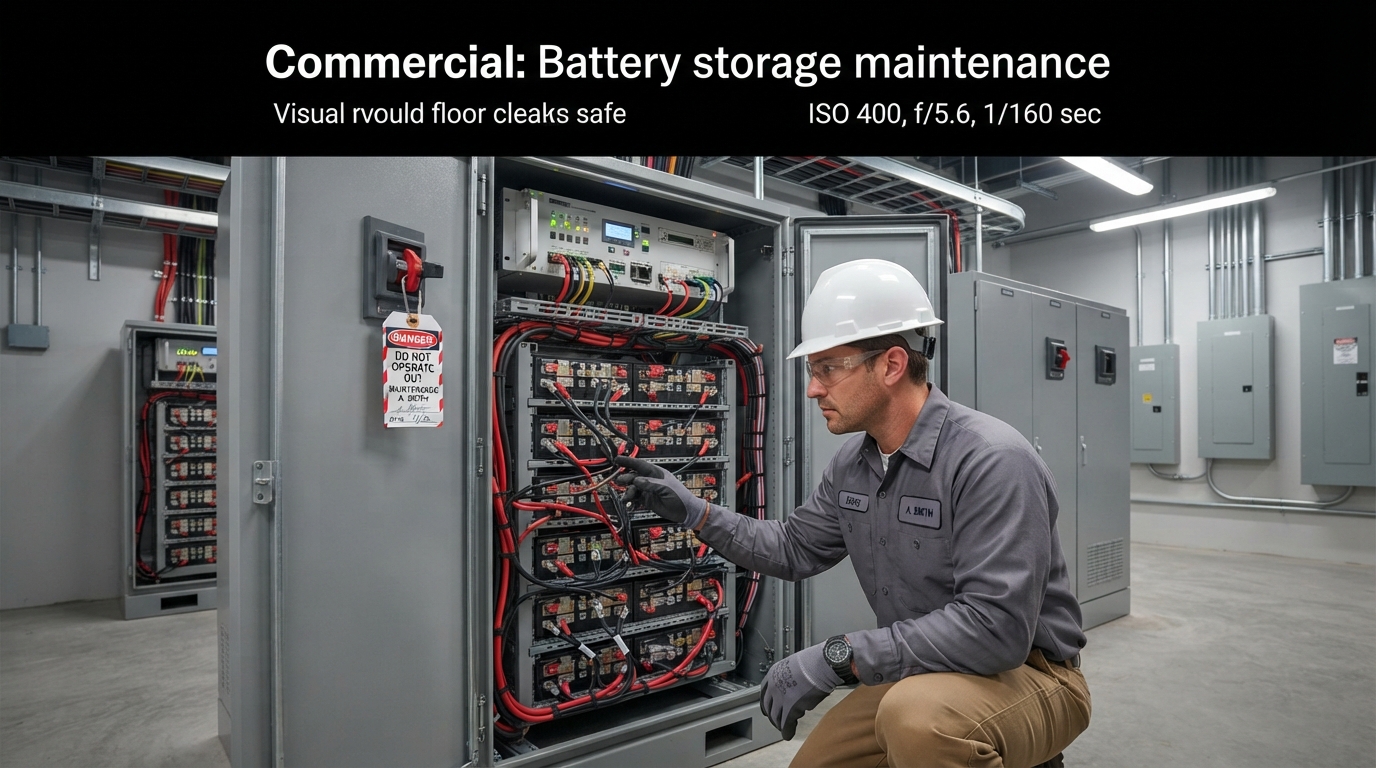
Three control layers make a 500 kW system operate safely and profitably:
- BMS (Battery Management System). The BMS monitors cell voltage, current, temperature, and state of charge. It protects the battery from overcharge, over-discharge, overcurrent, and thermal extremes, and it manages cell balancing to keep the battery healthy.
- PCS (Power Conversion System) / inverter. The PCS converts DC power from the battery to AC power for the facility or grid, and converts AC power back to DC when charging. A 500 kW system may use one large PCS or several smaller units operating in parallel.
- EMS (Energy Management System). The EMS decides when to charge and discharge based on tariff periods, site load, solar generation, and operator settings. It is the layer that turns the battery into a peak-shaving or load-shifting asset rather than a standby power source.
Cooling, Enclosure, and Fire Safety
High-power battery systems generate heat during charge and discharge, so thermal management is essential. Air-cooled systems are simpler and often lower in initial cost. Liquid-cooled systems provide more effective temperature control in high-power, high-cycle applications but add complexity and maintenance requirements.
The enclosure, whether an indoor cabinet or an outdoor-rated container, protects the battery and electrical equipment from environmental exposure. Outdoor installations require an appropriate IP rating to prevent water and dust ingress.
Fire detection and suppression are essential safety elements in large lithium-ion systems. Thermal runaway is a real risk in any lithium battery installation, and the system design must address cell selection, BMS operating limits, thermal management, early detection, and appropriate suppression. Because fire-safety requirements vary by jurisdiction and installation type, the final design must be reviewed against local building codes, fire codes, and utility requirements before installation.
How to Size a 500 kW BESS for Your Site
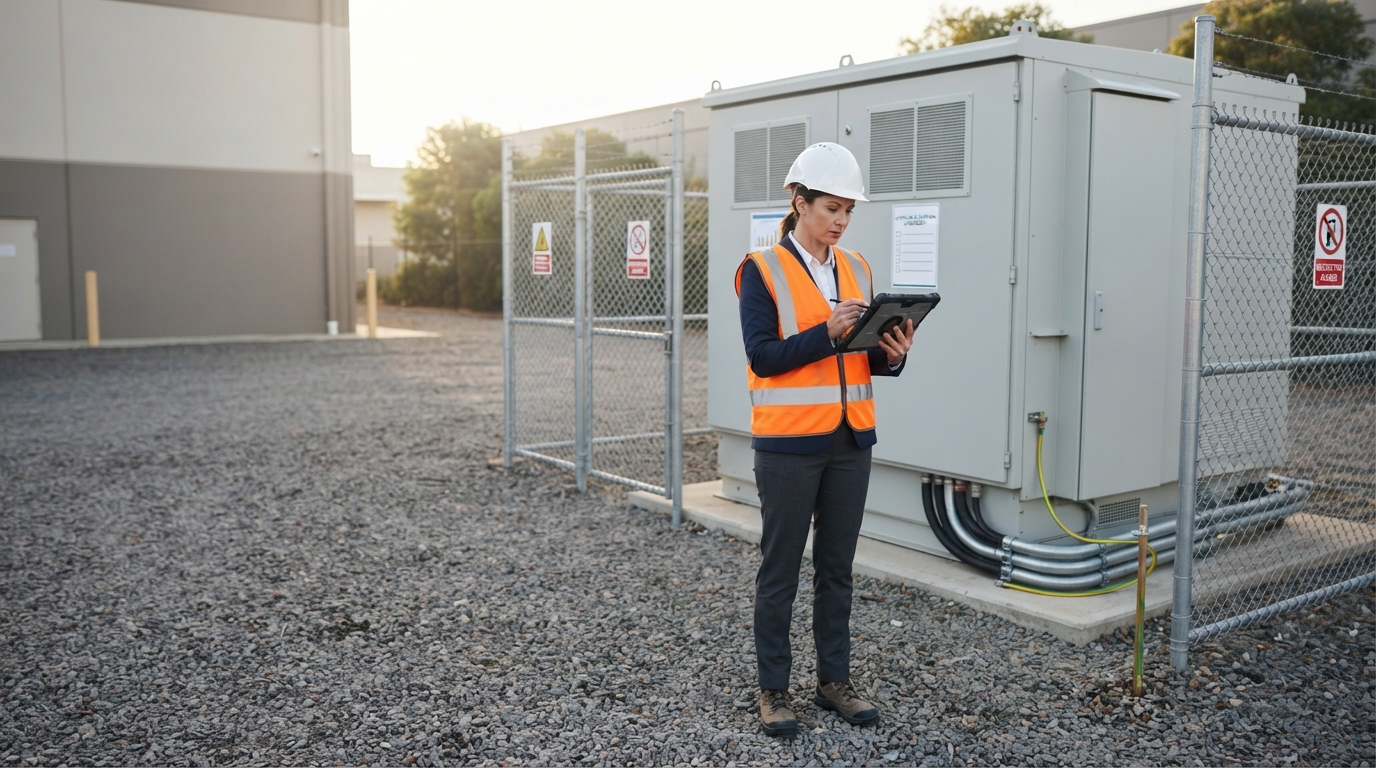
Sizing starts with data, not assumptions. Before requesting a quotation, assemble the following:
- Interval load data for the past 12 months. Interval data—recorded every 15 or 30 minutes—shows your facility’s actual demand, the frequency and duration of peaks, and how peaks align with tariff periods.
- The facility’s electricity tariff. Identify demand charges, energy charges, time-of-use periods, and any grid-export rules.
- Critical loads and required backup autonomy. If backup is part of the objective, list which loads must remain powered and for how long.
- Solar generation profile. For PV-plus-storage projects, you need hourly generation patterns and how they align with consumption.
- The primary operating objective. A system designed for peak shaving will differ from one designed mainly for backup. Each objective adds requirements for energy capacity, controls, and transfer equipment.
With these inputs, you can assess whether 500 kW is the right power rating and what energy capacity in kWh is needed to achieve the required duration. The full methodology for validating power and energy capacity against load data is covered in our commercial battery storage sizing guide.
Grid Connection and Electrical Integration Considerations
A 500 kW BESS is a substantial electrical installation. Connecting it to your facility and to the utility requires careful engineering.
- Interconnection rules. Utility requirements for storage interconnection vary by jurisdiction. Export limits, protection requirements, and approval processes must be confirmed early in the project.
- Transformer and switchgear capacity. The facility’s existing transformer and switchgear must accommodate additional power flows. Upgrades may be necessary.
- Protection coordination. Relays, breakers, grounding, and fault protection must be coordinated with the battery system’s fault characteristics and the utility’s requirements.
- PV coupling architecture. The PCS/inverter topology determines whether the battery integrates with solar on the DC side or the AC side. Each approach has different efficiency, control, and cost implications.
- Metering and monitoring. Tariff applications may require revenue-grade metering, and remote monitoring is important for ongoing performance management.
Commissioning, including testing, documentation, and operator training, should be clearly assigned to the supplier, the EPC, or the internal project team as part of the contract.
500 kW BESS Buying Checklist: What to Request from a Supplier
A credible supplier should be able to provide documentation that allows you to compare systems on equal terms. Request at minimum the following:
- A model-specific datasheet stating rated AC/DC power (kW), nominal and usable energy (kWh/MWh), voltage range (V), current (A), dimensions, weight, cooling method, enclosure rating, and communication protocols.
- Guaranteed performance values, including round-trip efficiency, depth of discharge, cycle life at specified conditions, and degradation behavior.
- Certification and test documentation applicable to the exact model and your jurisdiction. Confirm that each certificate or test report covers the system being quoted, not just the company’s general product line.
- Commissioning scope, including installation, testing, and acceptance criteria.
- Operation and maintenance requirements, including service intervals, spare parts, remote monitoring, and support response.
- Warranty terms in writing, covering duration, exclusions, performance guarantees, and claim procedures.
- Reference projects for comparable 500 kW installations, ideally with owners you can contact directly.
If a supplier’s proposal states “500 kW” without a corresponding kWh/MWh capacity and discharge duration, the specification is incomplete. Power and energy are separate decisions, and both must be in writing.
Building a 500 kW C&I BESS with VoltaLink
VoltaLink Battery, operating as Guangdong Voltalink New Energy Co., Ltd., is an energy-storage company focused on industrial and commercial, household, and outdoor energy-storage scenarios. According to the company’s website, VoltaLink is a high-tech enterprise under Shandong Guoli New Energy Co., Ltd., with a global foreign-trade and business center in Shenzhen and a stated establishment date of 2025. The company positions its systems around peak shaving and backup power applications.
For additional context on container-based system supply and vendor evaluation, you can also review our bess container supplier overview.
Because the right 500 kW configuration depends on your site’s load profile, tariff, and operating objectives, the most useful next step is a project-specific discussion. Submit your load data, critical-load requirements, and application goals to the VoltaLink sales team, and they will work with you to define the appropriate power rating, energy capacity, enclosure, cooling, controls, and safety design for your site.

-

 OEM Residential Energy Storage Solutions: Passive vs. Active Cell Balancing
2026-09-30
-
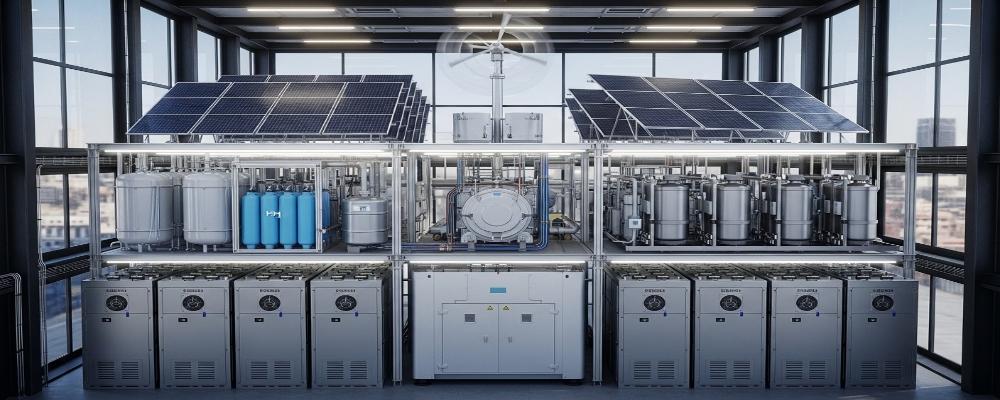 Smart Home Battery with BMS Communication: Cybersecurity and BMS Safety
 -
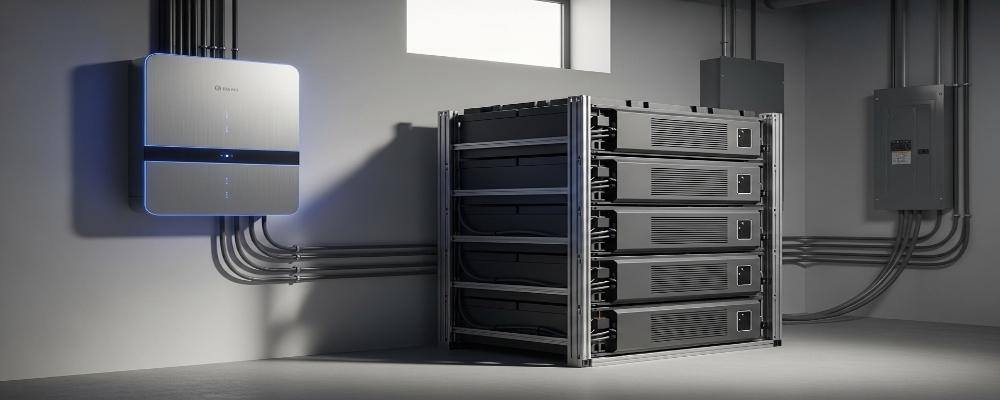 10kWh Home Battery Backup System: Is 90% DoD Better for Daily Solar Storage?
2026-09-29
-
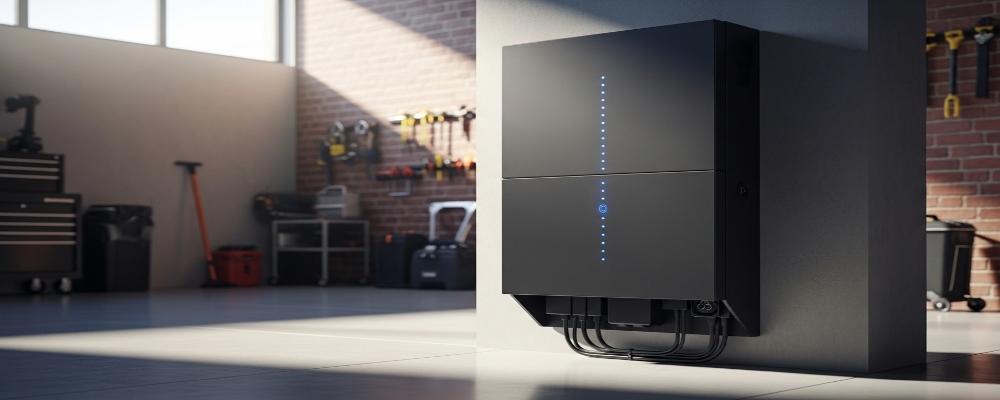 Integrated Home Energy Storage System 150–430V MPPT Design
2026-09-28
-
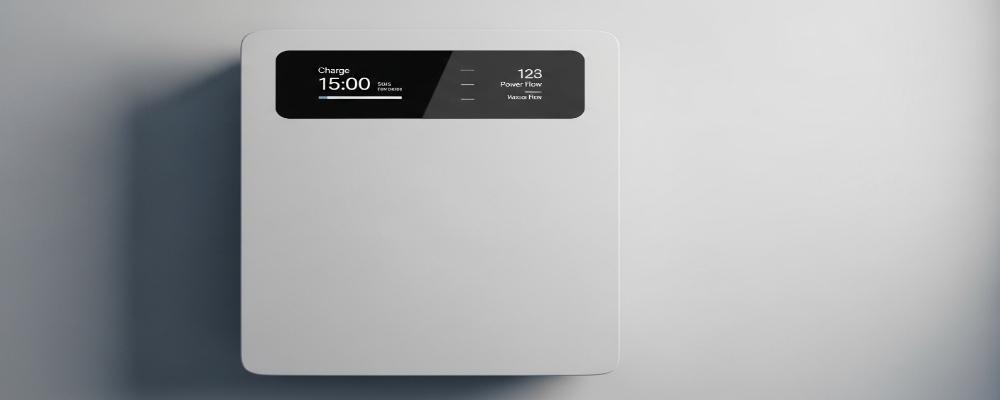 LiFePO₄ Residential Backup Battery SOC Accuracy in Parallel Systems
Share this:





.svg)






-899.svg)


