




How Stackable Home Battery Storage Achieves On-Demand Capacity Expansion
Electricity needs at home tend to be dynamic rather than fixed. The use case for battery storage begins with the household load of lighting and refrigeration and IT and security appliances. Later use of electric vehicles, heat pumps, air conditioning, and workshop appliances can be expected to increase the household load even more.
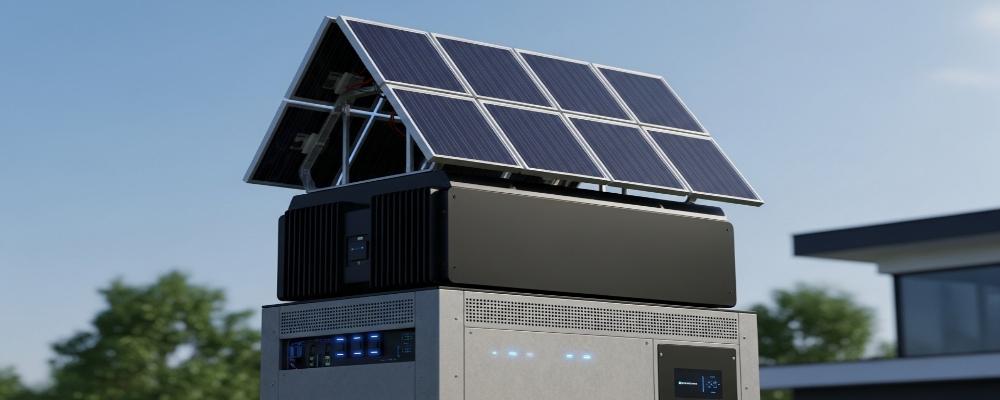
This raises an interesting question for planning. Is it better for homeowners to install a large battery system right away or to begin with a smaller Stackable Home Battery Storage system that can expand over time as needs grow?
The prospect of modular storage is that it eliminates the need to order storage with untapped capacity in the beginning to accommodate future needs. However, expansion is not simply a matter of placing another battery storage module next to a storage system. Battery and inverter limits, module conditions, communication protocols, charging capabilities, the planning space, and the installation space must also be considered.
What Is Stackable Home Battery Storage?
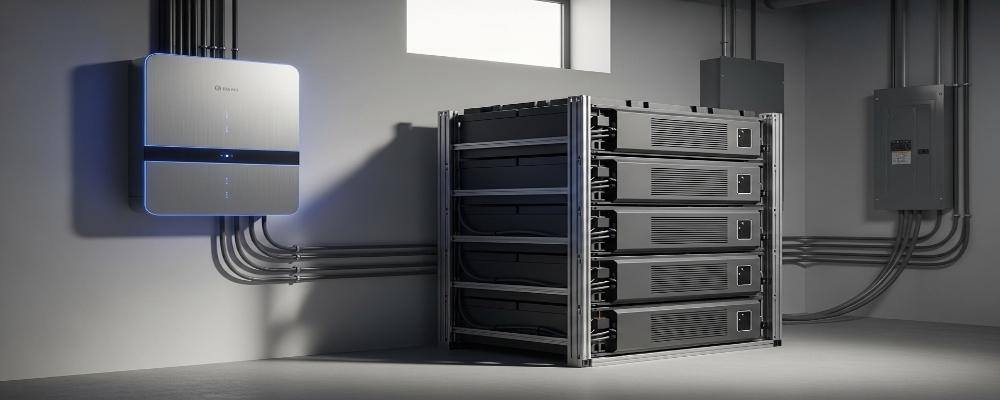
Stackable Home Battery Storage is another modular system concept. In this case, modules are standardized battery systems that can be connected mechanically and electrically to create a larger battery bank. Depending on the system, modules can be arranged vertically or next to each other.
A typical module includes:
• Lithium iron phosphate battery cells
• A battery management system
• Power connection terminals
• CAN or RS485 communication interfaces
• A protective metal enclosure
• Mechanical alignment and mounting structures
Unlike a fixed-capacity battery, Stackable Home Battery Storage allows users to begin with a base configuration and add compatible modules later.
Stackable designs are necessary, but not sufficient, for future expansion. Integration of battery modules, BMS, inverter, comms, wiring, and protection devices must be planned for interoperability of the system.
What Actually Changes When Capacity Is Expanded?
The most obvious change is that more energy is stored with the addition of battery modules. However, this change is often not accompanied by an increase in capability across the rest of the system.
| System Characteristic | Effect of Adding Modules |
| Stored energy | Increases according to the added battery capacity |
| Backup duration | Usually increases when the load remains unchanged |
| Nominal voltage | Normally remains at the same 48V or 51.2V platform |
| Inverter output power | Usually remains unchanged |
| Maximum appliance load | Still limited by the inverter and discharge current |
| Charging time | May increase if charging power remains unchanged |
| Solar utilization | May improve because more surplus PV energy can be stored |
This distinction is important. A larger battery bank can run the same appliances for longer, but it may not allow more high-power appliances to operate simultaneously.
How Do Expansion Options Work?
Modular designs in low-voltage Stackable Home Battery Storage systems promote the use of parallel connections. At the same voltage, battery modules connected in parallel can increase the system’s total energy capacity and ampere-hours.
Typically, the addition of a module occurs in four steps:
- Connection: The new module is installed, and the required power and communication interfaces are connected.
- Identification: The new module is identified by the battery management system (BMS) or the master controller.
- Health check: Communication check as well as a check for voltage, temperature, and state of charge are performed.
- Unified operation: The modules function as a single battery bank for the purpose of charging and discharging within the prescribed limits of current.
For example, a base stack of 51.2V, 400Ah provides about 20.48kWh of nominal energy.
| Configuration | Approximate Energy | Possible Use |
| One stack | 20.48kWh | Essential loads, solar shifting, short backup |
| Two stacks | 40.96kWh | Longer household backup and greater PV storage |
| Three stacks | 61.44kWh | Broader circuit coverage or higher daily consumption |
| Four stacks | 81.92kWh | Large homes, workshops, or light commercial loads |
Actual usable capacity will be lower than nominal energy because of depth-of-discharge settings, inverter losses, temperature, and reserve limits.

Which Expansion Strategy Is More Practical?
Every expansion strategy has different costs, risks, and required levels of effort.
| Evaluation Factor | Add Compatible Modules | Install Maximum Capacity Initially | Add a Separate Battery System | Replace Existing Storage |
| Initial Cost | Low | High | Medium | Medium to High |
| Risk of Unused Capacity | Low | High | Medium | Medium |
| Future Flexibility | Medium (Limited by Original Size) | Low (Limited by Original Design) | High, but More Complex | Depends on the New System |
| Installation Complexity | Low (if Pre-engineered) | Low (Most Work Done Initially) | High (Requires Separate Control or Wiring) | High (Requires Removal and Recommissioning) |
| Module Consistency | Must be Verified | Generally Good (All New Systems) | May Operate Independently | Consistent After Replacement |
| Space Requirement | Must be Reserved | Full Space Needed Immediately | Requires a Second Area | Depends on the Replacement |
| Inverter Impact | Must Stay Within Existing Limits | Sized at Initial Design | May Require Another Inverter | Often Reassessed |
When expansion is considered after the initial installation, the choice is clear: Stackable Home Battery Storage is the most convenient choice. After initial installation, upgrades as expansion is considered become progressively more difficult, with required reserved communication, cabling, and space along with inverter capacity.
Can New Modules Be Added to Older Batteries?
The age of the battery is one of the key factors when considering expansion. Older modules may have diminished capacity or higher internal resistance. When coupled with new modules, significant current sharing may occur, and several new modules may charge to different states.
Installers should consider the following prior to expansion:
| Inspection Item | Importance |
| Remaining capacity | Degree of degradation |
| Internal resistance | Affects current sharing among modules |
| State of charge | Equalization current caused by mismatches |
| Firmware version | Communication and control compatibility |
| Cycle history | Module aging estimation |
| Operating temperature | Installation temperature |
Some systems have specific limits on the age difference for the old and new modules that can be connected. Others will require balancing along with firmware updates, commissioning, and any other necessary activities before connection.
How Does the BMS Manage Multiple Modules?
The BMS is the core of expandable storage as the coordinator of battery operation and the communicator of limits to the inverter.
The functions of the BMS include the following:
• Monitoring the voltage of individual cells and modules
• Measuring the current for charge and discharge
• Measuring the temperature of the batteries
• Estimating the charge remaining in the batteries
• Providing protection against overcharge and over-discharge
• Providing protection against overcurrent, short-circuit, and overtemperature
• Communicating limitations via CAN or RS485
An effective Stackable Home Battery Storage system must provide visibility for each connected module, rather than treating each battery as a standalone unit.
What Needs to Be Considered Before Installation?
Future expansion should be considered before the first battery is installed. The initial design should reserve:
• Floor area and sufficient structural loading capacity
• Ventilation and maintenance clearances
• Cable and protection-device capacity
• Communication ports and compatible firmware
• Space for disconnects, busbars, and additional wiring
• Adequate inverter and charger capability
Charging capacity is often overlooked. Doubling battery capacity without increasing PV or grid charging power may double the time required to recharge the system.
Closing Words
Stackable Home Battery Storage provides a practical way to increase residential energy capacity as electricity demand changes. Its main benefit is not simply the ability to stack modules but the coordinated design of the batteries, BMS, inverter, wiring, communication, and protection systems.
Before expanding, users should ask whether the new module is compatible, whether the existing battery is still in suitable condition, whether charging capacity is sufficient, and whether the inverter can support the expanded system. When these factors are planned together, modular storage can provide a flexible alternative to purchasing a large fixed-capacity battery from the beginning.
FAQs
Q1. Are Stackable Home Battery Storage Systems able to expand later?
Yes. When the demand for energy increases, additional battery modules can often be added.
Q2. Does the addition of battery modules change the inverter’s power?
No. The addition of battery modules increases storage capacity and the duration of backup supply; however, it does not change the capacity of the inverter.
Q3. Can new battery modules be added to existing battery modules?
Of course, but the existing battery modules must be evaluated for age, voltage, capacity, firmware, and internal resistance.
Q4. What are the most common communication protocols?
Communication protocols commonly used are CAN and RS485. The communication is between the battery BMS and the compatible hybrid inverters.
Q5. How much space should be reserved in case of future expansion?
The future expansion design should include planning for floor space, clearance, space for wiring and maintenance access.

-

 OEM Residential Energy Storage Solutions: Passive vs. Active Cell Balancing
2026-09-30
-
 Smart Home Battery with BMS Communication: Cybersecurity and BMS Safety
 -
 10kWh Home Battery Backup System: Is 90% DoD Better for Daily Solar Storage?
2026-09-29
-
 Integrated Home Energy Storage System 150–430V MPPT Design
2026-09-28
-
 LiFePO₄ Residential Backup Battery SOC Accuracy in Parallel Systems
Share this:





.svg)






-899.svg)


