




Load Shifting Simplified: A Practical Guide to the Home ESS Rack Battery
A Home ESS Rack Battery offers backup power but can also help manage energy use. Electrical systems paired with certain inverters and batteries can store energy for later use during peak demand or high-cost periods. This is accomplished by the battery using excess energy during low demand or low-cost periods.

The battery’s ability to use energy at different times does not lower the overall energy use but rather shifts the times when energy is used.
Considerations for determining whether or not load shifting is beneficial may include pricing, demand, battery and inverter capacity, and the shifting operation and communication.
What Is Load Shifting?
A load-shifting cycle is typically comprised of three stages.
• Charging: The Home ESS Rack Battery draws energy from the grid or the home’s solar system when the energy is either low-cost or when there is excess generation.
• Standby: The battery keeps energy until the scheduled discharge time or until the demand is met.
• Discharging: Stored energy is used by the home’s systems to lower the cost or avoid using elevated demand energy.
• Load shifting is a good way to reduce the energy used from the grid at peak demand times and to increase the energy self-consumed from the home’s solar system. It is most beneficial when there are favorable tariffs on the energy load.
1. Is Load Shifting Motivated by the Electricity Tariff?
Users must understand the cost of charging before deciding the size of their battery.
| Tariff Type | Pricing structure | Examples/Types of battery policies | Primary limitations |
| Flat rate | Prices remain the same | Use a battery charged from solar for nighttime use | Only small savings possible |
| Time-of-Use | Well-defined peak and off-peak prices | Use a battery charged during off-peak for use at peak | Charging precisely takes some of the battery capacity |
| Dynamic pricing | Many frequent changes to prices | Use a battery charged during low pricing for use at higher prices | Requires some level of control |
| Demand pricing | Peak pricing for some time | Requires use during peak | Requires some level of control |
| Low export compensation | Low or no compensation for excess solar | Promotes more use of solar on the site | Depends on excess solar capacity |
Grid arbitrage does not provide a clear advantage for backup power and solar self-consumption when the prices for peak and off-peak times are similar.
2. Which Household Loads Should Be Shifted?
When planning for battery discharge, focus on loads to be discharged for the discharge duration as opposed to the daily cycle of household consumption.
| Load Category | Examples | Energy Demand | Starting Surge | Scheduling Flexibility |
| Essential loads | Refrigerator, router, lights | Low to moderate | Usually low | Limited |
| Heating and cooling | Heat pump, air conditioner | High | Moderate to high | Situation-dependent |
| Water systems | Well pump, sump pump | Intermittent | High | Limited |
| Cooking appliances | Oven, kettle, induction cooker | High | Moderate | Often deferrable |
| EV charging | Electric vehicle charger | Very high | Low | Usually high |
Supporting lighting, refrigeration, and Internet supplies through a Home ESS Rack Battery requires significantly less capacity than supporting air conditioning, cooking, and EV charging.
Runtime is determined by battery energy. The number of loads supported is determined by inverter power.
3. How Does a Home ESS Rack Battery Automate the Process?
A residential load-shifting system normally includes:
• A Home ESS Rack Battery
• A hybrid or battery inverter
• Solar panels or a grid connection
• An energy meter or current transformer
• Battery management and monitoring software
The inverter or energy management system controls when the battery charges and discharges. For example, the battery may charge from solar power at midday, remain on standby during the afternoon, and discharge during the evening tariff peak.
Common strategies include:
| Strategy | Charging Period | Discharging Period | Main Objective |
| Solar self-consumption | Midday solar surplus | Evening and night | Reduce solar exports |
| Time-of-use shifting | Low-rate grid period | Peak-rate period | Reduce expensive grid imports |
| Solar plus grid | Solar first, then off-peak grid | Extended evening demand | Improve energy availability |
| Peak shaving | Before predictable load peaks | Short high-power events | Limit maximum grid demand |
| Backup priority | Solar or off-peak grid | Mainly during outages | Preserve emergency capacity |
Several strategies can operate together. A system may discharge during the evening while maintaining a minimum state of charge for backup.
4. How Much Battery Capacity Is Needed?
To make a very rough estimate of energy requirements, the formula is:
Energy Required = Average Demand × Duration Required
If the demand for a load of 1.5 kW is sustained for four hours, then the total estimated energy required would be 6 kWh.
When sizing a battery bank, the following must be considered in addition to the above estimate:
• Losses due to inversion
• Limits to battery discharge
• An acceptable minimum reserve
• Variability of solar energy over the seasons
• Aging of the battery
• Possible increase of demand in the future
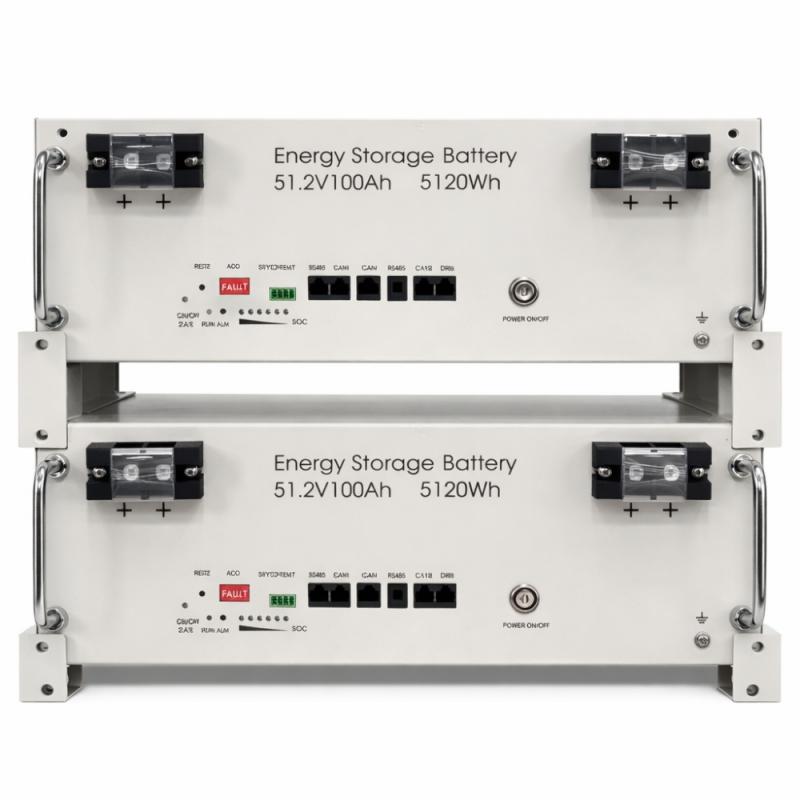
A 51.2V, 100Ah Home ESS Rack Battery has an approximate nominal value of 5.12 kWh. The usable AC energy is actually less than this due to capacity reservation and losses due to conversion.
| Planning Factor | Effect on System Design |
| Longer discharge period | Requires more battery modules |
| Higher simultaneous load | Requires greater inverter output |
| Larger backup reserve | Reduces capacity available for shifting |
| Limited daytime solar | May require off-peak grid charging |
| Future appliances | Favors a modular, expandable system |
5. Why Battery Communication Matters?
The battery does not usually manage the complete energy strategy independently. Operating data is sent to the inverter using communication interfaces such as CAN, RS485, or RS232.
The following data is transmitted:
• State of charge
• Battery voltage
• Charge and discharge currents
• Temperature
• Capacity available
• Warnings and faults
Because of the nature of the communication, the inverter is able to identify the battery limits and manage the power flow accordingly. Compatibility is ensured at the protocol and firmware level, which typically supersedes the connector level.
6. When Is a Rack-Mounted Setup the Right Choice?
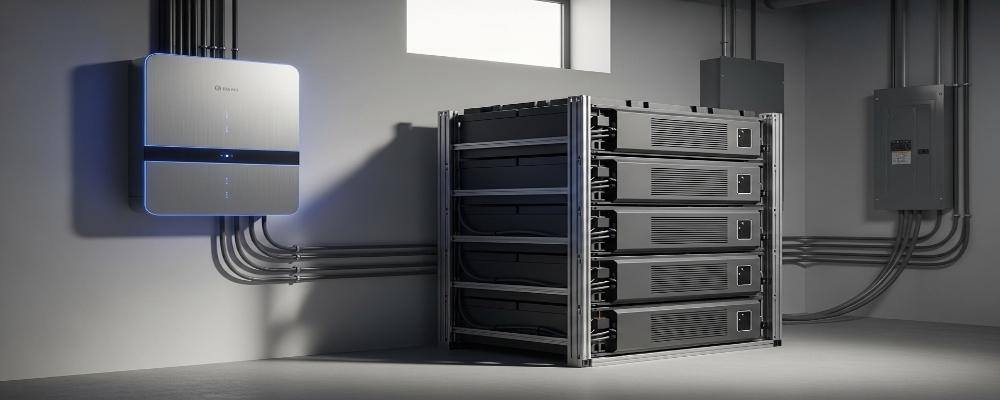
The rack-mounted design is based on the idea of partitioning the total storage capacity within the individual modules built in a standard storage cabinet. This offers a better design for managing data and power cables and promotes easier maintenance and expansion.
However, adding modules requires more than physical rack space. Installers should verify:
• Maximum inverter-supported capacity
• Number of permitted parallel modules
• BMS and firmware compatibility
• Cable and breaker ratings
• Module age and state of health
• Rack weight capacity
A modular Home ESS Rack Battery may be suitable where household demand is expected to increase after adding a heat pump, electric vehicle, larger solar array, or additional electrical equipment.
7. Load Shifting and Impacts on Electric Costs
Savings from the implementation of Residential ESS Rack Batteries are not assured. Results are dependent on the following:
• Disparity between peak and off-peak tariffs
• Electricity usage during peak hours
• Surplus solar generation
• Battery and inverter performance
• Export payments
• Backup reserve configurations
• Cost of installation
• Frequency of cycles and battery degradation
Increased cycling of the battery may create savings in the short term from tariff reductions; however, the battery will experience significant degradation and wear. As a result, the best approach is to optimize savings alongside the shortfall and provide the necessary backup reserve.
Closing Words
A Home ESS Rack Battery can support load shifting by storing electricity when it is less expensive or more abundant and releasing it during higher-cost or high-demand periods.
Effective performance depends on more than nominal battery capacity. Electricity tariffs, household loads, inverter power, communication protocols, reserve settings, and future expansion.
When these questions are addressed during system planning, a Home ESS Rack Battery can provide a structured method for solar self-consumption, peak rate management, backup reserve, and long-term residential energy control.
FAQs
Q1: How long can a stacked energy storage system provide backup power?
A1: Depending on the total capacity and load, these systems can supply electricity from several hours to multiple days.
Q2: Is installation complex?
A2: No, modular components and pre-configured UPS integration make deployment straightforward, even in confined spaces.
Q3: Can these systems operate in extreme conditions?
A3: Yes, temperature-adaptive modules and durable housing allow operation in both hot and cold environments.
Q4: How is maintenance managed?
A4: Automated monitoring, alert systems, and modular battery design reduce manual maintenance and ensure continuous operation.

-

 OEM Residential Energy Storage Solutions: Passive vs. Active Cell Balancing
2026-09-30
-
 Smart Home Battery with BMS Communication: Cybersecurity and BMS Safety
 -
 10kWh Home Battery Backup System: Is 90% DoD Better for Daily Solar Storage?
2026-09-29
-
 Integrated Home Energy Storage System 150–430V MPPT Design
2026-09-28
-
 LiFePO₄ Residential Backup Battery SOC Accuracy in Parallel Systems
Share this:





.svg)






-899.svg)


