




Hybrid Home ESS: When You Need PV and Battery
A hybrid home energy storage system combines solar PV input, battery storage, grid connection, and backup output through one coordinated inverter or control platform. Choose hybrid when you want solar energy after sunset, backup power during outages, and a cleaner upgrade path than separate PV-only or battery-only systems. It is not always necessary for simple daytime solar savings or basic battery backup.
A homeowner usually reaches this topic after seeing too many mixed terms: solar battery, hybrid inverter, backup battery, PV system, and all-in-one ESS. The real question is simpler. Do you need one system that manages solar panels, stored energy, grid power, and backup loads together? If yes, hybrid is worth a closer look. If not, a simpler PV-only or battery-only setup may be enough.
What is a hybrid home energy storage system?
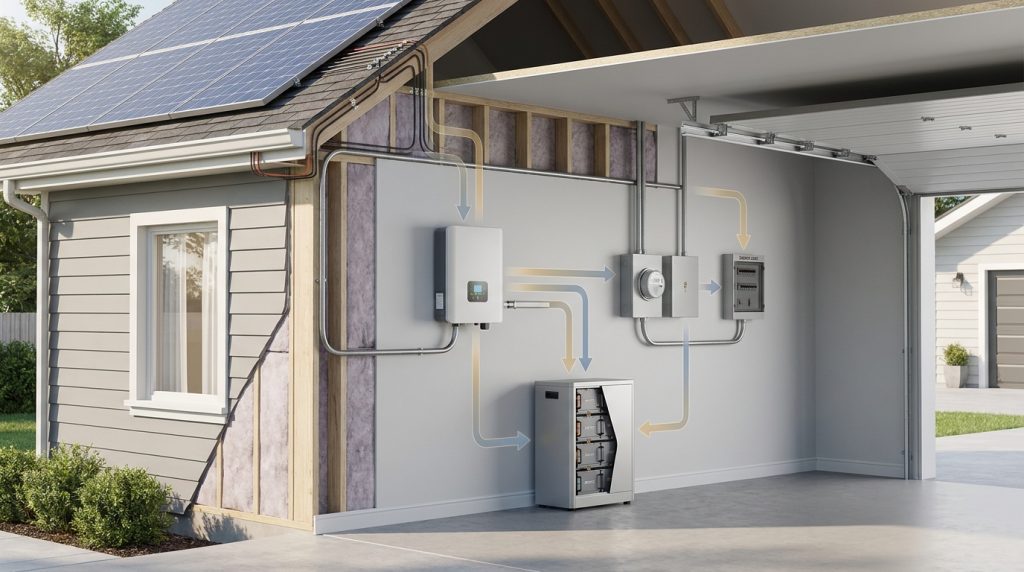
A hybrid home energy storage system uses a hybrid inverter to manage solar PV input, battery charging, grid connection, and backup output in one coordinated setup. It fits homes that want solar generation and stored power to work together.
In a home ESS, “hybrid” is mainly about system control. A hybrid inverter can take energy from solar panels, send it to home loads, charge the battery, draw from the grid, or power selected backup circuits when the grid is down.
This is different from buying a battery alone or installing solar panels alone. The goal is coordination. The system decides where energy should come from and where it should go, based on sunlight, battery charge, load demand, grid status, and user settings.
A basic home energy storage setup can store electricity for later use. A hybrid setup adds generation input, usually solar PV, and connects that energy flow to the battery and backup side of the home. For a broader buying path, use this home energy storage system guide.
Is hybrid the same as solar-plus-storage?
Solar-plus-storage describes the function: solar charges a battery. Hybrid home ESS describes the architecture: one inverter or control platform coordinates PV, battery, grid, and backup circuits.
The terms often overlap, but they are not perfect matches. The U.S. Department of Energy explains a solar-plus-storage system as a battery system charged by a connected PV system. That describes what the system does.
Hybrid describes how the system is arranged. It points to the inverter and control design that lets solar, battery, grid, and backup loads work through one managed platform.
| Term | What it means | Why it matters |
|---|---|---|
| Solar-plus-storage | Solar panels charge a battery | Describes the energy source and storage function |
| Hybrid inverter | Inverter manages PV and battery together | Controls charging, discharge, and grid interaction |
| Hybrid home ESS | Full home system with PV, battery, grid, and backup control | Helps the homeowner compare system architecture |
Some products are hybrid-ready, but not fully configured for your home yet. Always confirm PV input, battery voltage, backup output, and grid connection details before buying.
How does a hybrid system compare with PV-only and battery-only?
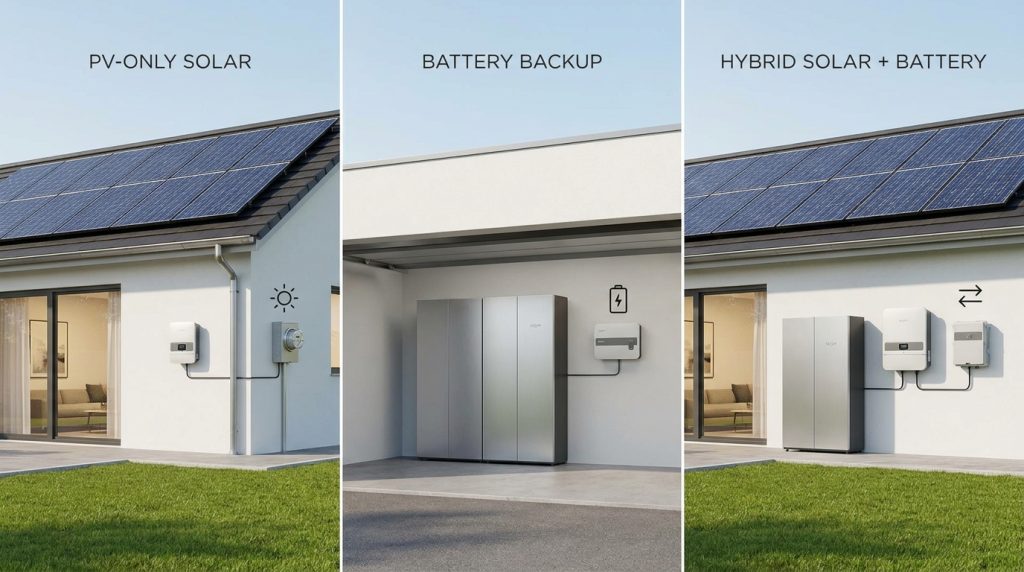
A hybrid system is the most complete option when the home needs solar generation, battery storage, grid connection, and backup support in one plan. PV-only and battery-only can still be good choices, but they solve narrower problems.
| Feature | PV-only system | Battery-only system | Hybrid home ESS |
|---|---|---|---|
| Solar PV input | Yes | No, unless solar is added later | Yes |
| Battery charging | No battery storage by default | Grid charging | Solar and grid charging |
| Evening solar use | No, unless paired with storage | No solar source | Yes, stored daytime solar can be used later |
| Grid connection | Usually grid-tied | Usually grid-charged | Grid-connected with managed charging and backup |
| Outage backup | Limited without storage and proper inverter setup | Yes, based on battery size and output | Yes, for selected loads if configured correctly |
| Best use case | Daytime bill reduction | Backup or off-peak charging | Solar self-use, backup, and future expansion |
| Upgrade path | May need added battery equipment | May need solar-compatible hardware later | Built for PV and battery together |
| Main caution | Solar may not help during outages by itself | No renewable charging without PV | Higher planning need before installation |
The DOE’s solar resilience guidance explains that solar panels alone usually need the right inverter and storage setup to support power during an outage. That is one reason hybrid systems are attractive for homes that care about backup, not only bill savings.
Why choose hybrid instead of PV-only?
Choose hybrid over PV-only when you want solar power to keep working beyond daytime production. A PV-only system can lower daytime grid use, but a hybrid system can store surplus energy and support backup loads.
PV-only is useful when your main goal is to reduce grid use during sunny hours. It can send solar energy directly to home loads and may export extra power to the grid, depending on the local setup. The weak point is timing. Solar production does not always match when the home needs energy.
Hybrid adds the battery layer. A home can use solar energy during the day, store extra energy, then use that stored power at night or during an outage. The DOE Energy Saver guide explains that battery storage can help homeowners use solar electricity later and support power needs during outages.
| If your goal is… | PV-only may work | Hybrid is better when… |
|---|---|---|
| Lower daytime bills | Yes | You also want evening use |
| Use solar after sunset | No | You want stored daytime solar |
| Backup during outages | Limited | You need selected loads powered |
| Long outage support | No | PV can recharge the battery during sunlight |
| Cleaner expansion path | Maybe | You are installing PV and battery together |
Example: a homeowner installs rooftop PV and a 10 kWh to 15 kWh battery at the same time. Hybrid is usually the cleaner path because one system can charge the battery from solar and support selected backup loads.
Why choose hybrid instead of battery-only?
Choose hybrid over battery-only when you want the battery to recharge from solar, not just the grid. Battery-only works for backup or off-peak charging, but hybrid adds renewable input and stronger daily self-consumption.
Battery-only can be a smart first step. It can charge from the grid and provide backup power for selected circuits. This works well for homes that need power security now but do not have the roof, budget, or timing for solar panels.
Hybrid becomes stronger when the homeowner wants the battery to fill from solar during the day. This reduces dependence on grid charging and makes the battery more useful during daily use, not only outages.
When battery-only still makes sense
Battery-only is not a bad choice. It works well when the home needs backup now but solar is not planned soon. It may also fit homes with shaded roofs, limited roof space, or rental restrictions.
Example: a homeowner wants backup today and solar next year. A battery-only setup may solve the urgent need, but a hybrid-ready inverter can reduce replacement work later. The buyer should ask whether the system can accept PV input later and what upgrades would be needed.
For battery care after installation, the writer can point readers to charging best practices when discussing daily charge and discharge behavior.
What components does a hybrid home ESS include?
A hybrid home ESS includes more than a battery cabinet. It usually needs a hybrid inverter, battery modules, PV input, grid connection, backup wiring, protection devices, and monitoring. The exact setup depends on the home, inverter design, and local installation rules.
Hybrid inverter
The hybrid inverter is the control center. It converts solar DC power into usable home AC power, manages battery charging, and controls when the home uses solar, battery, or grid power. It may include MPPT inputs, which help solar panels operate efficiently under changing sunlight.
Battery and BMS
The battery stores energy for later use. Many home systems use LiFePO4 batteries because they are common in residential storage and are known for stable performance. The Battery Management System, or BMS, monitors battery voltage, temperature, current, and state of charge.
If the buyer is comparing chemistry options, link them to LiFePO4 vs NMC instead of turning this article into a full battery chemistry guide.
Backup circuits and monitoring
A hybrid system does not always power the whole home during an outage. Many designs support critical loads, such as a refrigerator, lights, router, phone charging, and a medical device. Monitoring apps help the homeowner see solar production, battery charge, grid use, and backup status.
Safety questions should be handled briefly here. For a deeper reader path, use LiFePO4 safety myths as the next step.
When do you actually need a hybrid home energy storage system?
You need a hybrid home ESS when one system must coordinate solar generation, battery storage, grid supply, and backup loads. It is most useful for homes installing PV and battery together or planning a solar-ready backup system.
Hybrid is the right direction when the homeowner wants energy control, not only one product. The DOE storage overview explains that energy storage captures energy when available and releases it when needed. In a hybrid home setup, that stored energy can come from solar, the grid, or both.
| Home situation | Best choice | Reason | What to check before buying |
|---|---|---|---|
| New solar plus battery install | Hybrid | PV and battery are planned together | PV input, inverter output, battery capacity |
| Existing PV retrofit | Depends | Current inverter may limit storage options | AC-coupled or DC-coupled path |
| Backup-first home | Battery-only or hybrid | Hybrid helps if solar charging is wanted | Critical loads and backup output |
| Daytime bill reduction only | PV-only | Storage may not be needed | Daytime usage pattern |
| No solar plan | Battery-only | Grid charging may be enough | Battery size and backup circuits |
| Solar later, backup now | Hybrid-ready battery path | Reduces future replacement risk | Expansion support and warranty |
Example: a home needs a refrigerator, lights, router, medical device, and phone charging during outages. Hybrid makes sense if the system can power those critical loads and use PV to recharge the battery during longer outages.
For readers who want to see layout examples, link to real hybrid builds after this decision table.
When is hybrid not the best choice?
Hybrid is not always the best choice. PV-only may fit homes focused on daytime solar savings, while battery-only may fit homes that only need backup or off-peak grid charging without a near-term solar plan.
This is where buyers should be careful. A hybrid inverter is not just a marketing label. If it cannot manage PV input, battery charging, grid interaction, and backup loads in the required configuration, treat it as battery-ready or solar-ready, not a complete hybrid home ESS.
Use a simpler setup when the goal is simple. PV-only works when the homeowner is mainly home during the day and wants to offset daytime usage. Battery-only works when the home needs basic backup but has no clear solar plan.
- Choose PV-only if you mainly want daytime bill reduction.
- Choose battery-only if backup is the main need and solar is not planned.
- Check retrofit limits if you already have grid-tied solar.
- Avoid oversizing the system for loads you do not need to back up.
- Ask whether future solar or battery expansion matters.
Example: a homeowner who works from home, runs most appliances during sunny hours, and has stable grid service may not need hybrid on day one. PV-only may be simpler.
What should you ask before choosing a hybrid ESS?
Ask practical questions before buying because the word “hybrid” does not guarantee the system fits your home. The right system depends on PV input, battery capacity, inverter output, backup wiring, chemistry, certification, and expansion support.
- Is the inverter truly hybrid, or only battery-ready?
- What solar PV input range does it support?
- What battery voltage and chemistry are compatible?
- How much backup output can it provide?
- Can it run critical loads during a grid outage?
- Does it support whole-home backup or only selected circuits?
- Is the system AC-coupled or DC-coupled?
- Can the battery be expanded later?
- What monitoring app or energy management system is included?
- What warranty applies to the inverter and battery?
- What installation approvals or permits are needed locally?
Do not choose by battery capacity alone. A large battery with weak inverter output may still fail to run the loads you care about. Match the inverter, battery, PV array, and backup panel as one system.
Getting the next step right
A hybrid home energy storage system is the right choice when PV, battery, grid, and backup need to work as one managed setup. It is strongest for new solar-plus-battery projects, solar-ready backup plans, and homes that want to use stored solar after sunset.
Your next step is not to buy the biggest battery. List the loads you want to run, decide whether solar charging matters, then compare inverter output, PV input, battery capacity, and future expansion. If the home only needs daytime solar savings or simple backup, choose the simpler system with confidence.
Frequently Asked Questions
What is a hybrid home energy storage system?
A hybrid home energy storage system combines solar input, battery storage, grid connection, and backup control in one coordinated setup. Its hybrid inverter decides when to use solar, charge the battery, draw from the grid, or power backup loads.
Is hybrid the same as solar-plus-storage?
Hybrid and solar-plus-storage are closely related, but not identical. Solar-plus-storage describes a battery charged by solar, while hybrid usually refers to the inverter and control architecture that manages PV, battery, grid, and backup together.
Can I use a home battery system without solar panels?
Yes, a battery-only system can work without solar by charging from the grid. It can support backup power or off-peak charging, but it will not create renewable energy unless solar panels are added later.
Do hybrid systems work with existing solar panels?
Many hybrid systems can work with existing solar panels, but compatibility depends on inverter type, battery voltage, PV input limits, and whether the retrofit is AC-coupled or DC-coupled. Always confirm this before buying equipment.
Will solar panels work during a power outage?
Solar panels alone usually do not provide reliable backup during a grid outage. They need a properly configured inverter and storage system so the home can safely use solar energy when the grid is down.
When is hybrid not worth it?
Hybrid may not be worth it if your only goal is daytime solar bill reduction or simple grid-charged backup. In those cases, PV-only or battery-only can be simpler and easier to plan.

-

 OEM Residential Energy Storage Solutions: Passive vs. Active Cell Balancing
2026-09-30
-
 Smart Home Battery with BMS Communication: Cybersecurity and BMS Safety
 -
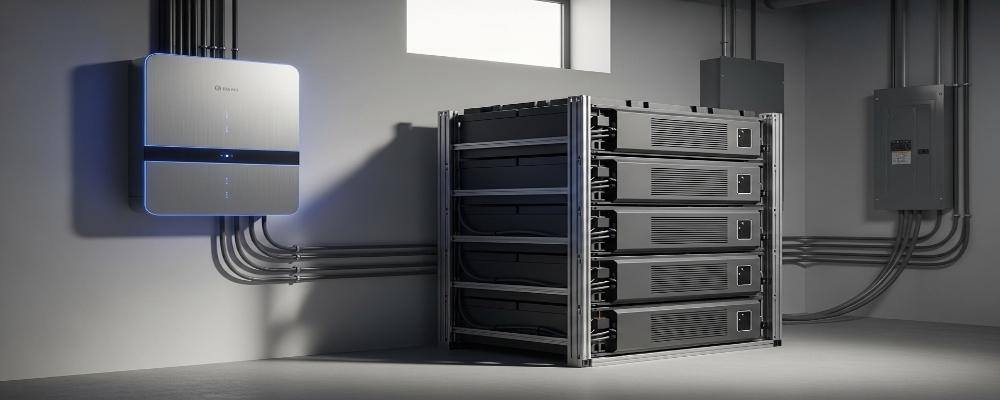 10kWh Home Battery Backup System: Is 90% DoD Better for Daily Solar Storage?
2026-09-29
-
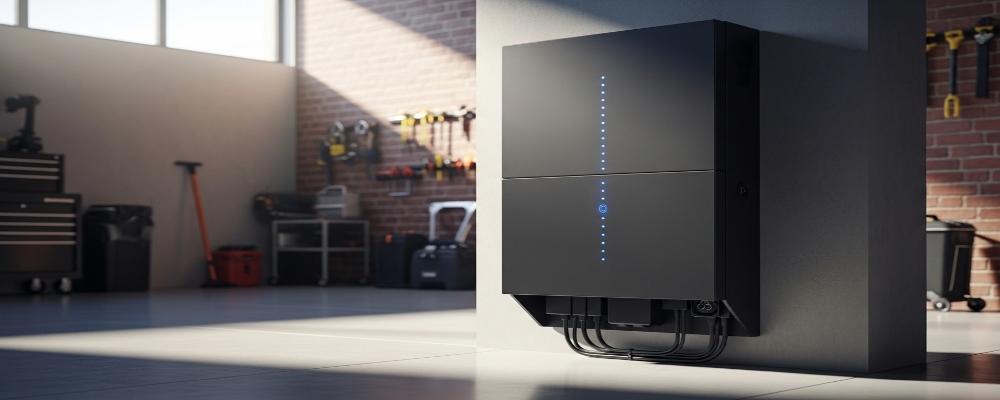 Integrated Home Energy Storage System 150–430V MPPT Design
2026-09-28
-
 LiFePO₄ Residential Backup Battery SOC Accuracy in Parallel Systems
Share this:





.svg)






-899.svg)


