




Home Energy Storage System Manufacturer for Modular Battery Expansion
A residential battery system should not be sized only for today’s electricity demand. EV charging, heat pumps, larger PV arrays, home electrification and longer backup expectations can turn an initial 10 kWh requirement into 15–20 kWh several years later.
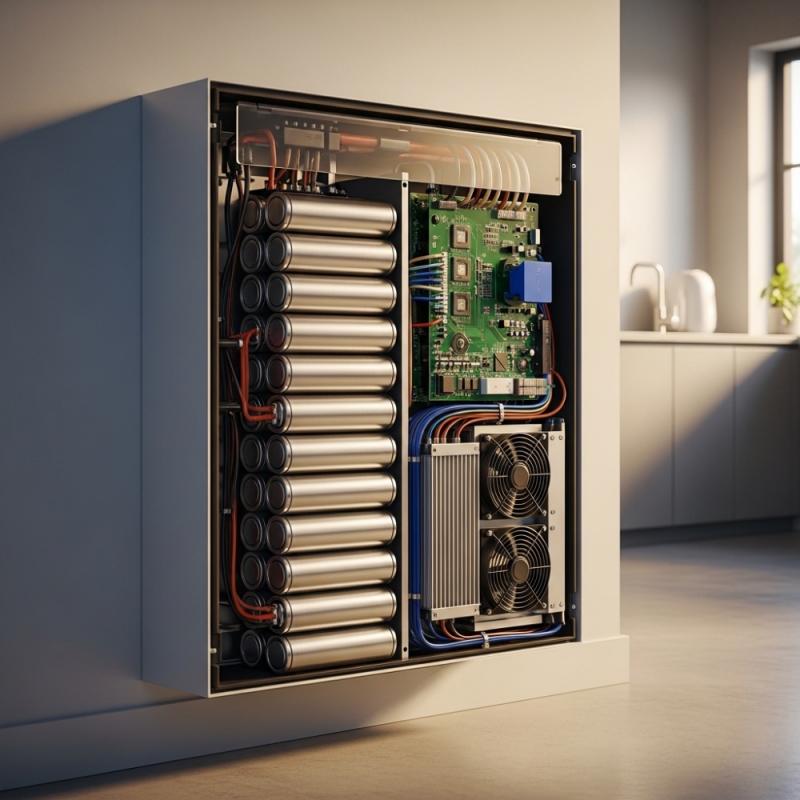
For this reason, choosing a Home Energy Storage System Manufacturer involves more than checking whether battery cabinets are stackable. Future expansion depends on electrical architecture, BMS coordination, inverter limits, current paths, firmware compatibility and protection design.
From VoltaLink’s perspective, a modular system should be engineered for expansion at the battery, communication and system levels from the first installation.
Expansion Capability Must Be Defined Before Installation
“Expandable” should mean more than leaving physical space for another battery.
A Home Energy Storage System Manufacturer should define:
• Maximum supported module quantity
• Nominal system voltage
• Parallel connection topology
• BMS communication architecture
• Maximum continuous charge/discharge current
• Compatible inverter protocols
• Cable, busbar and connector ratings
• Fuse or breaker requirements
• Rules for adding batteries after long-term operation
If these limits are unknown, the system is physically modular but not necessarily electrically scalable.
kWh Expansion and kW Expansion Are Different Engineering Problems
One of the most common mistakes in residential storage design is assuming that doubling battery capacity doubles system power.
For a 51.2 V battery:
51.2 V × 100 Ah ≈ 5.12 kWh
Four equivalent modules provide approximately 20.48 kWh of nominal energy. However, AC output may remain unchanged if the inverter or BMS is still limited to the original power level.
| Design Parameter | What It Actually Limits |
| Battery kWh | Backup duration and stored energy |
| Battery Ah | Total charge capacity |
| BMS current | Battery-side power capability |
| Inverter kW | Maximum AC output |
| Cable / busbar | Safe DC current carrying capacity |
| Fuse / breaker | Protection boundary |
The practical power limit follows the entire chain:
Cell → Battery Module → BMS → Connector → Cable → Busbar → Protection → Inverter
A competent Home Energy Storage System Manufacturer therefore evaluates energy and power separately.
Parallel Expansion vs. One Larger Battery
For low-voltage residential systems, future capacity is commonly added through compatible parallel battery modules rather than by changing the system voltage.
Each approach has trade-offs.
| Architecture | Advantage | Engineering Consideration |
| Multiple parallel modules | Flexible expansion and easier module replacement | Current sharing and communication become more complex |
| One large battery | Fewer cables and communication nodes | Lower future expansion flexibility |
| Larger inverter installed initially | Avoids future inverter replacement | Higher initial investment |
| Inverter upgraded later | Lower initial CAPEX | Future rewiring and recommissioning |
The correct choice depends on expected load growth, backup power demand, available installation space and the planned expansion horizon.
BMS Coordination Determines Whether Modules Can Work Together
The BMS becomes increasingly important as module count grows.
In a multi-battery system, the control architecture must monitor and coordinate:
• Module voltage
• Charge and discharge current
• Cell temperature
• State of charge
• Alarm conditions
• Available charge/discharge limits
• Communication status
A modular system may also require module addressing or master–slave coordination. Adding another battery without correct addressing can create communication conflicts or inaccurate aggregated SOC information.
CAN and RS485 Are Not Automatically Compatible
A physical CAN or RS485 port does not guarantee compatibility with an inverter.
The Home Energy Storage System Manufacturer must also consider:
• Protocol structure
• Baud rate
• Message IDs
• Battery identification
• Charge/discharge commands
• Firmware version
• Inverter communication profile
VoltaLink residential energy storage solutions use smart BMS control with communication interfaces such as CAN and RS485, supporting integration with compatible residential energy systems.
New Batteries and Aged Batteries Require Careful Matching
Future expansion becomes more difficult when the original battery has already operated for several years.
An aged battery may have:
• Lower SOH
• Higher internal resistance
• Reduced usable capacity
• Different voltage response under load
• Accumulated cycle history
• Firmware differences from newer production batches
This means that matching only nominal voltage is insufficient.
Before adding a new module, a Home Energy Storage System Manufacturer should evaluate at least:
Electrical Compatibility
• Chemistry
• Nominal voltage
• Capacity class
• Maximum current
Battery Condition
• SOC
• SOH
• Internal resistance
• Cycle history
Control Compatibility
• BMS firmware
• CAN/RS485 protocol
• Module addressing
• Inverter profile
SOC matching is not the same as SOH matching.
Two batteries may both indicate 50% SOC while having different usable capacities and internal resistance. Under high load, this can produce uneven current sharing and different voltage drops.
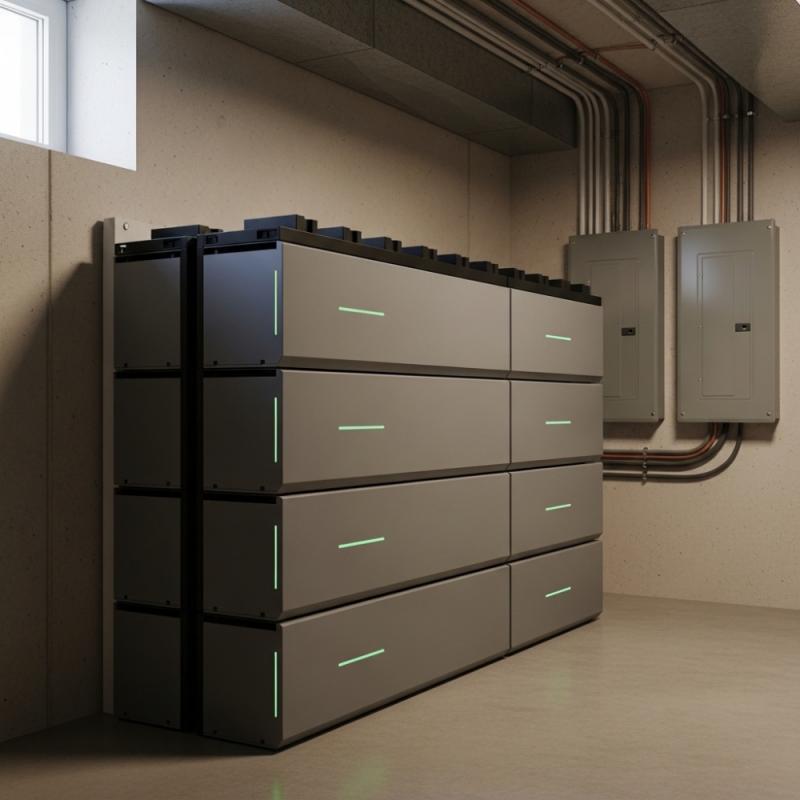
Battery Expansion Must Be Matched to the Entire DC System
Adding more battery modules can change the current available on the DC bus, even when nominal voltage remains the same.
Therefore, installers should recheck:
• BMS continuous current
• Inverter DC input limit
• DC cable cross-section
• Busbar ampacity
• Connector current rating
• Fuse rating
• Breaker rating
• Short-circuit protection
• Terminal torque
• Grounding and isolation
Equal Current Paths Matter
Parallel batteries should not simply be connected wherever space is available.
Poor cable routing can create unequal resistance between branches. A lower-resistance path may carry more current, causing one module to work harder than another.
Good system design considers:
• Cable length
• Cable cross-section
• Connection symmetry
• Busbar layout
• Terminal quality
This is one reason a professional Home Energy Storage System Manufacturer should provide an electrical expansion diagram rather than only a battery datasheet.
Installation and Maintenance Become More Complex After Expansion
A modular system should also be designed for serviceability.
As module count increases, installers need a practical method to identify, disconnect and replace one battery without unnecessarily dismantling the full system.
After adding capacity, recommissioning should verify:
• BMS module detection
• Communication status
• SOC synchronization
• Charge/discharge current limits
• Inverter recognition
• Alarm history
• Cable and terminal temperature
• Breaker and fuse configuration
• System charging and discharging behavior
These checks are especially important when new modules are added several years after initial installation.
Closing Words
As a Home Energy Storage System Manufacturer, VoltaLink develops residential LiFePO₄ storage solutions with modular configurations, BMS communication and system integration in mind. For distributors, installers and energy storage integrators planning systems that may grow with future household demand, VoltaLink’s residential energy storage portfolio provides a practical starting point for evaluating scalable battery architectures.
Explore VoltaLink residential energy storage solutions for projects where today’s capacity must remain compatible with tomorrow’s expansion.
FAQs
Q1. Does VoltaLink provide modular home energy storage systems for future capacity expansion?
Yes. VoltaLink offers residential LiFePO₄ energy storage solutions with modular and stackable configurations, allowing suitable systems to be planned around future capacity expansion requirements.
Q2. What should buyers confirm before expanding a VoltaLink residential battery system?
Buyers should confirm the supported module quantity, nominal voltage, BMS communication, inverter compatibility, firmware requirements, cable sizing and protection configuration before adding batteries.
Q3. Does VoltaLink support CAN and RS485 communication?
VoltaLink residential energy storage products can support communication interfaces such as CAN and RS485. Compatibility should always be confirmed for the specific battery and inverter combination.
Q4. Can a new battery module be added to an older VoltaLink system?
This depends on the battery model, SOC, SOH, firmware generation and system configuration. Existing and new batteries should be checked before parallel operation rather than connected based only on nominal voltage.
Q5. Can VoltaLink help match residential batteries with hybrid inverters?
VoltaLink develops residential energy storage systems with battery-to-inverter integration in mind. Buyers should provide inverter specifications and communication requirements so compatibility can be evaluated before ordering.

-

 OEM Residential Energy Storage Solutions: Passive vs. Active Cell Balancing
2026-09-30
-
 Smart Home Battery with BMS Communication: Cybersecurity and BMS Safety
 -
 10kWh Home Battery Backup System: Is 90% DoD Better for Daily Solar Storage?
2026-09-29
-
 Integrated Home Energy Storage System 150–430V MPPT Design
2026-09-28
-
 LiFePO₄ Residential Backup Battery SOC Accuracy in Parallel Systems
Share this:





.svg)






-899.svg)


