




Home Energy Storage Battery Factory’s Strategies for Grid-Friendly Design
Residential energy storage must interact with the public grid in a controlled and predictable way. A Home Energy Storage Battery Factory therefore needs to consider power conversion, charging behavior, communication, protection, and energy scheduling alongside battery performance.
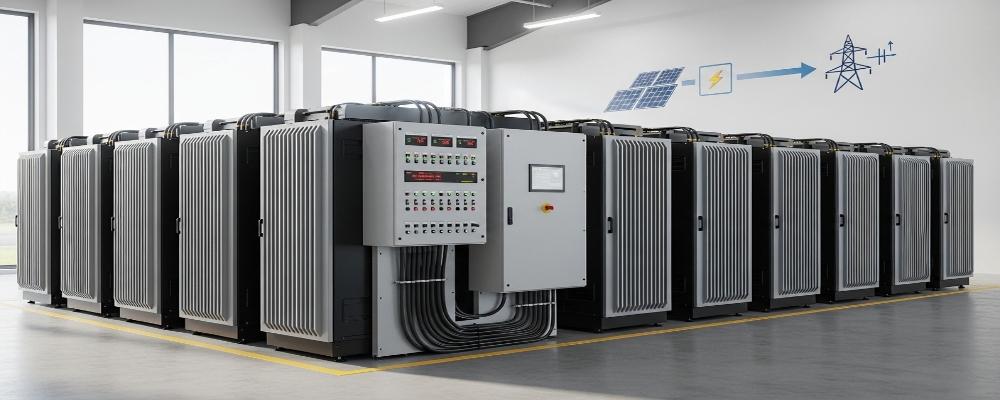
From VoltaLink’s perspective, grid-friendly design means coordinating solar generation, battery charging, household loads, and grid supply while reducing unnecessary power fluctuations.
What Is a Grid-Friendly Design?
A grid-friendly battery does not just charge when energy is available or discharge when a demand is present. A grid-friendly battery establishes coordinated control to decide when and how quickly and with what power the energy should move.
• Controlled Charging: Charging will be limited to the battery and inverter, wiring, and connection to the grid.
• Stable Discharging: Changes in output will address the problem created by the unpredictable changes in the household demand for power.
• Solar Self-Consumption: Any unused PV power will be consumed or stored on-site rather than leaving the site.
• Peak Load Support: Stored power will be useful when multiple household devices are used simultaneously.
• Backup Isolation: Protected circuits will be powered by the battery after backup power is supplied and the grid is disconnected.
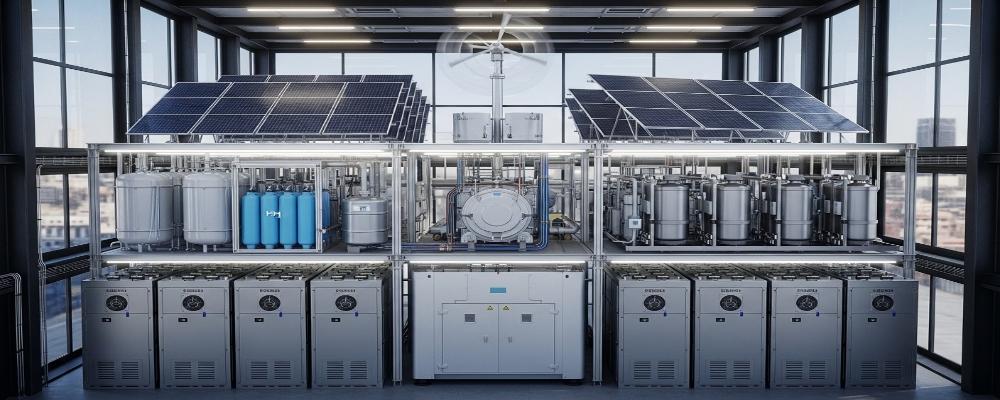
Core Components of a Grid-Friendly System
A Home Energy Storage Battery Factory should integrate several technical layers and should avoid treating the battery as a standalone product.
| Design Layer | Primary Function | Grid-Friendly Contribution |
| LiFePO4 battery pack | Stores DC power | Provides power within specified voltage and current range |
| BMS | Monitors cells, current and temperature | Prevents inappropriate charge and discharge |
| Hybrid inverter | Converts DC to AC and vice versa | Manages household power output and the grid |
| EMS | Plans energy flow | Manages PV, battery, grid, and household demand |
| PCS | Oversees bidirectional conversion | Regulates charge and discharge response |
| Protection system | Monitors and manages electrical faults | Aids in isolation and shutdown |
Matching Battery Energy with Output Power
The VoltaLink configuration mentioned uses a 25.6V, 314Ah LiFePO4 battery, which has a rated energy of 8,038Wh. Its AC side is designed to have a rated output of 3,000W and to provide a surge output of 6,000W for a limited period.
The values here cover a few different ways of looking at the performance of the system.
• Energy Capacity: The energy storage system has a rating of 8,038Wh. This rating is not inclusive of conversion losses and places a constraint on the system’s usable range.
• Rated Power: The power rating of the system is 3,000W, the maximum continuous output rating of the inverter.
• Surge Power: The rating is sufficient for starting some motor-operated appliances with the 6,000W rating.
• Load Priority: The system can prioritize the loads of refrigeration, lighting, communication, security, and medical appliances over other loads.
In a Home Energy Storage Battery Factory, optimal power matching can help mitigate the inverter overload, excessive current draws, and abrupt changes between the battery supply and the grid supply.
Managing Solar Input and Grid Export
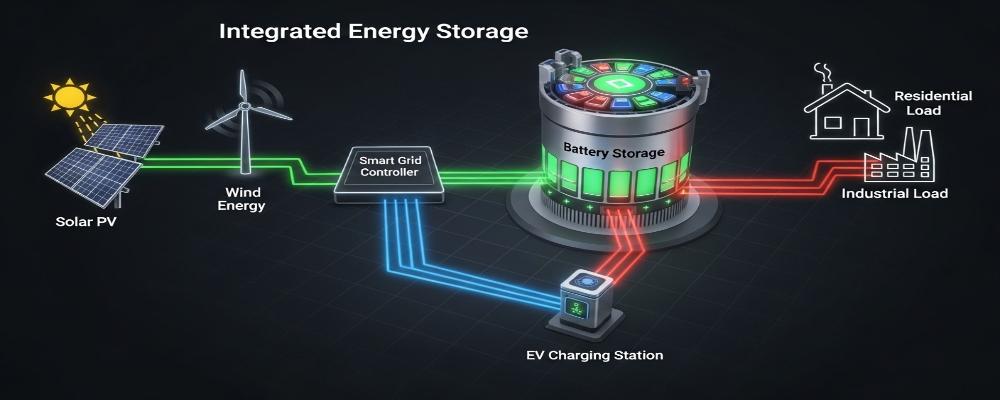
The system can work with MPPT devices rated at 4,000 W, with an operating range of 30 – 320 VDC and a maximum open-circuit voltage of 400 VDC. The MPPT solar controller manages solar input, and energy management systems (EMS) allocate the available energy.
• PV-to-Load Priority: The generated solar energy serves the household demand first before being used to charge the battery.
• Surplus Storage: The PV-generated surplus energy charges the battery instead of being exported to the grid.
• Charge Limiting: The charge can be limited if the battery approaches the predetermined control limits (temperature, State of Charge (SoC), or cell voltage).
• Export Control: The inverter is able to limit reverse power export in accordance with local regulations to control export.
• Gradual Response: Controlled changes in power allow for the smoothest and most gradual changes in the grid.
Maintaining Power Quality
The cutting-edge design of the grid maintains stable outputs of alternating current (AC). Using the VoltaLink configuration, the device generates pure sine waves, identifies 50/60 Hz on its own, and delivers over 90% performance of an inverter.
• Voltage Control: This allows for the operation of voltage-sensitive devices, as long as the total load is within the system’s limit.
• Waveform Quality: Pure sine wave output is acceptable for use with home electronic equipment and appliances containing motors.
• Conversion Efficiency: Improvement of the usable energy and reduction of excessive heat can be accomplished, but the load affects efficiency.
The design of the Home Energy Storage Battery Factory can maintain the quality of energy in the home and achieve a higher level of energy conversion efficiency.
Backup Operations and Grid Isolation
The energization of the external grid by a home battery is a prohibited condition during a utility outage. The inverter and associated protection devices must recognize the utility outage, disconnect the backup circuits, and supply power to the circuits containing only the loads approved for backup operation.
A Home Energy Storage Battery Factory should consider the following recommendations:
• Anti-Islanding Protection: The system should be able to disconnect from the grid per the relevant regulations.
• Critical Load Planning: Backup circuits should be able to cater to the demand of the inverter’s output, the energy from the battery, and the demand required to start the appliances.
• Restart Logic: The system should recover to its normal state of operation with the grid via a controlled sequence.
• Fault Protection: The system should be able to offer protection from overcharge, over-discharge, overcurrents, short circuits, and extremes of temperature.
• Installation Environment: The system should be installed in places where an enclosure with an IP20 rating is appropriate.
Why Communication Between Components Matters
The battery and the power-conversion equipment need to be in the framework of grid-friendly behavior. For that to happen, a high degree of communication is required.
The BMS sends information pertinent to battery voltage, current, temperature, state of charge, and protection status. The EMS then processes this information along with the data relevant to solar production and household consumption. The inverter or PCS then controls the charging/discharging power.
Ineffective communication results in:
• Overcharging: The inverter overcharges the battery due to the charging limits set by the battery.
• Involuntary System Shut Down: A lack of system component compatibility leads to protection events that will shut the system down.
• Ineffective Control of Energy Scheduling: Existing backup and peak-load management systems are rendered ineffective due to improper charging system definition.
• Inhibited Fault Diagnosis: The installer may find it difficult to identify the issue source amongst the battery, inverter, and communication.
For this reason, system-level compatibility testing is an important responsibility of a Home Energy Storage Battery Factory.
VoltaLink‘s Integrated Technical Approach
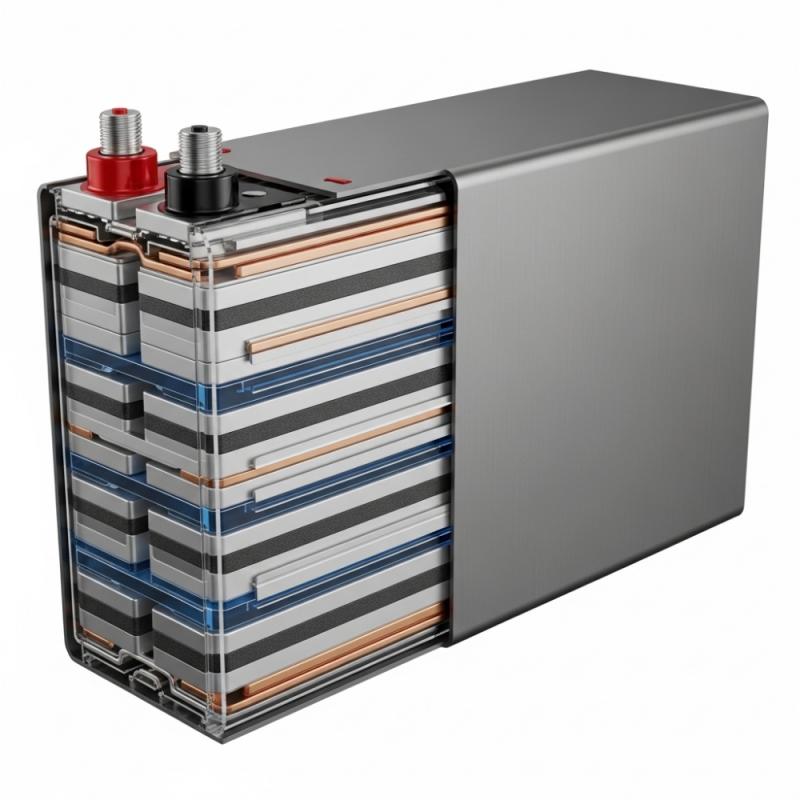
VoltaLink develops lithium battery packs and complete energy storage solutions. Its in-house capabilities cover hybrid inverters, BMS, EMS, and PCS technologies, helping the company consider communication and power control at the system level.
• BMS Customization: Requirements of the project can dictate adjustments concerning thresholds of protection, methods of communication, and logic.
• PACK Engineering: Customizations in voltage, capacity, configuration, connectors, busbars, and thermal management can be accommodated to your needs.
• System Testing: Inspection of voltage, current, and temperature along with the communication, charging, discharging, and fault response will be conducted prior to shipment.
• Regional Adaptation: Knowledge gained from over 3,000 projects in more than 140 countries will be applied to customize your solution with regards to voltage, frequency, interfaces, and guides.
• Quality Management: R&D, production, and quality management, along with after-sales service, can be integrated into a single management system.
UN38.3, MSDS, CE, FCC, RoHS, and other documents can be provided based on the specific product and destination market. Buyers should verify the applicable certification scope before procurement.
Closing Words
Grid-friendly residential storage depends on coordinated system control rather than battery capacity alone. A qualified Home Energy Storage Battery Factory should consider battery chemistry, inverter response, MPPT control, load priority, anti-islanding protection, power quality, communication, and regional requirements as one connected design.
VoltaLink combines LiFePO₄ battery production, BMS and PACK customization, and in-house inverter, EMS, and PCS development. This supports residential systems designed around household reliability and controlled grid interaction.
FAQ
Q1: What is the nominal voltage and capacity?
A: 48V DC nominal voltage with 200Ah rated capacity (~9.6 kWh usable energy).
Q2: How long does the battery last?
A: The LiFePO4 cells provide 3,000–6,000 cycles depending on depth of discharge.
Q3: Can multiple units be connected?
A: Yes, units can be connected in parallel to increase storage capacity.
Q4: Is it suitable for outdoor installation?
A: Yes, the system is built to withstand extreme temperatures and harsh residential environments.
Q5: Does it support remote monitoring?
A: Yes, the BMS supports CAN, RS485, and optional Modbus interfaces for real-time monitoring.

-

 OEM Residential Energy Storage Solutions: Passive vs. Active Cell Balancing
2026-09-30
-
 Smart Home Battery with BMS Communication: Cybersecurity and BMS Safety
 -
 10kWh Home Battery Backup System: Is 90% DoD Better for Daily Solar Storage?
2026-09-29
-
 Integrated Home Energy Storage System 150–430V MPPT Design
2026-09-28
-
 LiFePO₄ Residential Backup Battery SOC Accuracy in Parallel Systems
Share this:





.svg)






-899.svg)


