




Home Battery Storage for Power Outage: Critical Loads or Whole-Home Backup?
When planning Home Battery Storage for Power Outage, homeowners face one question: should the system support essential circuits or provide backup across most of the home?
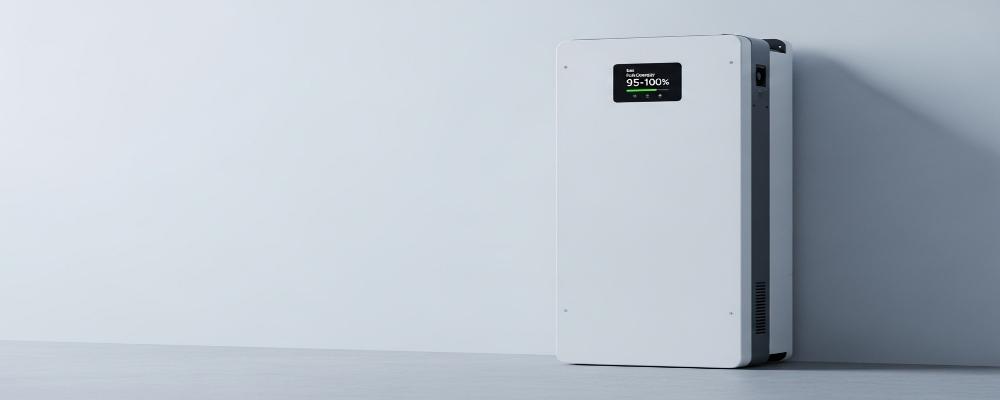
The answer depends on outage duration, appliance demand, inverter output, starting current, solar availability, installation design, and expansion. From VoltaLink’s perspective, Home Battery Storage for Power Outage should be sized around household priorities rather than capacity alone.
Which Loads Must Remain Powered?
First, determine essential loads and loads that can be deferred.
| Load Category | Typical Equipment | Main Question |
| Food Preservation | Refrigerator and freezer | How long do we need to protect food? |
| Communication | Router, modem, and phone chargers | Is connectivity 24/7 needed? |
| Safety | Lighting, alarms, and cameras | What circuits need to be powered? |
| Water Systems | Well pump or sump pump | What is the starting demand? |
| Comfort | Fans, heating controls, and HVAC | Does this need to run, and can we limit operation? |
| Convenience | Oven, dryer, and EV charger | Can we defer these loads? |
What Is Critical-Load Backup?
A specific backup power system that allows selected circuits to receive temporary power through a backup panel.
• Longer Runtime: Fewer connected loads means less load on the storage, thus increasing the runtime.
• Demand Control: The loads from the heating, cooking, and charging can be disconnected.
• Load Sizing: A load list simplifies the calculations.
• Starting Capacity: The system can start off with only one battery and be expanded later.
Less convenience for the user is the trade-off. Non-priority circuits will not be powered.
What Is Whole-Home Backup?
Whole-home backup connects almost all home circuits. Whole-home backup systems are more flexible but wouldn’t allow all household appliances to operate at once.
Consider this system first:
• Combined Demand: What appliances would likely be able to operate at the same time?
• Starting Surge: Are the inverter’s surge capabilities able to start circuits of pumps, compressors, or some HVAC equipment?
• Load Control: Are there provisions to automatically limit non-essential circuits?
• Expansion: Is it expected to be a greater need for more battery capacity in the near future?
Critical Loads vs. Whole-Home Backup
| Factor | Critical-Load Backup | Whole-Home Backup |
| Coverage | Selected circuits | Most household circuits |
| Capacity | Usually lower | Usually higher |
| Runtime | Generally longer | Generally shorter |
| Inverter Demand | Priority loads | Combined household loads |
| Installation | Dedicated backup panel | Wider panel integration |
| Load Management | Helpful | Often important |
| Convenience | More restricted | More flexible |
Neither option is universally better. The practical choice depends on how stored energy should be allocated.
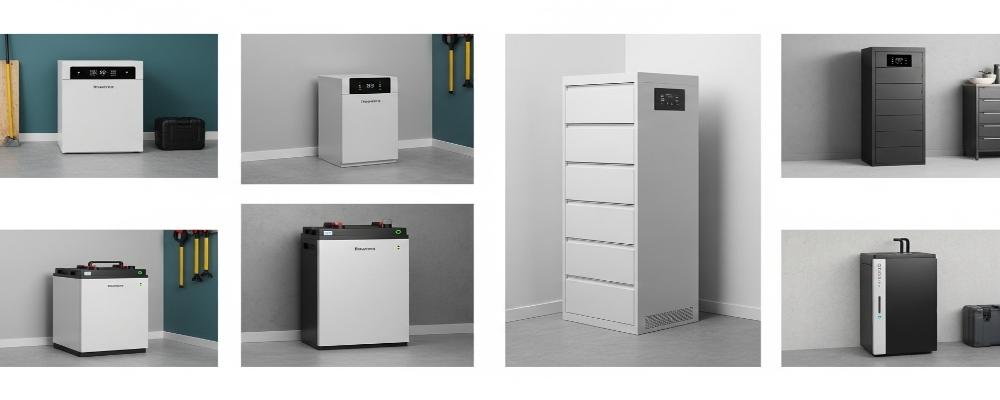
Is 16.07 kWh Enough?
A 51.2V 314Ah LiFePO4 battery has roughly 16.07kWh of capacity. However, because of component efficiencies, temperature, and load, the actual usable stored energy will be less and will affect how long the battery can be used.
A battery will power a home with a consistent load profile of 1kW for a far longer time than a home profile with a maximum load of 4kW. Given the above factors, the following should be considered:
• Daily Energy: energy that is expected to be consumed on a daily basis.
• Peak Power: The highest level of power demand at a given time for the house.
• Starting Power: The initial power demand of loads with a starting inertia, like motors.
• Reserve Level: The lowest level of energy that should be kept available for future use.
• Solar Recharging: The opportunity of solar charging during a blackout of the grid.
Why Capacity and Power are Different
Capacity refers to the length of time that demand for energy can be satisfied, and power refers to the maximum quantity that can be drawn at one time.
The VoltaLink battery platform provides 51.2V nominal voltage, 314Ah capacity, 150A continuous charging, and up to 300A continuous battery-side discharge. Household AC output still depends on the inverter, surge rating, BMS limits, cable sizing, and protection.
| Appliance | Main Challenge | Possible Strategy |
| Refrigerator | Compressor startup | Keep it as a priority load |
| Air Conditioner | High energy and surge demand | Use staged operation |
| Well Pump | Strong starting current | Verify pump specifications |
| Electric Oven | High sustained consumption | Restrict use during outages |
| EV Charger | Rapid battery depletion | Pause or reduce charging |
A battery may therefore contain enough energy for several hours but still be unable to start a particular appliance if the inverter or electrical system is undersized.
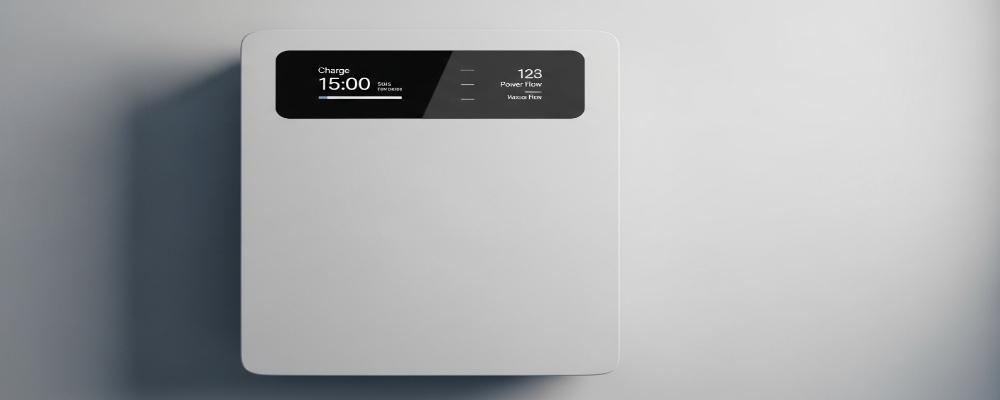
When Is Capacity Expansion Required?
VoltaLink’s modular system can support up to six batteries in parallel. This can result in an approximate increase of rated storage from 16.07 kWh to around 96 kWh.
• Longer Outages: Increasing the number of modules can increase the duration of your power outage backup.
• Broader Coverage: Additional modules can increase backup power coverage to more sections of the house.
• More Solar Generation: Can assist in storing more surplus solar power.
• Higher Demand: The addition of more equipment can increase the demand for power in the home.
Multiple installations require compatible inverters with batteries. Adding batteries will allow you to store more energy; however, you will not be able to power more AC loads unless the system is configured to support more AC loads.
What Is an Effective Strategy for Load Prioritization?
This can be achieved with the use of an energy management system.
• First Priority: Keep running refrigeration, security, comms, lighting, and essential medical loads.
• Second Priority: Home-office equipment, water pumps, and specific outlets can run with available energy.
• Third Priority: Use, or allow to function, the HVAC systems, cooking appliances, and entertainment equipment, and allow EV charging.
• Reserve Control: Keep a minimum state of charge in the battery for use when needed overnight or during an emergency.
Interfacing compatible inverters and energy controllers can be achieved through RS485, RS232, and CAN communication. For monitoring and automatic load management along with prioritization, the entire system has to be configured.
Safety, Communication, and Installation
The battery has the advantage of being thermally stable, having prolonged cycles, and being stable in storage. LiFePO4 is one of the most popular chemistries in residential applications.
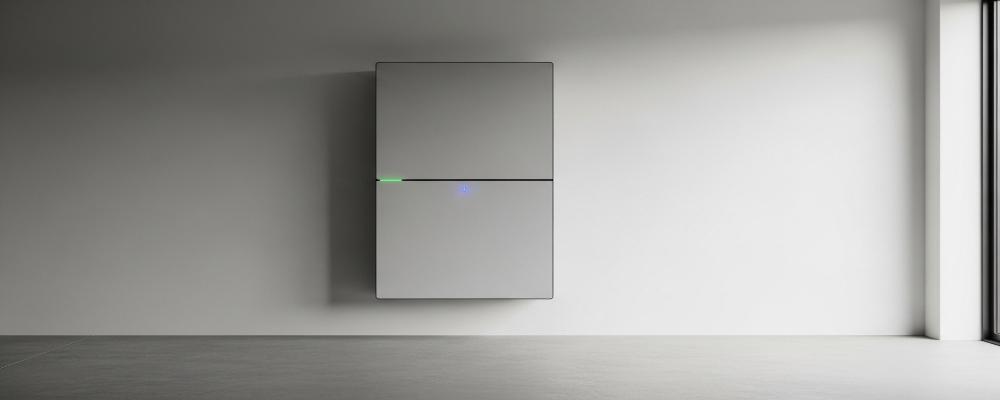
The battery has an IP20 enclosure and is designed for indoor use. The battery has to be installed considering temperature, humidity, airflow, space for servicing, and the local regulations.
It will be referenced in the documentation of UL 1973, UL 9540, UL 9540A, and IEC 62619. Buyers should confirm the certification or test scope that applies to the supplied battery and complete energy storage configuration.
Designing Home Backup Systems with VoltaLink
Selecting a critical-load or whole-home backup system is more than a battery size comparison. VoltaLink’s features like cell matching, BMS setup, communication checks, modular design, and production testing help ensure that the system works well together.
Please provide VoltaLink details about your household loads, expected outage durations, your inverter, solar system details, and any future solar system expansions. We will assist you with the design of a home battery storage for power outages based on your specific needs for storage duration, power, and preferences for system installation and system compatibility.
FAQs
Q1: How long can a residential high capacity battery supply power during outages?
A1: Depending on the home’s energy demand and battery size, it can provide backup power for several hours to multiple days.
Q2: Is the installation process complicated?
A2: No, modular design and pre-configured components allow for easy installation, even in confined home spaces.
Q3: Can these batteries work in extreme temperatures?
A3: Yes, the system’s temperature-resistant housing ensures reliable operation in hot or cold conditions.
Q4: How is system maintenance managed?
A4: Remote monitoring and automated alerts reduce the need for manual checks, keeping the system efficient and reliable.

-

 OEM Residential Energy Storage Solutions: Passive vs. Active Cell Balancing
2026-09-30
-
 Smart Home Battery with BMS Communication: Cybersecurity and BMS Safety
 -
 10kWh Home Battery Backup System: Is 90% DoD Better for Daily Solar Storage?
2026-09-29
-
 Integrated Home Energy Storage System 150–430V MPPT Design
2026-09-28
-
 LiFePO₄ Residential Backup Battery SOC Accuracy in Parallel Systems
Share this:





.svg)






-899.svg)


