




High-Capacity Home Battery Storage with Modular Stacking
Household electricity requirements are not static. For example, backup power may be required for lighting, refrigeration, internet devices, and security systems at first, but later may be required for air conditioning, heat pumps, workshop tools, or an enlarged solar array.
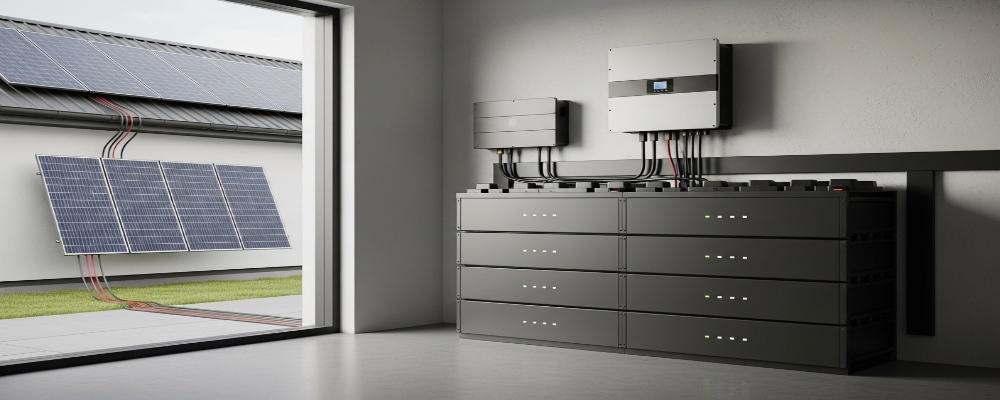
This raises a significant planning issue. Would it be preferable for the homeowner to install a large fixed-capacity battery right away, or should they install high-capacity home battery storage systems of modular design, which can be added to later?
Modular stacking provides a flexible option, but stackability alone does not determine system performance. Capacity, inverter output, solar input, module consistency, safety protection, installation conditions, and future compatibility should all be evaluated together.
From VoltaLink’s perspective, practical high-capacity home battery storage should operate as an integrated energy system rather than simply a collection of battery modules.
What Is Modular High-Capacity Home Battery Storage?
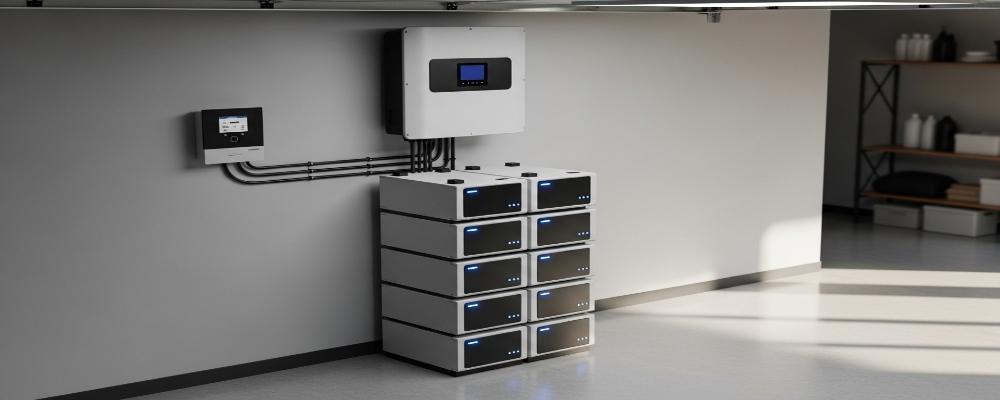
A modular stacked battery divides the storage system into compatible layers. The modules are arranged vertically and connected through structural interfaces, electrical conductors, and battery management communication.
A typical system may consist of LiFePO₄ cells, a nominal voltage of 51.2V, a total of 200Ah, and a total of approximately 10.24 kWh of nominal energy. As energy requirements change, additional compatible storage modules may be incorporated within the limits of system expansion.
Modular design has many advantages:
• Better use of space: Battery modules may be stacked in vertical lines (i.e., arrays).
• Expanding Storage: Initially, battery modules can be installed at the base storage capacity level to meet the needs of the homeowner, and later modules can be added as necessary.
• Ease of placement: Positioning of the modules is facilitated if a structural connection provides direction.
• Coordinated systems and monitoring: The BMS takes the responsibility of monitoring and controlling the modules’ voltage, current, temperature, and state of charge.
• Adaptive and flexible planning of the storage system: The storage system can grow along with the solar system, the electrification of the home, or the backup needs.
Fixed Capacity or Modular Stacking?
The suitable structure depends on the household’s expected energy development.
| Evaluation Area | Fixed-Capacity System | Modular Stacked System | Question to Ask |
| Initial sizing | Full capacity is selected at installation | A base capacity can be installed first | Is future demand expected to increase? |
| Expansion | May require replacement or parallel equipment | Compatible modules may be added | What is the supported expansion limit? |
| Space use | Determined by one enclosure | Uses more vertical space | Is sufficient installation height available? |
| Investment | More capacity may be purchased immediately | Spending can be divided into stages | Is phased investment more practical? |
| Maintenance | The complete enclosure may require inspection | Modules may be checked separately | Can individual modules be serviced? |
| Compatibility | Configuration remains relatively fixed | Future modules must match the system | Will later modules and firmware remain compatible? |
Modular high-capacity home battery storage is generally useful when future demand is uncertain. However, the first installation should still reserve sufficient space, electrical protection, inverter capacity, and communication support for expansion.
How Much Stored Energy Is Actually Usable?
Nominal energy does not equal the final AC energy delivered to household appliances.
A 51.2V, 200Ah battery provides approximately 10.24kWh of nominal DC energy. At a depth of discharge of up to 90%, the theoretical usable DC energy is approximately 9.2 kWh. Inverter losses, standby consumption, temperature, cable resistance, and control settings can reduce the final usable amount.
| Energy Stage | Approximate Value | Main Influence |
| Nominal battery energy | 10.24kWh | Voltage and ampere-hour rating |
| Energy at 90% DoD | About 9.2kWh | Discharge limit |
| Converted AC energy | Lower than usable DC energy | Inverter and wiring losses |
| Practical household energy | Application dependent | Load pattern, temperature, and reserve settings |
Homeowners should therefore ask how much capacity must remain available for outages after normal solar self-consumption or tariff-based cycling.
Does a Larger Battery Support More Appliances?
Not necessarily. Energy capacity and output power describe different aspects of high-capacity home battery storage.
This context distinguishes between kilowatt-hours and kilowatts. The first relates to potential runtime, while the second relates to how many devices can be powered at the same time. A device with a rated AC output of 5,500W and a surge output of 11,000W can support many household loads, but the real result depends on the loads’ combined demand and startup demand.
Important points to consider are:
• Continuous load: What is the total running power of all the devices that could potentially run at the same time?
• Startup surge: Does the starting demand of air conditioners, refrigerators, pumps, and tools require additional starting demand?
• Critical circuits: Which loads need to be kept running when the power is out?
• Backup time: Is this device meant to be used during short power outages, run overnight, or used off-grid for longer periods?
• Inverter limitation: If additional battery modules were added, could it potentially increase runtime while output power stays the same?
Typically, additional storage modules will increase available energy, but this won’t increase the inverter’s power rating.
When Is Battery Capacity Expansion Required?
The expansion of battery modules should be in response to demands for energy and not based on a desire to have more power capacity.
| Possible Trigger | Response Evidence | Proposed Action |
| Frequent Solar Export | Daytime exports exceeded consumption on a regular basis | Look at storage options beyond the MPPT limits. |
| Inadequate Outage Run Time | Loads are dropped prior to reconnection to the grid | Look at additional battery capacity options that are compatible. |
| New Appliances | Increase in daily energy consumption and in peak power requirements | Re-evaluate both energy and power requirements. |
| Low State of Charge (SOC) Each Evening | Full capacity is utilized on a daily basis | Look at enlarging both the storage capacity and the charging opportunities. |
| Increased Energy Self-Sufficiency | Intended reduction in grid usage | Look at the coordination of batteries, solar, and backup generation systems. |
| Changes in Seasonal Demand | Increased energy consumption due to heating or cooling | Look at the energy profile for summer and winter. |
A larger battery requires more charging capacity in order to satisfy its needs. If either the solar array or the grid charger cannot provide the necessary support to the expanded battery, the additional capacity is likely to remain underutilized.
The Importance of Consistency Among Modules
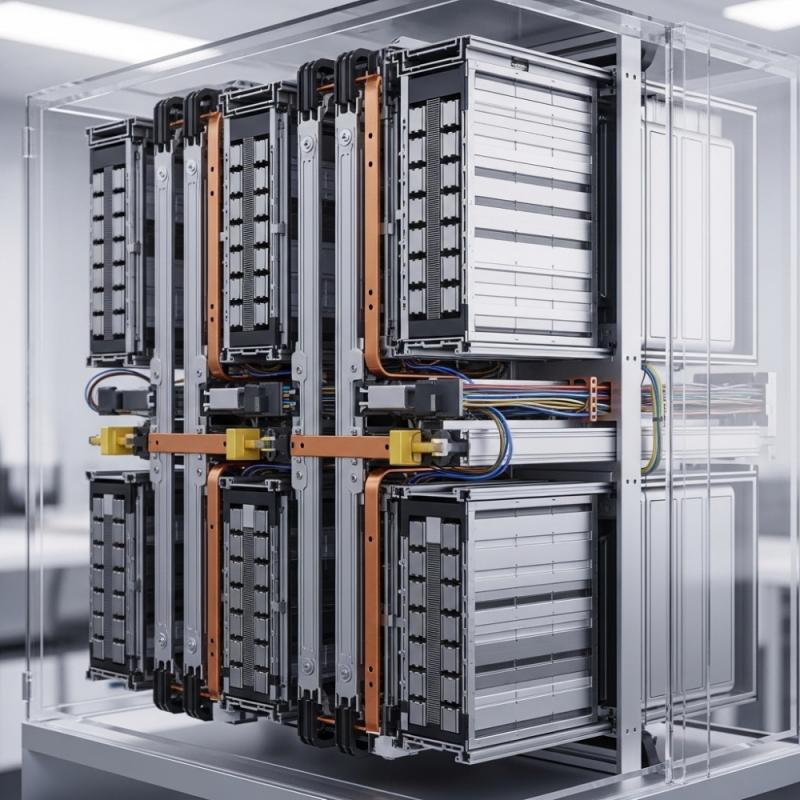
In stacked battery systems, inconsistency between the elements or modules of the system can lead to a decrease in overall capacity. If one module reaches its voltage limit, the BMS will prevent the entire stack from being utilized.
At VoltaLink, we focus on some of the following products and processes in our manufacturing:
• Cell sorting automatically by measures of capacity, voltage, and resistance
• Laser welding with a high level of control to allow more repeatable connections
• Controlled packing to allow stable stacking of modules
• Testing of modules to allow full verification of capacity
• Insulation testing to verify electrical isolation before system integration
• Smart BMS balancing to allow management of voltage differences during charging and discharging
While we do our best to focus on consistency, the actual performance of the system will be influenced by a number of additional factors such as temperature and the depth and rate of cycling.
Applications for Modular Storage
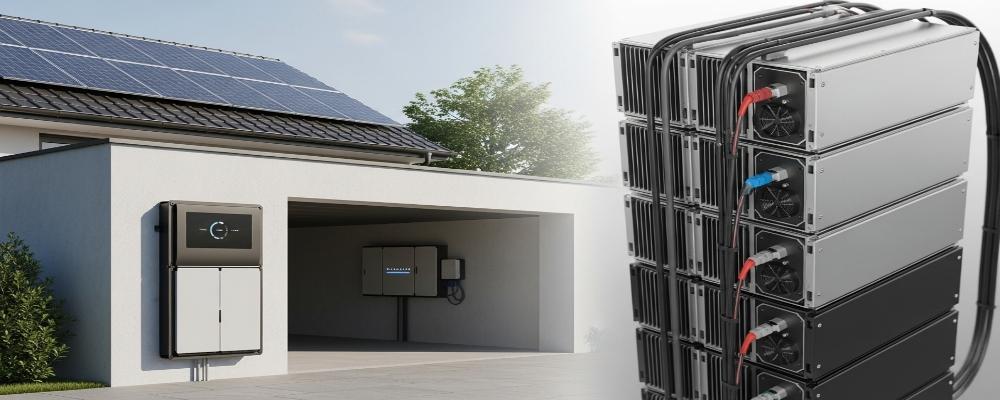
• Photovoltaic energy used during the day can be stored for later use in the evening.
• Modular storage can ensure lighting, refrigeration, and even communication circuits remain operational.
• Properties that do not have a consistent occupancy can benefit from the low self-discharge characteristics.
• In areas off the electric grid, modular storage can be utilized in conjunction with other energy sources and solar energy.
• The system can support the lighting and even tools of small workshops, provided the tools are within the limit of the inverter.
• Modular storage can be used at distributed energy nodes for buffering power at small installations.
Concluding Remarks
Modular stacking allows high-capacity home battery storage to be adapted more easily as household loads, solar capacity, and backup demands evolve. Careful planning of the system should still take into consideration usable energy, inverter capacity, surge demand, input for charging, BMS, installation, and growth possibilities for the future.
VoltaLink uses LiFePO4 cells, a modular design, controls for cell consistency, smart battery management, and production testing to help with home solar storage, backup power, and small off-grid uses.
Contact VoltaLink to discuss a suitable modular storage configuration for your project.
FAQ
Q1: Is this system wall-mounted?
A: No, it is a stacked floor-standing modular system, not wall-mounted.
Q2: Can the capacity be expanded?
A: Yes, multiple modules can be stacked or connected in parallel to increase total storage capacity.
Q3: Is it compatible with solar systems?
A: Yes, it works with most solar inverters and PV systems.
Q4: How long is the cycle life?
A: Typically over 6000 charge-discharge cycles depending on usage conditions.
Q5: Does it support remote monitoring?
A: Yes, optional communication interfaces support real-time monitoring via BMS.

-

 OEM Residential Energy Storage Solutions: Passive vs. Active Cell Balancing
2026-09-30
-
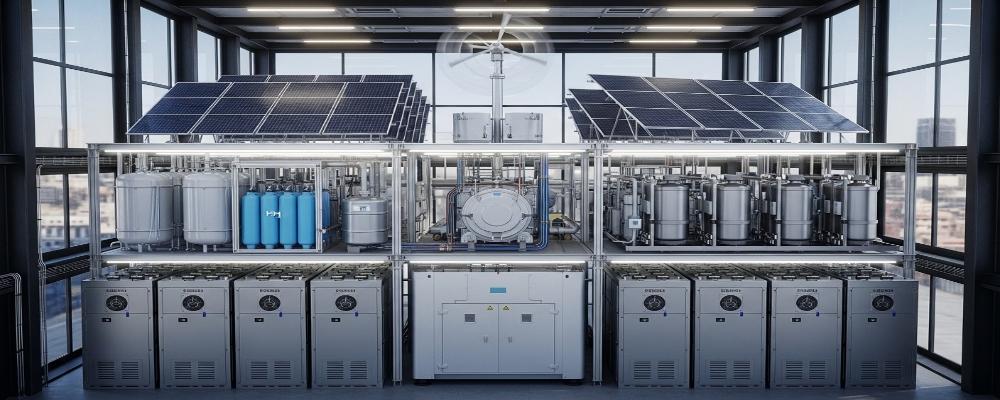 Smart Home Battery with BMS Communication: Cybersecurity and BMS Safety
 -
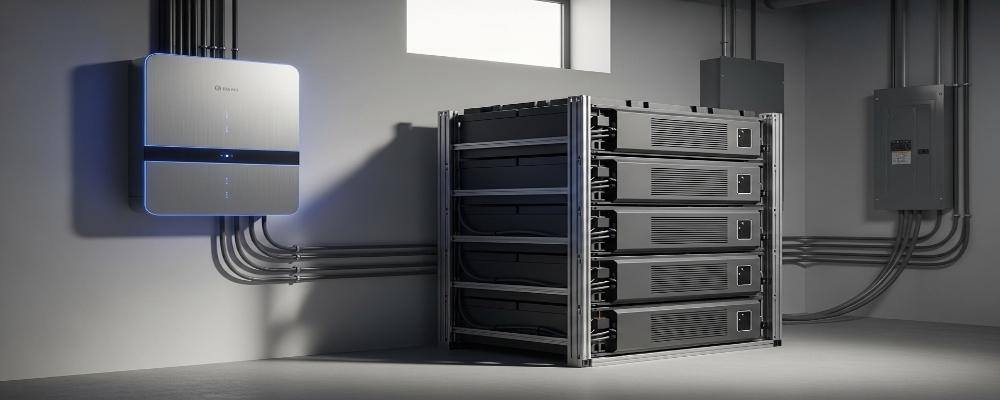 10kWh Home Battery Backup System: Is 90% DoD Better for Daily Solar Storage?
2026-09-29
-
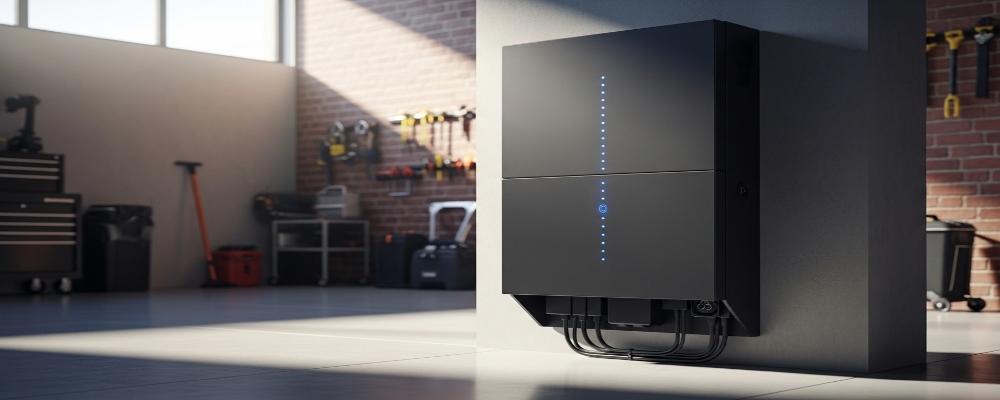 Integrated Home Energy Storage System 150–430V MPPT Design
2026-09-28
-
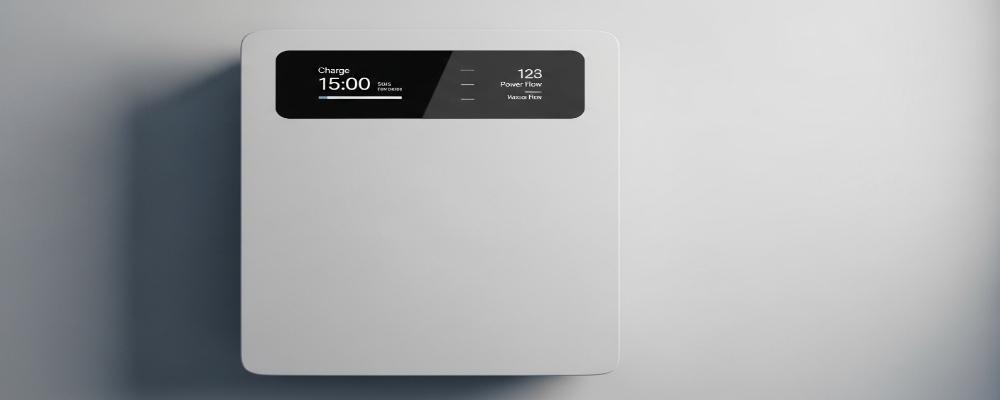 LiFePO₄ Residential Backup Battery SOC Accuracy in Parallel Systems
Share this:





.svg)






-899.svg)


