




Best Home Battery Storage System for Dynamic Electricity Tariffs and Time-of-Use Savings
The introduction of dynamic electricity pricing and time-of-use rates has transformed the purchasing and consumption patterns of households with respect to electricity. Rather than paying the same average price for electricity during the day, households may pay a higher price as demand for electricity increases and a lower price during off-peak periods.
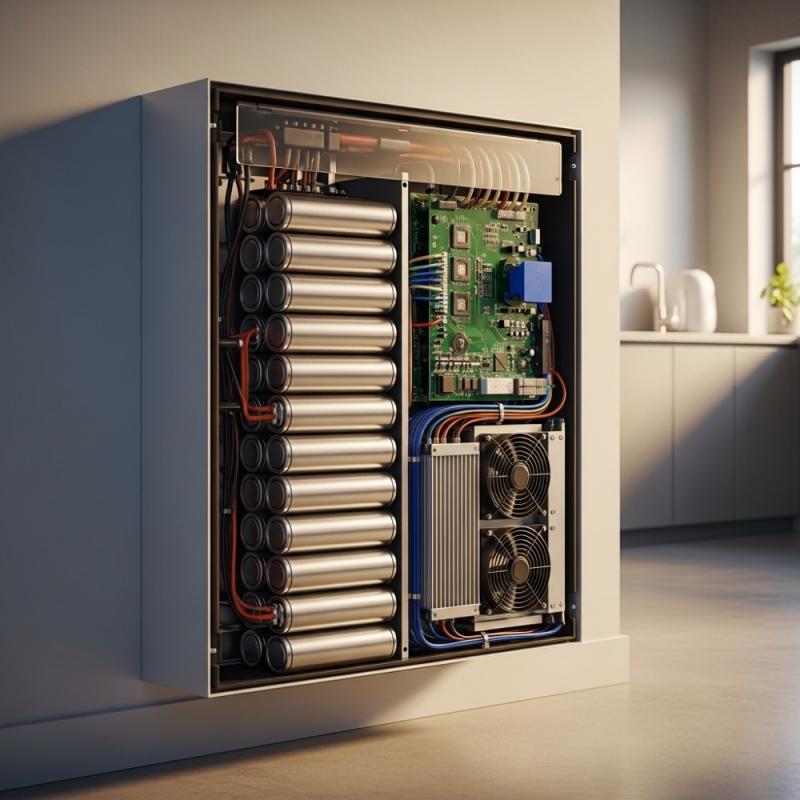
A residential battery could charge from the grid at off-peak (lower cost) times or charge from surplus solar energy and then discharge to the home during times of higher tariff. While a home battery could be a significant investment, it may not result in cost savings for the homeowner. The Best Home Battery Storage System should match the household’s tariff structure, load profile, solar generation, backup requirements, and appliance power demand.
Rather than asking which battery is universally better, homeowners should begin with several practical questions.
How Does the Electricity Tariff Work?
First, do electricity prices fluctuate enough to warrant energy shifting?
| Tariff Type | Pricing Structure | Possible Battery Strategy | Key Issue |
| Flat Rate | Tariffs remain consistent during the day | Focus on solar self-consumption and provide backup | Limited margin for tariff-arbitrage |
| Time-of-Use | Discrete peak and off-peak periods | Charge during off-peak and discharge at peak | Needs to be scheduled |
| Dynamic Tariff | Hourly volatility | Respond to price signals and adjust forecasts | Variable savings |
| Export Tariff | Payment for exported solar electricity | Balance export earnings to stored energy | Lower storage economy is not viable |
The optimal Home Battery Storage for time-of-use savings should allow the user to set charge times, discharge times, solar use and back-up reserves.
When Does the Household’s Peak Energy Demand Occur?
The load curve of the household heavily influences battery use. If the evening load is significantly high, the household may benefit from storing solar generation at midday. On the other hand, if the load is high during the day, the household may use the solar generation immediately.
| Household Profile | Typical Load Pattern | Main Battery Role | Selection Priority |
| Evening-Heavy Home | Uses energy for cooking, lighting, etc. during evening hours | Use stored solar energy during evening hours | Usable capacity |
| Home Office | Uses energy during all working hours | Flatten peak demand | Power response |
| Frequent-Outage Area | Bad supply of electricity from the grid | Essential loads only | Reserve capacity |
| Heat Pump Home | Yearly cycles for long demand | Heating and scheduling of battery demand | Capacity and continuous output |
| Home with Pumps or Air Conditioning | Requires high sudden demands of energy | Support short sudden demands | Surge power |
It can be demonstrated with this comparison that when it comes to the Best Home Battery Storage System, battery capacity alone is not a parameter to choose the system.
Capacity, Output Power, and Surge Power
The concepts of battery capacity and inverter output define the boundaries of the same system.
• Battery Capacity: Refers to the total amount of energy that can be stored. The unit is expressed in kilowatt-hours.
• Rated Power: Indicates the inverter’s output capacity and the maximum continuous load supported. The unit of measurement is kilowatts.
• Surge Power: It helps supply the short starting-current demand of compressors, pumps, and motor-driven equipment.
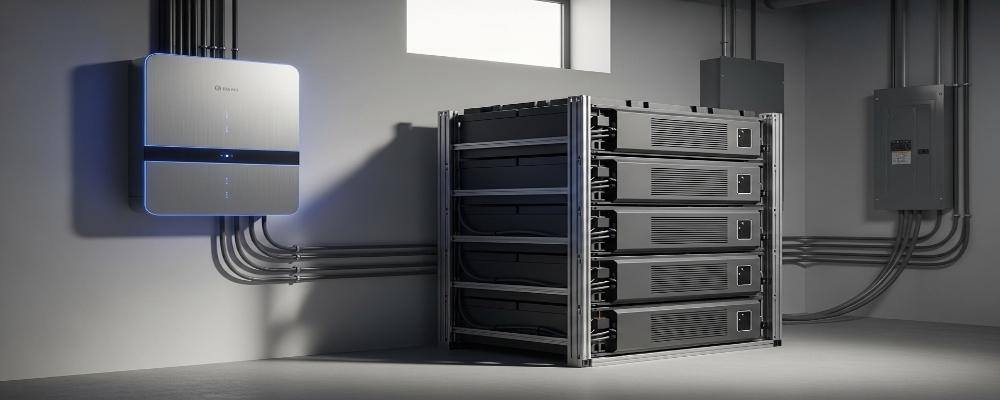
VoltaLink’s residential LiFePO4 solution combines a 51.2V, 100Ah battery with 5.12kWh of rated energy and a 5200W pure sine wave inverter.
| Parameter | Specification | Practical Importance |
| Battery material | LiFePO4 | Good for cycle use in residential settings |
| Rated Energy | 5.12kWh | Defines maximum capacity for storage of energy |
| Rated Inverter Power | 5200W | Allows loads of a certain continuous rating |
| Surge Power | 10400W | Helps to cope with a short demand for starts |
| Peak Efficiency | ≥90% | Helps understand impact of conversion energy |
| AC Output | 230VAC ±5% | Designed for certain residential networks |
| Frequency | 50/60Hz auto sensing | Works with regional differences in frequency |
The actual usable energy is usually less than the rated energy. This is due to inverter losses, temperature effects, Battery Management System effects, reserve settings, and wiring resistance.
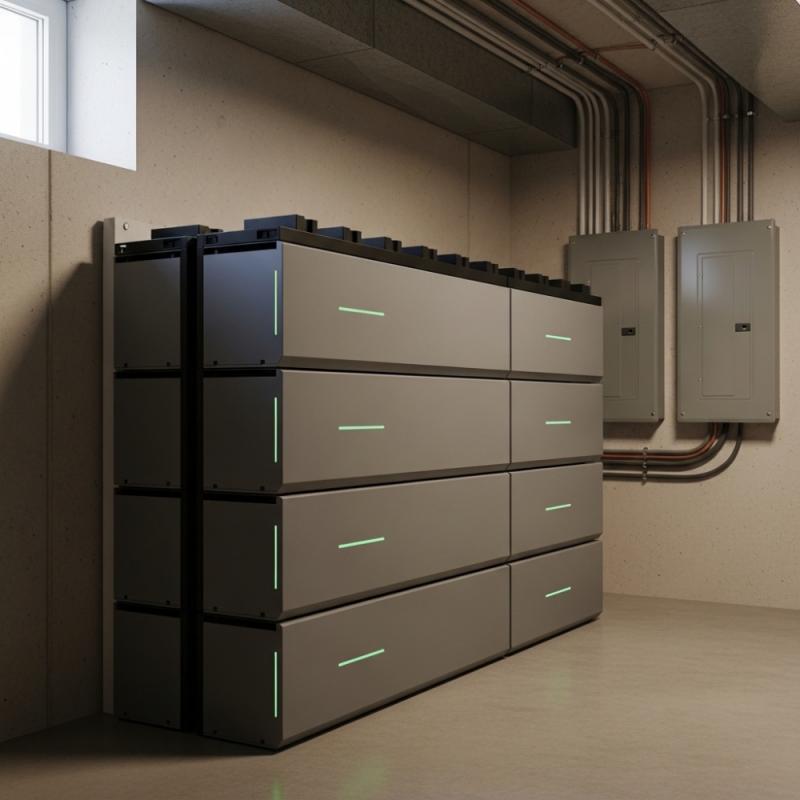
What Is the Better Charging Source for Batteries: Solar or Grid?
There is no single correct answer to this question. The answer will be determined by the pricing of electrical grids, the pricing and accessibility of solar energy, the pricing of energy sold to the grids, and the requirements for back-up energy.
Solar-First Operation
• Direct Use of Solar: Use solar energy directly for any use that creates demand for energy on the site.
• Surplus Storage: Charge the batteries with any excess solar energy.
• Discharge: Use the stored solar to avoid night-time purchases from the grid.
Tariff-First Operation
• Charge Off-Peak: Use low-cost electricity from the grid to charge the battery when permitted.
• Discharge Peak: Use the battery to supply on-site demand during expensive grid supply hours.
• Backup Reserve: Part of the capacity remains available for outages.
The VoltaLink system supports up to 6000W of MPPT power, a 150–430VDC MPPT operating range, a 450VDC maximum open-circuit voltage, and an 18A maximum input current.
| Operating Condition | Solar-First Strategy | Tariff-First Strategy |
| Sunny Day | Store surplus solar generation | Reduce grid charging |
| Cloudy Day | Use available solar input | Supplement during off-peak hours |
| High Export Rate | Consider exporting surplus power | Avoid unnecessary cycling |
| High Peak Price | Discharge stored solar energy | Increase scheduled discharge |
| Elevated Outage Risk | Maintain a larger reserve | Limit tariff-based discharge |
The Best Home Battery Storage System should allow these priorities to be adjusted rather than applying one fixed operating pattern.
Important Energy Management Configurations
Controls design the intent of the stored energy, be it savings, solar maximization, or backup.
• Minimum State of Charge: Holds a reserve for emergencies.
• Charging Schedule: Charge occurs at pre-defined times to take advantage of lower energy costs.
• Discharging Schedule: Considers a grid energy purchase at a pre-defined time.
• Solar Priority: Energy needs of the household circumvent battery charging and export of solar energy.
• Load Priority: Pre-defined load appliances are powered first from stored energy.
• Active Charging: The solar or grid energy used in this scenario will determine how the battery charging process will be varied.
Stable operations of VoltaLink are achieved when layering the distribution of energy, charging that adapts to the demands of the household, and rapid modular systems.
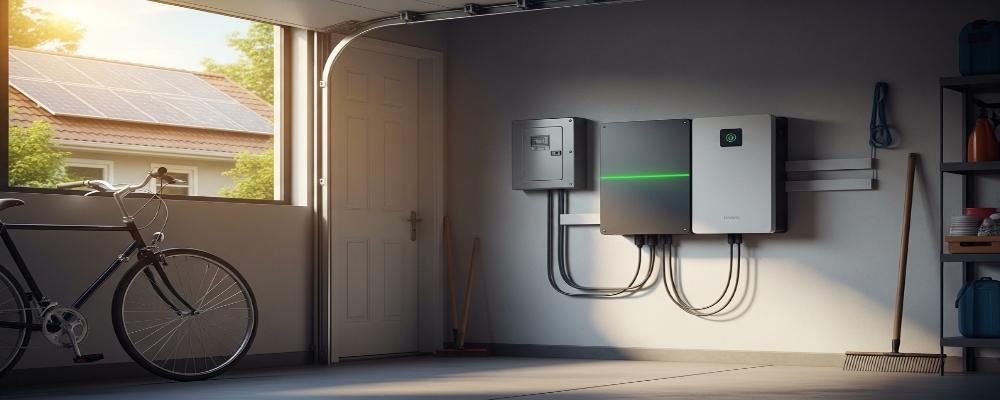
What is the Best Way to Estimate Savings from Time-of-Use Rates?
Potential savings = (shifted energy × rate differential) – (conversion losses) – (storage costs)
The following charges should be included in an overall assessment:
• Cost of Energy Loss: A cost is incurred when energy is lost during the processes of charging, discharging, and storage.
• Battery Loss Cost: The useful life of the battery is diminished due to the charging cycles that are incurred.
• Lost Export Cost: Energy that is stored may result in a decrease in the total income that is received from the export operation of the energy to the grid.
• Lost Backup Reserve Cost: The energy that is held in reserve for backup cost is lost for cost shifting.
• Installation Cost: The costs associated with the installation and the protection of the system from the elements will be included in the potential returns.
• Seasonal Variation: Savings are likely to be affected by changes in demand and solar energy generation.
The potential for savings from energy shifting controls is greatest when there are large cost differentials for charging across peak periods. When the differentials are small, the primary benefit may be the provision of backup energy.
How Does the Quality of Manufacturing Impact Performance?
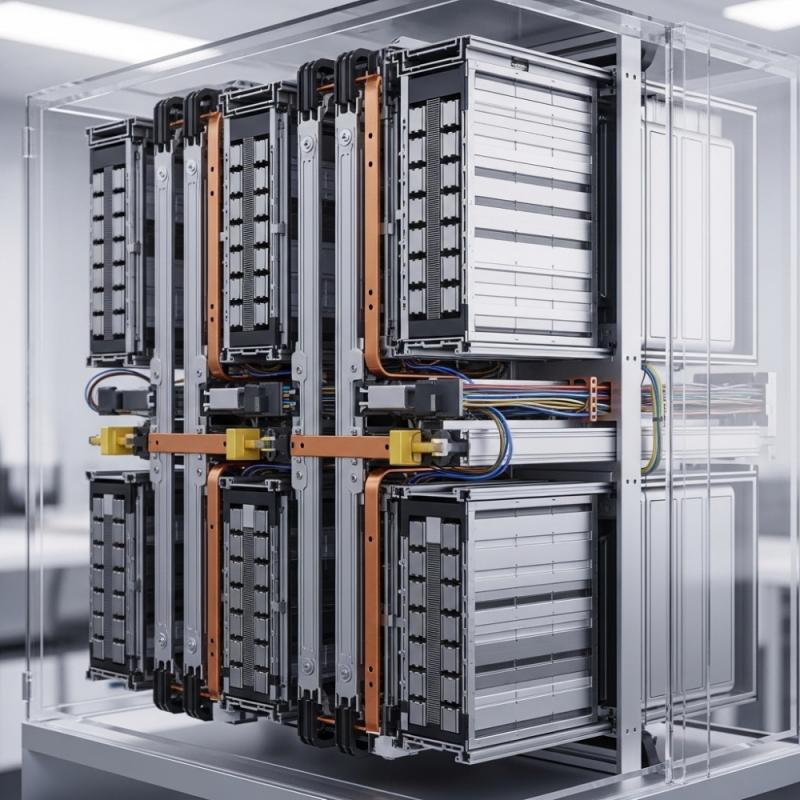
The Best Home Battery Storage System combines battery cells, BMS, inverter, enclosure, internal conductors, and system controls.
| Manufacturing Area | VoltaLink Approach | Purpose |
| Cell Selection | Grading and consistency verification | Reduce variation for the entire battery pack |
| Module Assembly | Equalization of module voltage and capacity | Guarantees uniform charge and discharge |
| BMS Integration | Monitoring of voltage, current and temperature | Prevention of electrical and thermal hazards |
| System Validation | Testing for Capacity, aging and performance | Estimating system performance before dispatch |
| Internal Conductivity | Copper busbars and neat assembly | Reduction of internal resistance |
| Enclosure Design | Arrangement of metal housing | Guarantees safe indoor installation |
| Modular Architecture | Aligned components | Different configurations and flexibilities for different capacities |
The overall dimensions are approximately 440 mm x 190 mm x 1271 mm with an IP20 rating. Ample ventilation has been provided for safe indoor use with electrical clearance and maintenance access.
In Closing
The optimal system for home battery storage for variable tariffs does not always mean the system with the largest battery. It means the right mix of storage, inverter, tariff, and backup and solar compatibility, along with the right fit for the location, balance, and operating costs.
The VoltaLink storage system goes one step further, integrating all the above and more in a compact, 5.12 kWh, modular package, offering a configurable 5200W pure sine wave inverter with 6000W MPPT and BMS protection. Modular systems always need to be assessed in the context of the home’s energy costs, consumption, solar generation, and backup needs.
FAQs
Q1: Can this system work with solar panels?
A: Yes, it is fully compatible with residential photovoltaic systems.
Q2: Is the system expandable?
A: Yes, multiple modules can be connected to increase total capacity.
Q3: What inverter types are supported?
A: It supports most 48V hybrid inverter systems.
Q4: How long is the battery lifespan?
A: It supports over 6000 charge cycles under normal conditions.
Q5: Does it support monitoring functions?
A: Yes, it supports CAN/RS485 communication and optional smart monitoring systems.

-

 OEM Residential Energy Storage Solutions: Passive vs. Active Cell Balancing
2026-09-30
-
 Smart Home Battery with BMS Communication: Cybersecurity and BMS Safety
 -
 10kWh Home Battery Backup System: Is 90% DoD Better for Daily Solar Storage?
2026-09-29
-
 Integrated Home Energy Storage System 150–430V MPPT Design
2026-09-28
-
 LiFePO₄ Residential Backup Battery SOC Accuracy in Parallel Systems
Share this:





.svg)






-899.svg)


