




All In One ESS 20kwh for Whole Home Backup: How Much Can It Power?
Choosing an All In One ESS 20kwh for whole-home backup is not simply a question of whether 20kWh “sounds large enough.” A technically correct assessment must consider four variables together: usable battery energy, continuous inverter output, surge demand, and recharge capability.
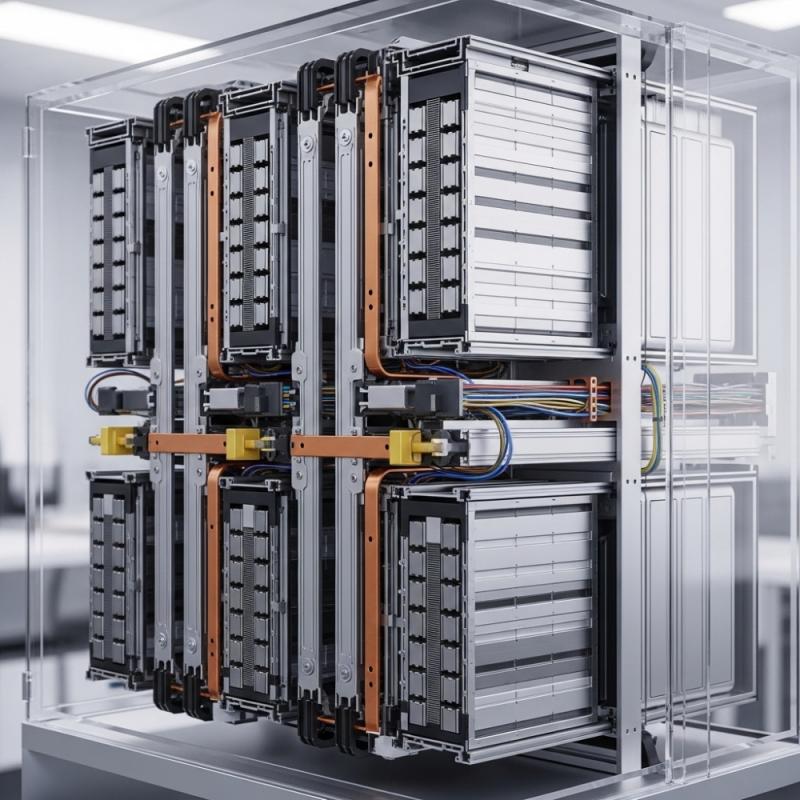
VoltaLink‘s All In One ESS 20kwh configuration uses a 51.2V LiFePO₄ battery architecture with 20.48kWh rated energy, up to 90% DOD, 10kW rated AC output, 20kW surge power, and 230/400VAC three-phase output.
For buyers, the real question is therefore:
How much of the house can run at the same time, and for how long?
What 20.48kWh Really Means for Backup Runtime
Battery capacity and appliance power should not be treated as the same specification.
The All In One ESS 20kwh has 20.48kWh rated energy and supports up to 90% depth of discharge.
At 90% DOD:
20.48kWh × 0.90 ≈ 18.43kWh
This is the theoretical battery-side usable energy before inverter conversion and other system losses.
Actual AC-side energy will depend on:
• Inverter operating efficiency;
• Standby consumption;
• Battery temperature;
• Discharge rate;
• Wiring and conversion losses;
• Actual load profile.
The specified inverter peak efficiency is ≥92%, but peak efficiency should not be used as a fixed value across every operating point.
Estimated Runtime by Average Load
| Average Household Load | Theoretical Backup Characteristic | Typical Use Case |
| 0.5–1kW | Long-duration backup | Refrigerator, lights, router, electronics |
| 1–2kW | Extended household backup | Essential loads plus selected appliances |
| 3–5kW | Medium-duration backup | Higher household activity |
| 8–10kW | Rapid energy depletion | Multiple high-power loads |
These are engineering scenarios, not guaranteed runtime figures. Compressors, heaters and household appliances cycle on and off, so actual average demand matters more than simply adding all nameplate ratings.
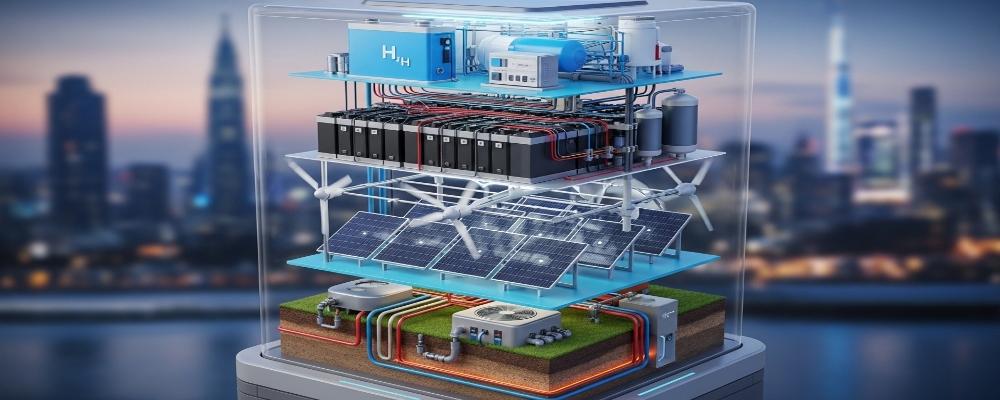
20kWh Determines Runtime; 10kW Determines Simultaneous Load
This distinction is critical when sizing an All In One ESS 20kwh.
• 20.48kWh = stored energy
• 10kW rated output = continuous load capability
• 20kW surge power = short-duration peak capability
A house may consume only 15kWh over an entire day but still exceed 10kW for several minutes if an induction cooker, water heater, air conditioner and other high-power appliances operate together.
This is why installers should evaluate both:
• Daily energy consumption in kWh/day
• Maximum simultaneous demand in kW
Surge power is particularly relevant for compressors, pumps, air conditioners and some heat-pump systems. However, 20kW surge capability does not mean the inverter can continuously supply 20kW. The permitted surge duration should be confirmed for specific applications.
Essential-Load Backup vs Whole-Home Backup
For a 20kWh storage system, backup strategy can change runtime as much as battery size.
Essential-Load Backup
Prioritizes:
• Refrigerator and freezer;
• Lighting;
• Router and communications;
• Security equipment;
• Selected sockets;
• Control systems.
This approach reduces unnecessary peak demand and preserves stored energy for longer outages.
Whole-Home Backup
Keeps more household circuits available, but requires active control of:
• Electric water heating;
• Induction cooking;
• Large air conditioners;
• Heat pumps;
• EV charging;
• Workshop equipment.
An All In One ESS 20kwh may therefore be suitable for whole-home electrical integration while still requiring load management during an outage.
Three-Phase Output Requires Load Distribution Planning
VoltaLink’s configuration specifies 230/400VAC three-phase AC input and output.
For three-phase homes, total inverter power alone is not enough for system design. Installers should also verify:
• Load on each phase;
• Maximum permitted phase imbalance;
• Single-phase high-power appliances;
• Three-phase motor loads;
• Startup current;
• Protective device sizing.
A 10kW three-phase system should not automatically be interpreted as providing 10kW independently on every phase.
This is especially important in European residential installations where heat pumps, induction cookers, EV chargers and other larger loads may be distributed across several phases.
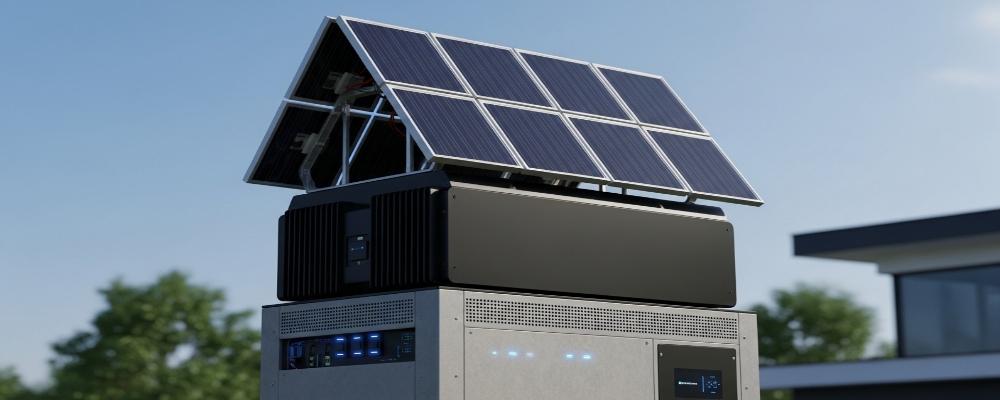
Can 15kW of MPPT Input Recharge a 20kWh Battery Quickly?
The All In One ESS 20kwh uses two MPPT channels rated at 7.5kW each. The specified MPPT operating range is 200–650VDC, with 22A maximum input current per MPPT and an 800V open-circuit voltage specification.
This gives installers several important PV matching limits.
PV String Design Must Check
• Module Voc;
• Module Vmp;
• Module Isc and operating current;
• Series module quantity;
• Parallel string current;
• Cold-weather Voc;
• Expected local irradiation.
Nominal PV capacity alone does not determine recharge time.
During daylight:
PV Generation → Household Daytime Demand → Remaining Power Available For Battery Charging
A 15kW PV input capability therefore does not mean the battery receives 15kW continuously.
10kWh vs. 20kWh vs. 30kWh: Which Capacity Fits Better?
| Storage Size | More Suitable For | Main Trade-Off |
| 10kWh | Essential backup, lower daily consumption | Shorter autonomy |
| 20kWh | Whole-home backup, larger PV systems | Requires proper load planning |
| 30kWh+ | High overnight demand, longer outages | Higher cost, space and charging requirement |
The All In One ESS 20kwh occupies a practical middle range for homes where 10kWh may provide insufficient autonomy but larger storage would add unnecessary cost or charging demand.
Installation and Manufacturing Considerations
At 760 × 600 × 800mm and approximately 228kg, this system requires floor-standing installation planning, adequate handling access and appropriate electrical clearances.
VoltaLink manufactures systems in which control and reliability are integrated, whereas most companies classify this ability as a feature of marketing. First, cells are matched and integrated for consistency prior to the BMS being able to monitor voltage, current, and temperature. In addition, each unit is subjected to capacity, aging, safety, and safety verification tests before shipment.
CAN and RS485 communication support system coordination between the battery management system and compatible inverter control architecture.
VoltaLink All in One ESS 20kwh Key Specifications
The VoltaLink All In One ESS 20kwh integrates LiFePO₄ battery storage, a three-phase inverter, and dual MPPT solar input in one residential energy system. Its electrical configuration is designed for solar self-consumption, whole-home backup, and off-grid applications.
| Key Parameter | Specification |
| Battery | 51.2V 400Ah LiFePO₄ |
| Rated Energy | 20.48kWh |
| Usable DOD | Up to 90% |
| AC Output | 10kW rated / 20kW surge |
| Grid Output | 230/400VAC, Three Phase |
| Solar Input | Dual MPPT, 7.5kW × 2 |
| MPPT Range | 200–650VDC, 22A × 2 |
| Communication | CAN / RS485 |
| Cycle Life | 6000+ cycles |
| Size / Weight | 760 × 600 × 800mm / 228kg ±1kg |
These parameters allow installers to evaluate battery runtime, simultaneous household load, PV compatibility, and installation requirements before selecting the All In One ESS 20kwh for a residential project.
Is an All In One ESS 20kwh Enough for Your Home?
An All In One ESS 20kwh is a strong candidate when a project requires substantial overnight energy, solar self-consumption, three-phase residential backup or longer outage support. However, capacity should never be selected independently from peak load and PV recharge capability.
For project evaluation, VoltaLink recommends providing daily kWh consumption, maximum simultaneous kW load, largest motor or compressor load, PV module specifications, grid configuration and required backup duration. These data make it possible to determine whether the 20kWh configuration is appropriately sized—or whether the battery, inverter or solar array should be adjusted before installation.
FAQs
Q1. How much usable energy does the VoltaLink All In One ESS 20kwh provide?
The VoltaLink All In One ESS 20kwh has 20.48kWh of rated energy and supports a 90% Depth of Discharge (DOD). This results in around 18.43kWh of battery-side usable energy before inverter and system losses.
Q2. Can the All In One ESS 20kwh power an entire house?
The VoltaLink system can provide backup for a whole house, but the extent it can do so will depend on the simultaneous demand. The VoltaLink system has a 10kW rated AC output. So, there may need to be some load management with some appliances.
Q3. What is the difference between 20.48kWh capacity and 10kW output?
The 20.48kWh capacity implies the duration of how long loads can be supplied, while the 10kW output implies how many loads can be supplied simultaneously. These both must be considered when sizing a home backup system.
Q4. What is the surge power of the VoltaLink All In One ESS 20kwh?
The VoltaLink system has a surge power of 20kW compared to a continuous power rating of 10kW. Surge power is relevant for starting equipment like pumps, compressors, and some air-conditioning systems.
Q5. Does the All In One ESS 20kwh support three-phase homes?
Yes. The input and output of the system is 230/400VAC three phase with 50/60Hz frequency auto-sensing. Installers need to confirm the phase and the load imbalance for the project.

-

 OEM Residential Energy Storage Solutions: Passive vs. Active Cell Balancing
2026-09-30
-
 Smart Home Battery with BMS Communication: Cybersecurity and BMS Safety
 -
 10kWh Home Battery Backup System: Is 90% DoD Better for Daily Solar Storage?
2026-09-29
-
 Integrated Home Energy Storage System 150–430V MPPT Design
2026-09-28
-
 LiFePO₄ Residential Backup Battery SOC Accuracy in Parallel Systems
Share this:






.svg)






-899.svg)


