




Wall Mounted Lithium Battery System Safety and BMS Design
A Wall Mounted Lithium Battery System used for residential energy storage must manage more than stored energy. It must control cell voltage, current, temperature, inverter communication, fault current, installation conditions, and system expansion throughout its service life.
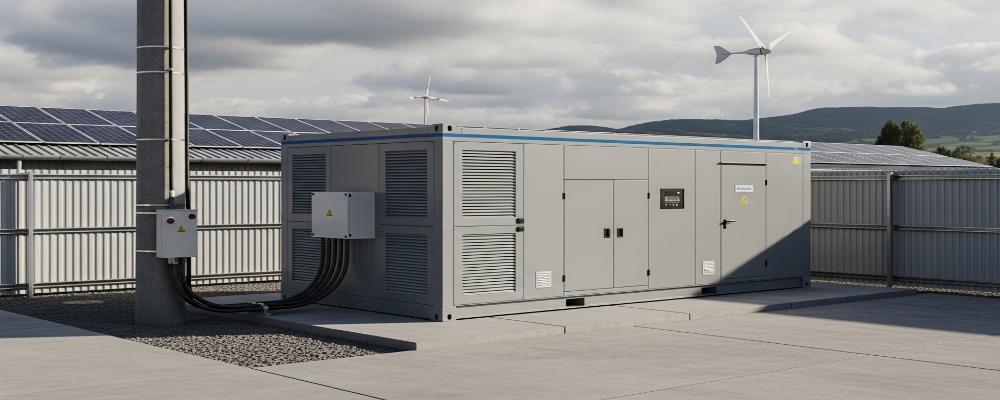
For installers, distributors, and energy storage integrators, battery safety should therefore be evaluated as a complete engineering chain:
LiFePO₄ Chemistry → BMS Protection → Electrical Coordination → Inverter Matching → Installation → Verification
VoltaLink designs its Wall Mounted Lithium Battery System around a 51.2V LiFePO₄ architecture with intelligent BMS monitoring, communication interfaces, parallel expansion capability, and an indoor wall-mounted enclosure. Understanding how these layers interact is more useful than simply asking whether LiFePO₄ is “safe.”
LiFePO₄ Improves Thermal Stability, but It Is Only the First Safety Layer
LiFePO₄ is widely used in stationary energy storage because it offers favorable thermal stability and a stable operating profile compared with higher-energy-density lithium chemistries.
However, LiFePO₄ does not remove risks caused by poor system design.
A Wall Mounted Lithium Battery System can still experience abnormal conditions from:
• Excessive charge or discharge current;
• Loose terminals or high-resistance connections;
• Cell voltage imbalance;
• Unsuitable inverter parameters;
• Poor ventilation or high ambient temperature;
• Incorrect cable sizing;
• Parallel packs with different SOC levels;
• External short circuits.
This distinction matters because battery chemistry determines how cells respond to abuse, while BMS, protection devices, and installation design determine whether abnormal operating conditions are detected and interrupted early.
LiFePO₄ vs. NMC in Stationary Storage
| Engineering Factor | LiFePO₄ | NMC |
| Thermal stability | Higher | Lower relative to LFP |
| Energy density | Moderate | Higher |
| Cycle-oriented ESS use | Well suited | Application dependent |
| Thermal management requirement | Required | Required |
| BMS requirement | Essential | Essential |
The correct conclusion is not that LiFePO₄ eliminates thermal risk. It gives the Wall Mounted Lithium Battery System a more favorable starting point for residential energy storage safety.
BMS Protection Must Work at Cell and Pack Level
The BMS is the active control layer of a Wall Mounted Lithium Battery System. Its role is not simply to display SOC. It continuously evaluates whether cells and the complete battery remain inside defined operating limits.
VoltaLink’s wall-mounted battery platform uses intelligent BMS monitoring for voltage, current, temperature, charging, discharging, and abnormal operating conditions.
Important protection functions include:
Cell Voltage Supervision
Pack voltage does not give insight to a single cell approaching overvoltage or undervoltage. With cell-level monitoring, the BMS can take action before one weak or imbalanced cell can act as a limiting factor to the performance of the entire pack.
Current Protection
Charge and discharge current must remain within battery, busbar, cable, connector, and inverter limits. Excess current produces additional heat and can accelerate electrical stress.
Temperature Protection
Temperature sensors provide information for charging restrictions, discharge derating, or shutdown when operating conditions move outside permitted limits.
Short-Circuit and Fault Response
Severe electrical faults require rapid isolation. The BMS works together with external fuses, breakers, contactors, and system wiring rather than replacing them.
Safety Depends on Multiple Coordinated Layers
A professional Wall Mounted Lithium Battery System should not depend on one protection mechanism.
| Protection Layer | Main Engineering Function |
| LiFePO₄ cells | Improve intrinsic thermal stability |
| BMS | Monitor cells, current and temperature |
| Fuse / breaker | Interrupt excessive fault current |
| Busbar and cables | Carry operating current with controlled losses |
| Inverter control | Coordinate charge/discharge operation |
| Metal enclosure | Protect internal electrical components |
| Installation design | Control mechanical and environmental risks |
This layered approach is especially important in residential ESS because the battery operates repeatedly at high current and may remain installed for many years.
51.2V, Current and Inverter Power Must Be Matched Together
VoltaLink’s Wall Mounted Lithium Battery System uses a 51.2V nominal architecture, 314Ah capacity, 16.07kWh rated energy, and a 40–57.6V operating range.
These parameters should not be evaluated independently.
Energy Is Not the Same as Power
The 16.07kWh rating tells the buyer how much energy is stored. It does not directly determine how large an inverter can be connected.
Electrical power is primarily related to voltage and current:
Power ≈ Voltage × Current
At a nominal 51.2V and 150A:
51.2 × 150 ≈ 7.68kW DC
Actual usable power depends on:
• Battery voltage under load;
• BMS current limits;
• Inverter efficiency;
• Transient surge demand;
• Cable and connector losses;
• Temperature-related derating.
This is why inverter selection should never be based on kWh alone.
High Current Makes Cable and Connection Quality Critical
Electrical heating follows the relationship:
Power loss = I²R
This means resistance at cables, terminals, connectors, or busbars becomes increasingly important as current rises.
For a Wall Mounted Lithium Battery System, installers should therefore verify:
• Cable cross-sectional area;
• Cable length;
• Terminal torque;
• Connector contact resistance;
• Fuse and breaker rating;
• DC disconnect placement.
A loose connection may have relatively small resistance, but at high current that resistance can produce significant localized heating.
CAN and RS485 Are Part of the Safety Architecture
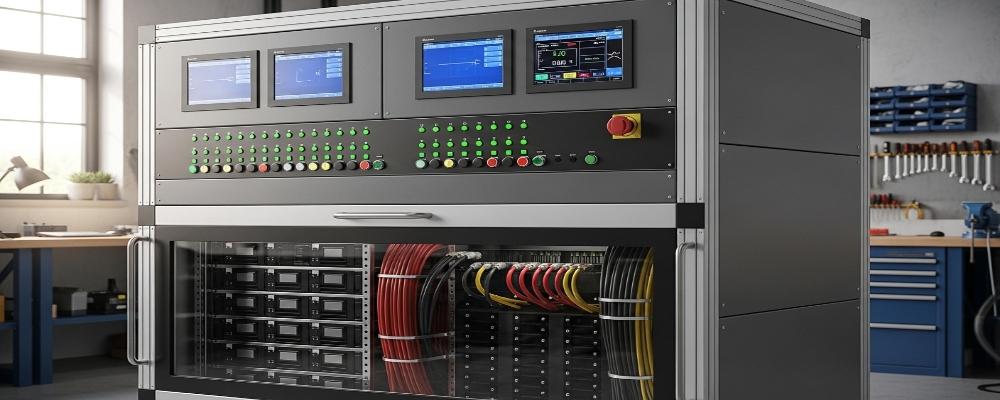
VoltaLink integrates CAN, RS485, and RS232 communication interfaces into its Wall Mounted Lithium Battery System.
These interfaces allow data exchange between the battery, inverter, and energy management equipment.
Important parameters may include:
• SOC;
• Pack voltage;
• Charge current limit;
• Discharge current limit;
• Temperature alarms;
• Protection status.
However, the presence of a CAN port does not guarantee inverter compatibility. The battery and inverter must use compatible communication protocols and parameter mapping.
For project buyers, an inverter compatibility list or confirmed protocol should therefore be reviewed before installation.
Parallel Expansion Requires More Than Connecting Additional Batteries
Parallel expansion increases storage capacity, but it also changes current distribution.
When multiple Wall Mounted Lithium Battery System units operate together, engineers should check:
• Pack voltage before connection;
• SOC difference;
• Internal resistance consistency;
• Equal cable impedance;
• Current-sharing behavior;
• BMS communication;
• Inverter current limits.
If one battery has lower resistance or higher SOC, it may carry more current than the other packs. Unequal current sharing can cause additional heating, premature BMS trips, and inconsistent aging.
For this reason, parallel expansion should be treated as a system design task, not simply a capacity upgrade.
IP20 Sets Clear Installation Boundaries
VoltaLink specifies this Wall Mounted Lithium Battery System as IP20 for indoor use.
That means installation planning should consider:
• A dry indoor environment;
• Suitable wall strength;
• Secure mechanical anchoring;
• Service and inspection access;
• Controlled exposure to heat;
• Protected DC cable routing;
• Appropriate breaker or disconnect access.
IP20 should not be interpreted as outdoor or waterproof protection.
Wall mounting also introduces mechanical considerations that floor-standing batteries do not face. The wall structure and fixing system must support the battery throughout its operating life.
Maintenance Should Focus on Trends, Not Just Alarms
Many battery problems develop gradually before a protection trip occurs.
Useful maintenance indicators include:
• Increasing cell voltage deviation;
• Repeated overcurrent events;
• Abnormal temperature differences;
• SOC drift;
• Communication interruptions;
• Cable or terminal heating;
• Repeated BMS shutdowns.
Trend data can reveal imbalance, resistance growth, or system integration issues before they become major faults.
UL, IEC and UN38.3 Verify Different Risks
Procurement teams should not treat all certificates as equivalent.
| Standard / Test | Main Area |
| IEC 62619 | Industrial lithium battery safety |
| IEC 63056 | Batteries used in energy storage systems |
| UL 1973 | Stationary battery safety |
| UL 9540 | Complete energy storage system |
| UL 9540A | Thermal runaway fire propagation testing |
| UN38.3 | Lithium battery transportation testing |
UN38.3, for example, is important for transportation but does not by itself prove that a Wall Mounted Lithium Battery System is approved for residential installation.
Buyers should request the exact standard number, certificate number, tested model, certificate scope, test report, and installation manual rather than relying only on certification logos.
A Better Way to Evaluate a Wall Mounted Lithium Battery System
A technically sound purchasing process should evaluate the complete chain:
• LiFePO₄ cell chemistry;
• BMS protection logic;
• Continuous current capability;
• Inverter voltage and protocol compatibility;
• Parallel system design;
• Installation environment;
• Applicable test and certification evidence.
VoltaLink combines LiFePO₄ cells, intelligent BMS monitoring, CAN/RS485/RS232 communication, a 51.2V architecture, parallel expansion capability, and wall-mounted residential storage design in its Wall Mounted Lithium Battery System.
For distributors, installers, and energy storage project buyers, the most effective next step is to match the required load, inverter, installation environment, and compliance requirements before finalizing battery configuration.
FAQs
Q1. What battery chemistry does VoltaLink use in its Wall Mounted Lithium Battery System?
VoltaLink’s Wall Mounted Lithium Battery System uses LiFePO₄ battery chemistry, which is widely used in stationary energy storage because of its favorable thermal stability and cycle characteristics.
Q2. What is the nominal voltage of VoltaLink’s Wall Mounted Lithium Battery System?
The system uses a 51.2V nominal battery architecture, making it suitable for many residential 48V-class energy storage inverter applications when voltage and communication requirements are correctly matched.
Q3. What is the storage capacity of the VoltaLink Wall Mounted Lithium Battery System?
The current configuration is rated at 314Ah and approximately 16.07kWh, providing substantial energy capacity for residential backup, solar self-consumption, and hybrid energy storage applications.
Q4. Does the VoltaLink Wall Mounted Lithium Battery System include BMS protection?
Yes. VoltaLink integrates an intelligent BMS to monitor important operating parameters such as voltage, current, temperature, charging, discharging, and abnormal battery conditions.
Q5. Which communication interfaces are available on the VoltaLink battery?
The Wall Mounted Lithium Battery System supports CAN, RS485, and RS232 communication interfaces for integration with compatible inverters and energy management equipment.

-

 OEM Residential Energy Storage Solutions: Passive vs. Active Cell Balancing
2026-09-30
-
 Smart Home Battery with BMS Communication: Cybersecurity and BMS Safety
 -
 10kWh Home Battery Backup System: Is 90% DoD Better for Daily Solar Storage?
2026-09-29
-
 Integrated Home Energy Storage System 150–430V MPPT Design
2026-09-28
-
 LiFePO₄ Residential Backup Battery SOC Accuracy in Parallel Systems
Share this:





.svg)






-899.svg)


