




Advanced Backup Power Systems for Telecom Towers
In today’s highly connected world, telecom towers form the backbone of mobile communication and data transmission networks. Any disruption in their power supply can lead to dropped calls, interrupted internet services, and critical operational failures. To mitigate these risks, advanced backup power systems for telecom towers have become essential. These systems are designed to provide uninterrupted electricity, optimize energy usage, and ensure operational resilience for both urban and remote installations.
Modern solutions focus not only on emergency power support but also on efficient energy management, modular scalability, and integration with renewable sources. By implementing intelligent power systems, telecom operators can maintain high service quality, reduce operational costs, and support sustainable energy practices while guaranteeing network continuity.
Understanding Tower Backup Power Systems
A tower backup power system is a comprehensive energy solution that maintains continuous operation of telecom infrastructure in the event of a grid outage or power fluctuation. Unlike traditional generator-only setups, modern systems integrate multiple energy sources, including high-capacity batteries, solar energy, and grid connectivity, all orchestrated through intelligent control units.
Core components typically include battery storage arrays, energy conversion devices, monitoring units, and automated switching mechanisms. Together, these components enable rapid power transitions, maintain operational stability, and provide scalable solutions that can grow alongside network demand.
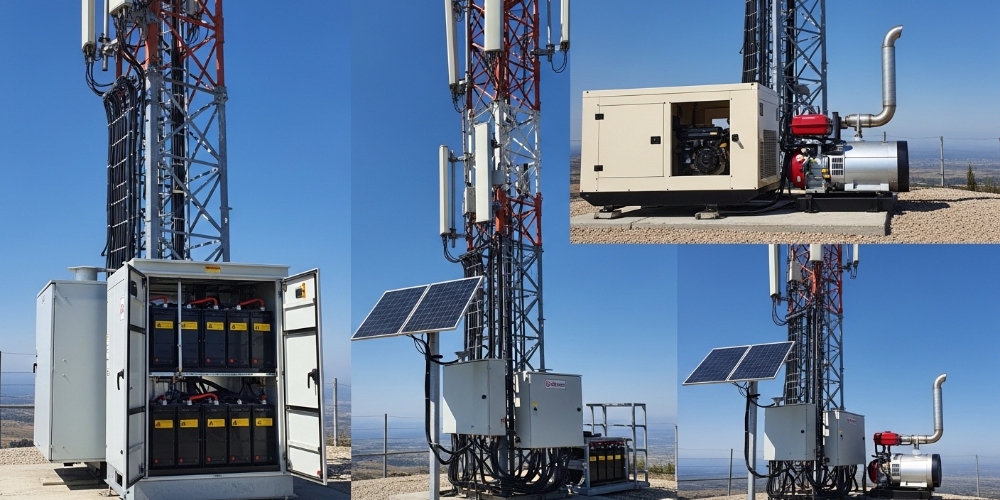
Why Reliable Tower Power Is Critical
Continuous energy supply is vital for telecom towers to maintain service quality. Power interruptions, even short-term, can cause dropped connections, slow data transfer, and affect emergency communication channels. Reliable tower energy ensures that mobile services, internet connectivity, and critical data transmission remain uninterrupted.
Remote or off-grid towers face unique challenges due to limited or unstable access to electricity. Backup power systems provide these sites with dependable energy, ensuring consistent network coverage and resilience in disaster situations. By deploying modern energy solutions, telecom operators can enhance the reliability of their networks and reduce operational risk.
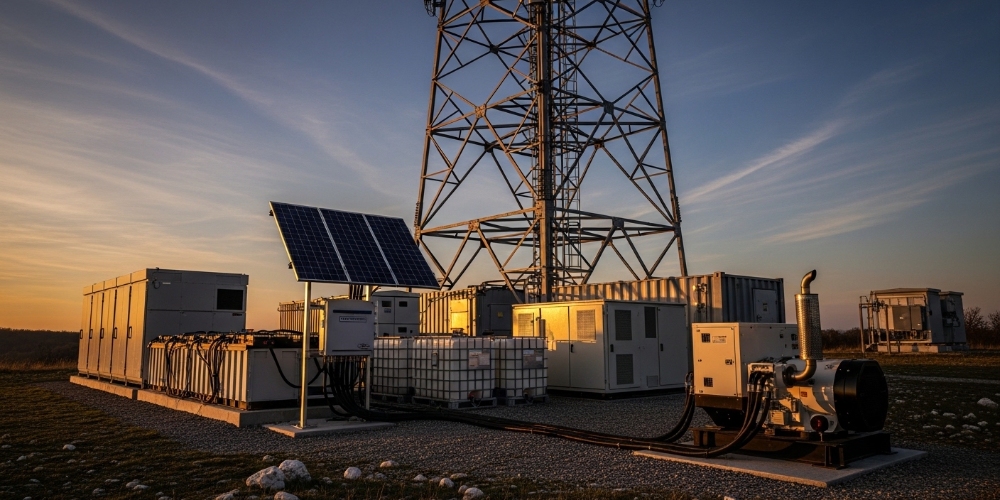
Key Features of Modern Backup Power Systems
Hybrid energy integration is a defining feature of contemporary systems. Combining batteries, renewable energy sources such as solar, and external grid supply enhances reliability and reduces dependency on a single source. Intelligent energy management systems monitor consumption in real time, automatically switching between sources and optimizing energy allocation.
Durability is another critical factor. These systems are engineered to operate in harsh environmental conditions, including extreme temperatures, high humidity, and dusty environments, ensuring consistent performance. Modular design allows for scalability and easy expansion, adapting to changing network needs without costly replacements.
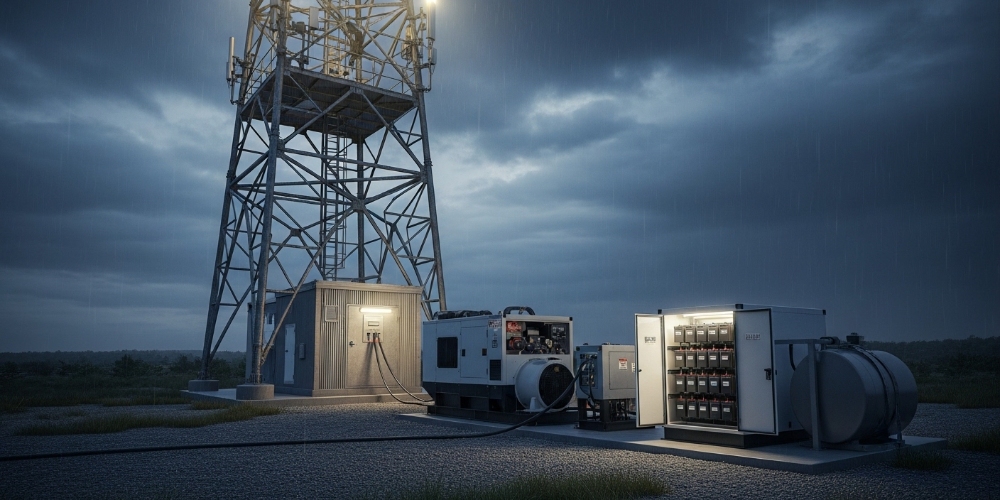
Applications Across Telecom Infrastructure
Backup power systems are essential for cellular towers, data relay stations, and remote network nodes. They provide stable electricity for transceivers, routers, cooling systems, and other critical components. Emergency communication networks rely on these systems to remain active during crises, supporting public safety and disaster response operations. Portable or temporary backup solutions also enable quick deployment for events, construction projects, or temporary installations, ensuring immediate energy availability without complex setups.
These systems also contribute to sustainability goals by integrating renewable energy sources and reducing reliance on fuel-based generators, lowering both carbon emissions and operational costs. Operators benefit from a combination of reliability, efficiency, and environmental responsibility.
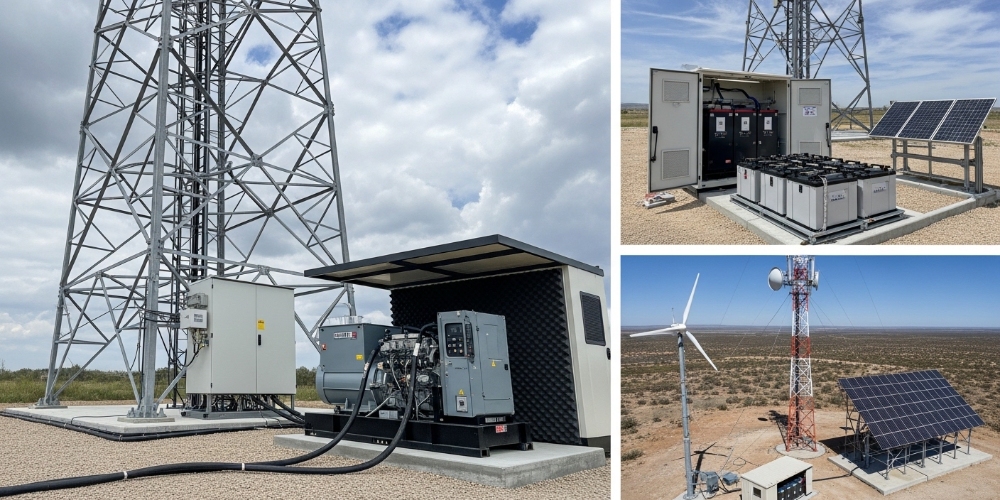
Advantages Over Conventional Power Methods
Advanced tower backup systems offer several advantages over traditional diesel generators. Operational costs are reduced due to lower fuel consumption and minimized maintenance requirements. Intelligent control systems optimize energy usage and prevent waste. Renewable energy integration further reduces environmental impact, aligning with corporate sustainability initiatives. The modular and scalable nature of these systems ensures they can be tailored to the specific requirements of each telecom site, providing both flexibility and future-proof performance.
Emerging Trends in Tower Energy Solutions
Artificial intelligence and machine learning are increasingly applied to optimize energy management, predict load requirements, and prevent unexpected downtime. Decentralized power systems allow towers to operate independently from the central grid while maintaining full functionality. Remote monitoring and cloud-based control platforms simplify system management and reduce on-site maintenance needs. The adoption of hybrid energy solutions continues to rise, combining batteries, solar, and other renewable sources to provide reliable, sustainable, and cost-efficient power for telecom infrastructure.
Conclusion
Backup power systems for telecom towers are no longer a luxury—they are a necessity in a digitally connected society. By incorporating intelligent energy management, hybrid energy integration, and modular scalability, these systems ensure continuous network operation, enhance energy efficiency, and reduce operational costs. For telecom operators, investing in advanced tower energy solutions guarantees uninterrupted service, resilience against power interruptions, and alignment with sustainability goals, making networks more reliable and future-ready.
FAQ
Q1: What is a tower backup power system?
A: It is an integrated solution that provides continuous electricity to telecom towers using batteries, renewable sources, and intelligent management.
Q2: How do hybrid energy systems enhance reliability?
A: By combining multiple power sources, these systems can automatically switch between them, ensuring uninterrupted operation.
Q3: Are backup systems suitable for remote telecom sites?
A: Yes, they are ideal for off-grid or hard-to-access locations, providing stable and reliable energy.
Q4: Can renewable energy be integrated into tower backup systems?
A: Modern systems often include solar or other renewables, reducing fuel use and supporting sustainability.
Q5: What benefits do intelligent tower energy systems offer?
A: Benefits include continuous service, reduced costs, scalability, energy efficiency, and environmental sustainability.

-

 OEM Residential Energy Storage Solutions: Passive vs. Active Cell Balancing
2026-09-30
-
 Smart Home Battery with BMS Communication: Cybersecurity and BMS Safety
 -
 10kWh Home Battery Backup System: Is 90% DoD Better for Daily Solar Storage?
2026-09-29
-
 Integrated Home Energy Storage System 150–430V MPPT Design
2026-09-28
-
 LiFePO₄ Residential Backup Battery SOC Accuracy in Parallel Systems
Share this:






.svg)






-899.svg)


