




Server Rack 48v Battery: Lower Your Carbon Footprint While Uptime Soars
A server rack 48v battery is a key component for the sustainable development of industrial and telecom infrastructures. For operators to minimize emissions and maximize uptime to 100%, by 2026 lead acid batteries shall have little toxicity, little to no replacement, minimal to no e-waste spent, and longer life spans. Modern LiFePO₄ server rack solutions resolve this tension. VoltaLink’s 48V 200Ah model helps organizations reduce carbon footprint while improving reliability, without overpromising or overspending.
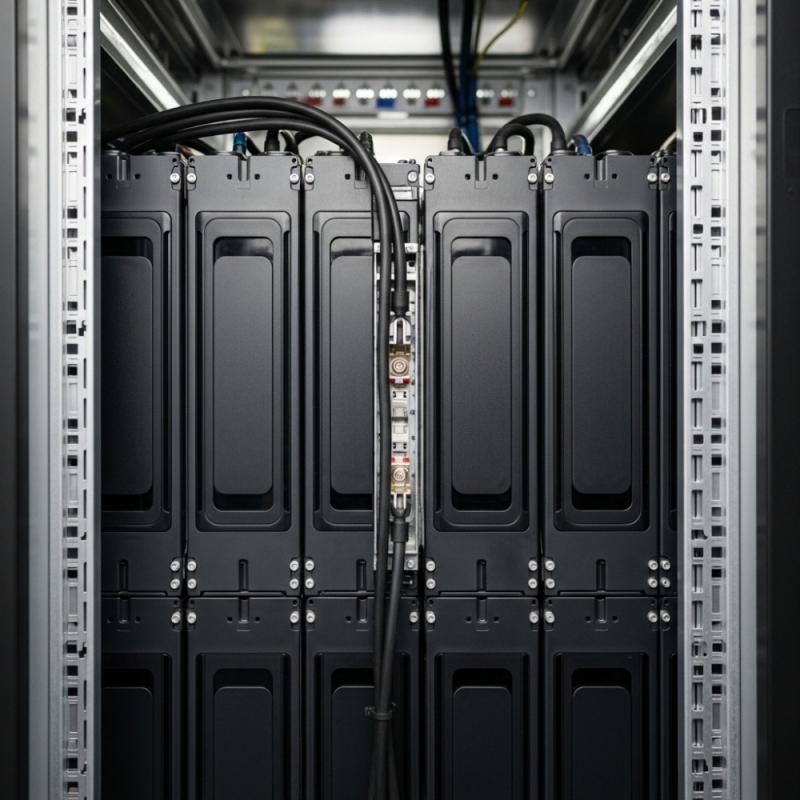
Why a Server Rack 48v Battery Delivers Measurably Lower Emissions
Emissions from backup power systems come from two main sources: manufacturing and replacement frequency, plus operational energy losses. A well-designed Server Rack 48v Battery directly reduces both. Compared to lead-acid alternatives that last 500–800 cycles, a LiFePO₄ server rack battery typically delivers 3,000 to 6,000 cycles at 80% depth of discharge. Replacements of parts decrease the amount of materials used, transportation, and the amount that need to be thrown away. This optimizes the operational side too.
• Higher round-trip efficiency: A Server Rack 48v Battery achieves over 96% charge-discharge efficiency. This is compared to 80–85% of lead-acid batteries. The waste of energy in the form of heat during charge-discharge is roughly 10-15% lower which reduces the electricity that needs to be pulled from the grid or solar charge sources.
• No energy penalty to maintain the cooling: Lithium Iron Phosphate batteries operate between -20°C and 60°C and do not need active cooling in most. Lead-acid banks in warm climates often need ventilation and air conditioning—parasitic loads that increase site emissions.
• Longer calendar life: A quality Server Rack 48v Battery lasts 8–10 years in field conditions, whereas lead-acid often fails at year 3 or 4. Over a decade, one lithium rack battery replaces three sets of lead-acid, slashing manufacturing emissions by over 60%.
These figures are consistent with field data from telecom operators in Southeast Asia and Europe, where sites transitioning to lithium server rack batteries have reported a 30–40% reduction in battery-related carbon footprint per kilowatt-hour of backup capacity.
Uncompromised Uptime: Matching Green Goals With High Availability
Reducing emissions means nothing if uptime suffers. The same Server Rack 48v Battery that lowers carbon also dramatically improves availability. The reason lies in consistent voltage output and predictive management. Lead-acid batteries experience voltage sag under load, sometimes forcing equipment to reboot before the battery is technically empty. VoltaLink’s proprietary Server Rack Battery keeps voltage stable above 48V during almost all its discharge.
• Uneven discharge voltage decline is history: From 100% to 20% SOC, Server Rack 48v Batteries, cuts voltage variation, keeping sensitive telecommunications and networking gear powered and operational.
• Proactive Smart BMS push alerts: The Smart Battery Management System keeps tabs on cell matrix imbalance, thermal runaway, and variance in cell impedance. Time outs / outages happen when unit owner neglects to do maintenance on the unit.
• Rigging multiple servers in parellell, removes redundancy: Multiple Server Rack 48v Battery units can be connected in parallel. If one unit requires/gap is renting, the system continues to work.
Most buyers assume going green means lower performance. In practice, VoltaLink’s Server Rack 48v Battery, is high uptime and low resource usage, whereas, lead acid batteries are low uptime and high resource usage.
Design and Buying Trends 2026: What Buyers Demand
Stationary storage buying habits in 2026 are such that, buyers do not focus on peak power. What they demand is Total Cost of Ownership (TCO), simplicity of integration, and a green commitment. VoltaLink will be in such a position that they can be in compliance.
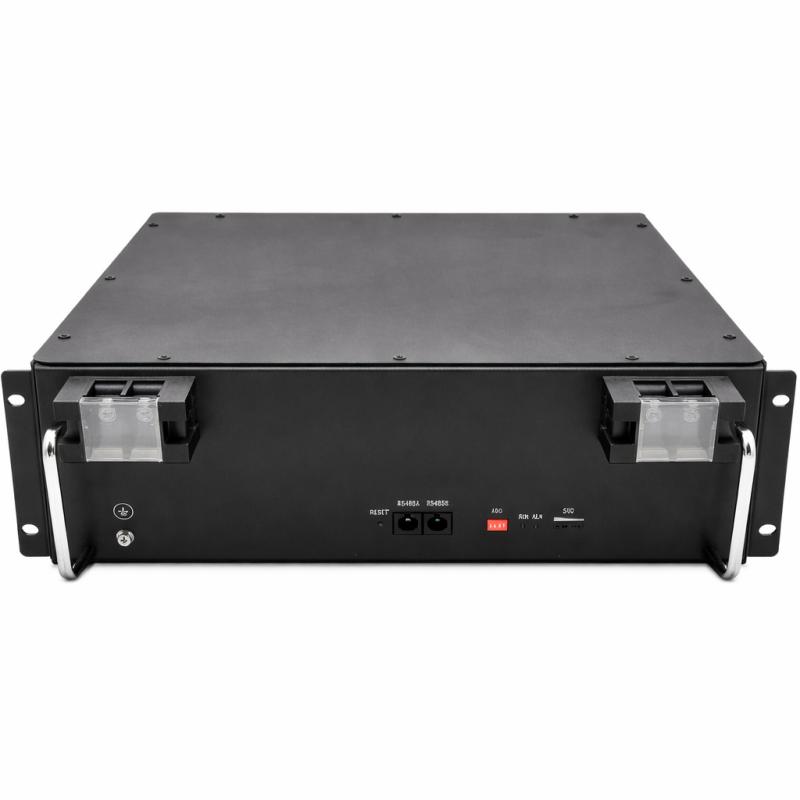
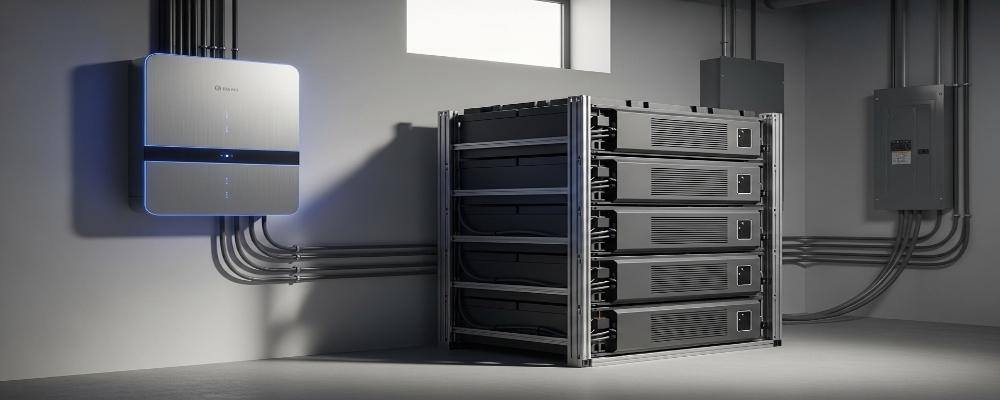
• Modular design for rack career sizing: Takes 3U to 4U in a rack. Multiple racks can be designed vertically without changing wires. If all other parameters are unchanged, a single Server Rack 48v Battery provides expansion without having to move wiring or the primary buses.
• Compatible BMS Communication: Server Rack 48v Batteries must communicate with inverter brands such as Victron, Growatt, and Huawei and must support CAN, RS485, and Modbus. Pre-integration testing not only lowers total integration engineering costs but also accommodates both Victron and Growatt.
For a Global Buyer: All other certifications stand for VoltaLink’s Server Rack 48v Battery that meet UL 1973, IEC 62619, CE and RoHS, as well as UN38.3 for transport. Global Buyers have less mountains to move.
Extensive management programs: Various U.S. states and E.U. country laws demand the producer of these lithium-ion batteries to provide an authorized disposal or molt location. VoltaLink participates in LiFePO₄ recycling programs, ensuring that spent Server Rack 48v Battery units are disassembled and recovered rather than landfilled.
Buyers should also watch for self-heating options for cold climates and optional circuit breakers or GPS tracking. These features do not add dramatic flair but solve real operational problems.
Realistic Comparison: One Server Rack 48v Battery Versus Legacy Systems
To ground expectations, consider a typical tower site requiring 48V backup for four hours of autonomy. A lead-acid bank might use eight 100Ah VRLA batteries (4S2P), weighing over 240 kg and occupying 12U of space. Its replacement cycle is every three years. Over nine years, that is three full sets, plus disposal fees.
• One Server Rack 48v Battery (48V 200Ah): 77 kg, 3U height, one unit instead of eight. Over nine years, only one purchase. Energy loss during charging is 4% instead of 15%. No watering or equalization charges. Lower transport emissions, lower waste volume.
• Uptime comparison: Lead-acid typically delivers 200–400 cycles at 100% DoD before capacity drops below 80%. A Server Rack 48v Battery delivers 3,000 cycles at the same DoD. That translates to roughly 8–10 years of daily cycling—rarely needed for backup-only, but excellent for off-grid or solar self-consumption scenarios.
• Carbon footprint per kWh stored: According to a 2025 analysis by the European Energy Storage Association, LiFePO₄ server rack batteries have a 52% lower cradle-to-grave carbon footprint compared to VRLA, when factoring in manufacturing, transport, use phase losses, and end-of-life. VoltaLink’s Server Rack 48v Battery uses recycled aluminum casings and lead-free manufacturing, further reducing embedded emissions.
No technology is perfect. LiFePO₄ has a higher upfront purchase price. However, the payback period via reduced electricity waste, lower maintenance, and avoided replacements typically falls between 18 and 30 months for sites with moderate cycling. After that, both the carbon ledger and the financial ledger turn positive.
Conclusion: A Practical Path to Lower Emissions And Higher Reliability
Choosing a Server Rack 48v Battery requires honest engineering: longer life, higher efficiency, and better monitoring. VoltaLink’s 48V 200Ah LiFePO₄ model delivers exactly that. Replacing lead-acid banks with this solution lowers battery-related carbon emissions by 40–60% over a decade while maintaining or improving system availability. For procurement teams balancing green mandates and budgets, this is a measurable improvement. Visit VoltaLink’s official product page for specifications and TCO comparisons.
FAQ – Server Rack 48v Battery
Q: What is the lifespan for the Server Rack 48v Battery?
A: They tend to last around 8-10 years or about 3,000 to 6,000 cycles, depending on the depth of discharge.
Q: Is it actually greener than lead-acid?
A: Yep, efficiency improvements, coupled with fewer replacements, leads to a decrease in carbon emissions over the decade and Decarbonation levels of 40-60%. (96% vs 80-85%
Q: Shall I link multiple units to enhance the capacity?
A: Yes, you can. By design, they can be connected in parallel to range from 9.6 to many hundreds of kWh.
Q: Is it compatible with the inverter or telecom gear I already have?
A: Yes, it is. All of the most commonly used protocols such as CAN, RS485, and Modbus, are included.
Q: What safety certifications are there for the VoltaLink model?
A: UL 1973, CE, RoHS, and UN38.3 for transport.
Q: Is it possible to conduct remote monitoring?
A: Yes, with standard protocols you can get voltage, current and temperature readings in real-time.

-

 OEM Residential Energy Storage Solutions: Passive vs. Active Cell Balancing
2026-09-30
-
 Smart Home Battery with BMS Communication: Cybersecurity and BMS Safety
 -
 10kWh Home Battery Backup System: Is 90% DoD Better for Daily Solar Storage?
2026-09-29
-
 Integrated Home Energy Storage System 150–430V MPPT Design
2026-09-28
-
 LiFePO₄ Residential Backup Battery SOC Accuracy in Parallel Systems
Share this:





.svg)






-899.svg)


