




What Affects Long-Term Capacity in Lithium Home Battery Systems?
Long-term capacity refers to the useful energy output of Lithium Home Battery Systems after years of use in day-to-day operations and exposure to various seasonal conditions. Capacity degradation is a function of many factors, including the chemistry of the cells, thermal conditions, the charging regime, the load to which the battery is subjected, control of the battery, and variability in manufacturing.
For homeowners, installers, and B2B customers, the most important consideration regarding battery capacity is not the amount of capacity the battery has when it is new, but rather the amount of capacity it is expected to lose during its useful life.
1. Temperature and Thermal Management
Temperature is one of the most significant effects on battery aging. Lithium Home Battery Systems are affected by external conditions as well as by heat generated by their own operation.
• High temperature: Rapid electrolyte decomposition occurs, and reactions that consume active lithium occur.
• Low temperature charging: At higher charging currents, low temperature charging may result in lithium plating.
• Inadequate thermal management may result in uneven aging of battery cells and therefore result in a reduction of the total system capacity, as capacity is limited by the weakest cells.
• Poor ventilation: Allows heat to be trapped in the system and increases long-term thermal stress.
The system must be designed with consideration to the installation environment and also the management of heat and current.
2. Depth of Discharge and Cycling Pattern
Depth of discharge (DoD) is the remaining energy of a battery after charging. Discharging a battery to a lower energy level is typically less damaging than discharging a battery to a higher energy level (i.e., fully cycling the battery).
| Operating Pattern | Relative Stress | Capacity-Retention Effect |
| Frequent 90–100% DoD | High | Deteriorates capacity faster |
| Regular 70–80% DoD | Moderate | Balance between runtime and lifetime |
| Partial 40–60% DoD | Lower | Diminished stress per cycle |
| Backup-only use | Low cycle count | Annual aging dominates |
• Deep daily discharge: Stress due to continual cycling is higher because electrodes continually expand and contract due to deep discharge.
• Shallow cycling: Stress due to continual cycling is lower, and cycling may increase the total number of cycles.
• Load Management: Prevents the deep cycling of Lithium Home Battery Systems.
The assessment of cycle life is normally done in conjunction with the applicable temperature, the discharge rate, the specific chemistry, and the criteria at which life is considered to be expended.
3. State of Charge and Voltage Exposure
The state of charge of a battery affects both the charge and the quiescent voltage of the battery.
• Storage at elevated states of charge: Increases the cell’s electrochemical potential and may initiate undesirable side reactions.
• Storage at full charge: Leads to more aging of the battery on the calendar compared to storage at a mid-range SoC.
• Very low SoC: Causes difficulty in recharging the battery when self-discharge continues.
• SoC control: Minimizes exposure to both high and low voltage stress.
For the purpose of daily solar self-consumption, a mid-range operational SoC may provide a more reliable long-term storage capacity than the battery being held at maximum charge.
4. Charge and Discharge Rate
The C-rate of a battery is a measure of the speed of charge and discharge of a battery in comparison to the capacity of a battery. For heating, ventilation, and air conditioning (HVAC) equipment, pumps, cooking appliances, and whole-house backup systems, high currents may be required. However, repeated operations at high rates may increase internal stress due to the heating effects.
| Current Condition | Main Effect | Design Consideration |
| Moderate current | Lower generation of heat | Suitable for routine cycling |
| Repeated high discharge | Higher thermal stress | Requires correct cell and inverter sizing |
| High charging current | Faster recharge but more heat | Must remain within BMS limits |
| Short surge demand | Temporary peak stress | Verify battery and inverter surge ratings |
Stress due to current on Lithium Home Battery Systems may be minimized by proper sizing of continuous and surge loads, as well as of the recharge time.
5. Calendar Aging
Calendar aging of a lithium battery system refers to the loss of storage capacity due to the aging of the system even when the system is not cycled on a daily basis.
Storage at elevated temperatures: Increases the internal chemical reactions of the system.
• High standby SoC: Increased aging due to high voltage.
• SEI formation: Uses up reversible lithium and increases internal resistance.
• Extended storage: Requires precise temperature and SoC conditions.
When it comes to lightly cycled lithium home battery systems, it is possible calendar aging will negatively impact the total service life more so than cycle aging.
6. Performance of a Battery Management System
The Battery Management System (BMS) is responsible for regulating charge/discharge cycles, maintaining safety, and ensuring equilibrium among the battery cells.
• Cell equilibrium: Refers to the mitigation of voltage differentials among cells to avoid the cell’s degradation by preventing the cell from reaching its upper/lower operating limits.
• Safety regarding voltage: Concerned with avoiding the overcharge and overdischarge of the battery.
• Safety regarding temperature: Concerned with mitigating and stopping the operation of the system at the extreme limits of the temperature range.
• SoC and health prognosis: Involves the self-limiting charge/discharge of the Lithium Home Battery System.
• Control of the communication interface: Involves the coordination among the battery, inverter, energy management system, and monitoring system.
If strong cells are implemented but the systems are improperly calibrated, then a lack of balancing capacity will impair long-term battery performance.
7. Chemistry of Cells and Manufacturing Consistency
The chemistry of cells determines the primary aging mechanism of the cells, and the inconsistency of the manufacturing process of the cells determines the uniformity of the pack.
• Lithium Iron Phosphate: Preferred for residential storage because of the stable cycling and thermal characteristics of the chemistry.
• Nickel manganese cobalt has a higher energy density; however, it bears more risks and requires greater management of temperature and voltage.
• Cell Matching: Minimizing the differences in voltage, capacity, and internal resistance between cells is critical.
• Pack Assembly: The reliability of busbars, sensors, insulation, compression, and electrical connections results in uniformity of operation.
• Production testing: Variations are discovered before production through testing of communication, protection, and aging capacities.
Practical Evaluation Checklist
There are multiple integrated variables in assessing the Lithium Home Battery Systems which must be considered by the installer and the purchaser.
• Usable capacity: The amount of energy that could be used within the limits of the charging state (SoC) and the depth of discharge (DoD).
• Temperature range: The range of temperatures to which the system is suited for the environment in which it is to be installed.
• Continuous and peak current: The ability of the system to meet the demand of the household and the load requirement of the inverter.
• BMS functions: The functions of balancing, protection, monitoring, and communication.
• Warranty conditions: The difference in the conditions of the warranty related to the restrictions of retained capacity, the number of cycles, and the prohibitions of use.
• System expandability: The requirement for future modules to be the same as the original battery generation to confirm compatibility.
Final Remarks
The long-term evolution of Lithium Home Battery Systems relies on multiple interrelated factors affecting capacity, including the current and calendar time, temperature, depth of discharge, state of charge, BMS, cell chemistry, and manufacturing.
A system of adequate size and suitable placement will be able to operate within defined limits and control factors to preserve usable energy for the duration of its service life.
FAQ
Q1. Does deep discharge shorten battery life?
Deep discharge causes uneven cell stress. It is preferable to operate within a moderate SOC range.
Q2. Does frequent charging damage the battery?
Partial charging, even if frequent, is not as damaging as the effects of temperature, current, and depth of discharge.
Q3. Is high temperature harmful to home batteries?
Heat exposure makes home batteries lose capacity faster and contributes to higher internal resistance.
Q4. Does cold weather reduce battery capacity?
Cold weather causes a temporary decrease in a battery’s rate of charging and discharging.
Q5. Should Lithium Home Battery Systems stay fully charged?
If the Lithium battery is held in a high state of charge, it is better for backup. However, that practice is counterproductive if it is done routinely, because it causes the battery to age faster on a calendar basis.

-

 OEM Residential Energy Storage Solutions: Passive vs. Active Cell Balancing
2026-09-30
-
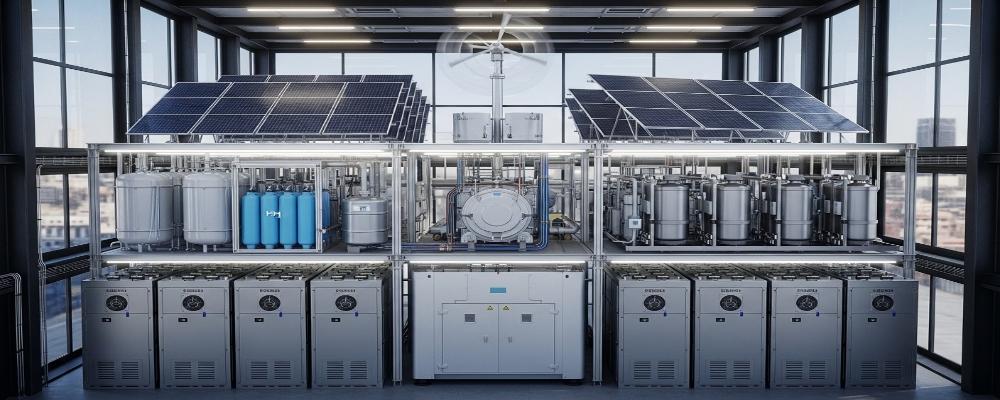 Smart Home Battery with BMS Communication: Cybersecurity and BMS Safety
 -
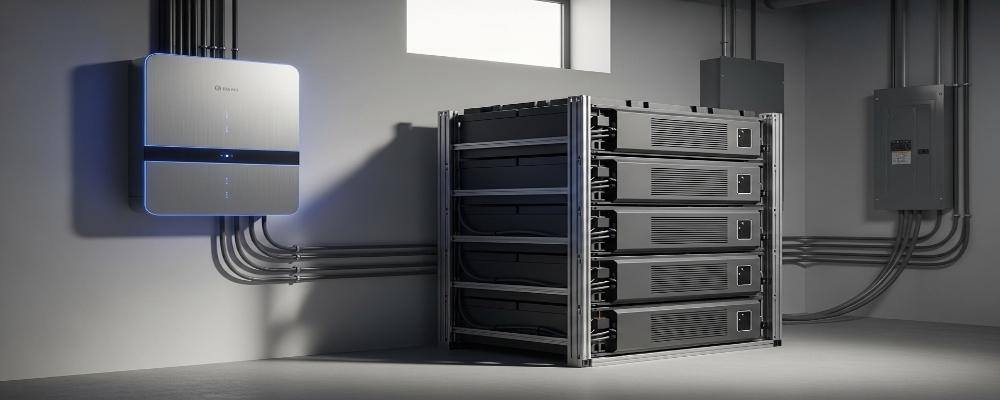 10kWh Home Battery Backup System: Is 90% DoD Better for Daily Solar Storage?
2026-09-29
-
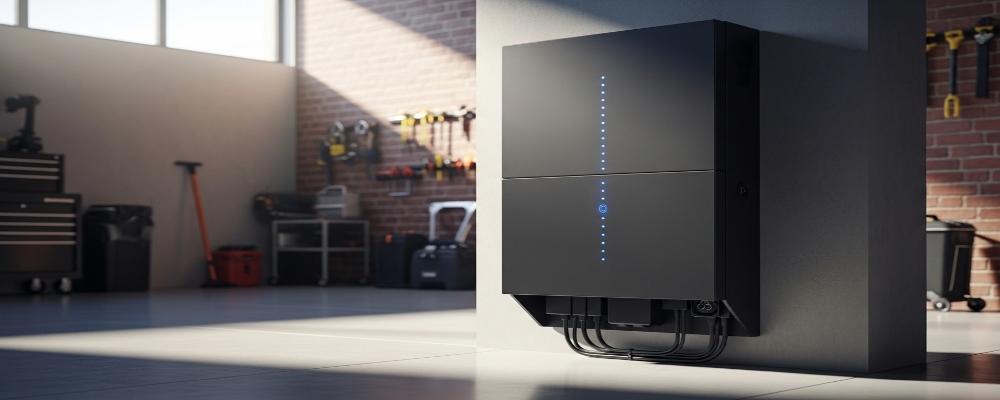 Integrated Home Energy Storage System 150–430V MPPT Design
2026-09-28
-
 LiFePO₄ Residential Backup Battery SOC Accuracy in Parallel Systems
Share this:





.svg)






-899.svg)


