




Whole-Home Battery Backup: Sizing & Surge Realities
A whole home battery backup system is sized in two steps: inverter kW for what can run at once, and battery kWh for how long it runs. Whole-home backup is not just adding up breakers. Count continuous loads, add motor-start surge for HVAC, well pumps, and compressors, then decide whether load management is smarter than oversizing.
Can a Whole Home Battery Backup System Really Keep Every Breaker Live?
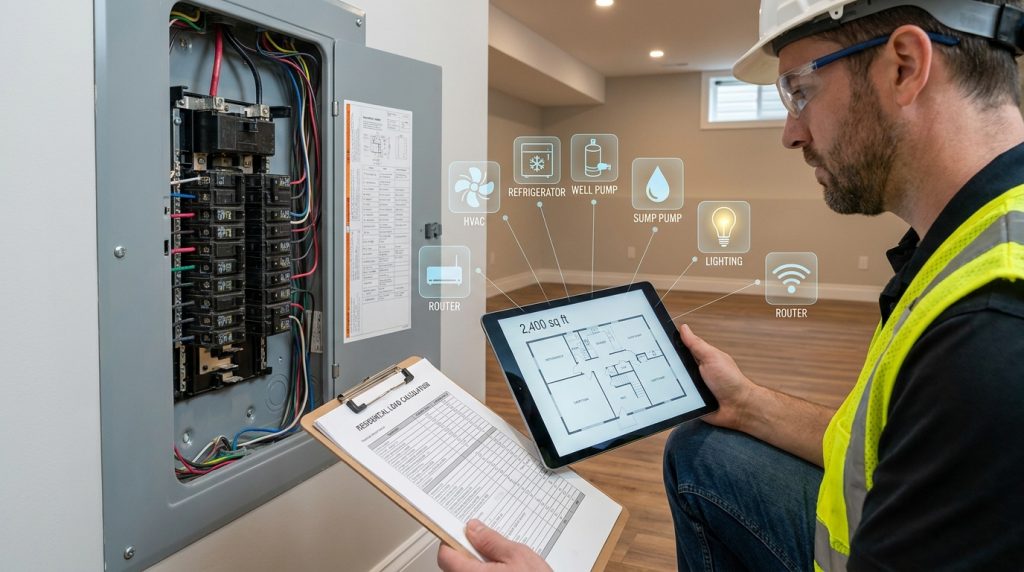
A whole home battery backup system can keep every breaker available, but it cannot run every load at full power at the same time unless the inverter and batteries are sized for combined continuous load and motor-start surge.
That is the key difference many homeowners miss. “Whole-home backup” can mean the main panel or most circuits stay available during an outage. It does not mean the battery can run HVAC, electric cooking, well pump, EV charging, water heating, and every outlet at the same time without limits.
Think of whole-home backup as access plus control. The system gives the home backup power access, while the inverter, battery capacity, and load-management settings decide what can run safely at the same time.
| Homeowner expectation | What it really means | Best planning response |
|---|---|---|
| Every breaker stays live | The panel can stay energized during an outage | Confirm inverter size and load control |
| Every appliance runs normally | All major loads may try to run at once | Size for high continuous load and surge |
| Long backup time | The battery must cover average load for many hours | Calculate battery kWh and reserve |
| No lifestyle changes | Large comfort loads remain available | Consider oversizing or smart load management |
What Numbers Matter: kW, kWh, Surge, and LRA?
kW decides what can run at the same time. kWh decides how long it can run. Surge or LRA decides whether motors such as HVAC compressors, well pumps, and refrigerator compressors can start without tripping the inverter.
A battery with high storage capacity can still disappoint if the inverter cannot deliver enough power at the exact moment a motor starts. That is why whole-home sizing must look at both runtime and startup power.
| Term | What it means | Why it matters for whole-home backup |
|---|---|---|
| kW | Power available at one moment | Shows what can run at the same time |
| kWh | Stored energy over time | Shows how long the home can run |
| Continuous load | Normal running power | Used to estimate everyday outage demand |
| Surge load | Short startup power spike | Used to check motor-start capability |
| LRA | Locked rotor amps on motor equipment | Helps estimate compressor or pump startup demand |
The U.S. Department of Energy explains energy storage using both power capacity and energy capacity. In practical home backup terms, that means a homeowner must ask two questions: how much power can the system deliver now, and how much energy can it store for later? DOE solar energy and storage basics.
How Do You List Your Whole-Home Continuous Loads?
Start with the electrical panel, not the battery brochure. A whole-home sizing worksheet should list the loads that may run during an outage, then separate essential loads from comfort loads and optional loads.
The goal is not to make a perfect engineering report. The goal is to give your installer a realistic load picture so the inverter and battery are not sized from guesses.
- List always-on loads such as refrigerator, freezer, router, lighting, and security devices.
- List motor loads such as HVAC, well pump, sump pump, and refrigerator compressor.
- List large electric loads such as oven, water heater, dryer, EV charger, and electric heat.
- Mark which loads are essential during an outage.
- Mark which loads can be staggered or locked out.
| Load | Priority | Running load | Surge concern | Can be staggered? |
|---|---|---|---|---|
| Refrigerator | High | Yes | Compressor startup | No |
| Lighting | High | Yes | Low | Partly |
| Router and devices | High | Yes | Low | No |
| HVAC | Comfort | Yes | High | Yes |
| Well pump | High | Yes | High | Yes |
| EV charger | Optional | High | Depends on charger | Yes |
How Do You Account for Motor Surge Before Choosing Inverter kW?
Size inverter kW from running load plus the largest likely motor-start event, not from average household use alone. HVAC compressors, well pumps, and refrigerator compressors can demand short surge power far above their normal running watts.
Motor surge is the reason two homes with the same battery kWh may have very different backup experiences. One home may only need lights, fridge, and internet. Another may need central HVAC, a well pump, and a sump pump during the same outage.
The largest startup event often decides the inverter requirement. If a compressor or pump starts while several normal loads are already running, the inverter must handle both the continuous load and the short surge event.
Where to Find LRA or Starting-Watt Information
Look for LRA, starting amps, or startup-watt information on the equipment nameplate, appliance manual, or manufacturer datasheet. HVAC compressors, pumps, and refrigeration equipment are the most important items to check.
- Check HVAC condenser nameplate data.
- Check well pump or sump pump specifications.
- Check refrigerator and freezer compressor behavior.
- Ask the installer whether a soft-start device is useful.
- Confirm the inverter’s continuous and surge rating before purchase.
What Inverter Size Fits a 2,400 Sq Ft Home?
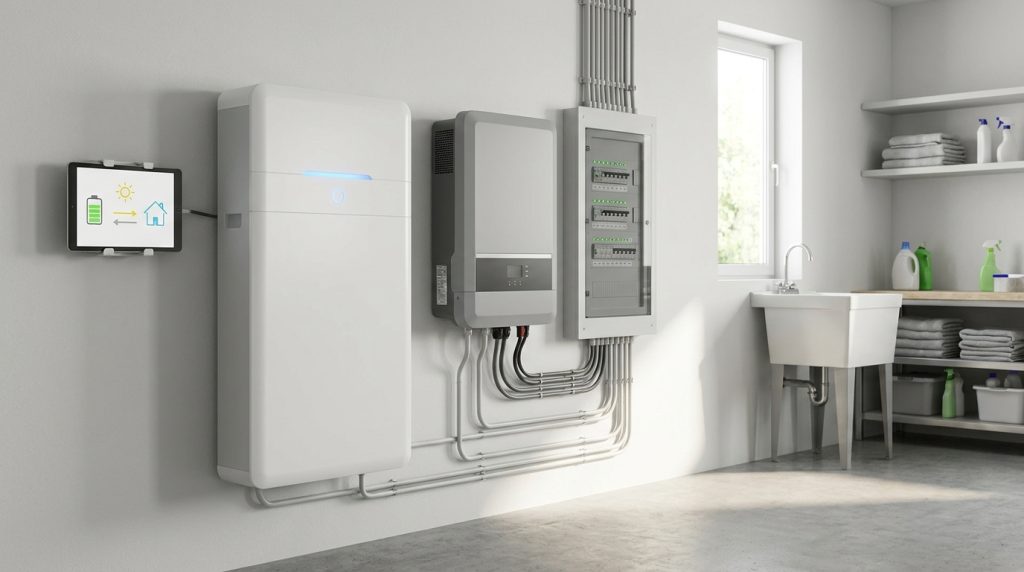
A 2,400 sq ft home does not have one universal inverter size. The correct size depends on the loads the homeowner wants available during an outage, especially HVAC, well pump, sump pump, and electric appliances.
Use the worksheet below as a planning example, not as a final design. Actual appliance nameplates and installer verification should decide the final inverter size.
| Load | Outage priority | Running load impact | Surge impact | Sizing decision |
|---|---|---|---|---|
| Refrigerator and freezer | High | Moderate | Compressor startup | Include in base load and surge check |
| Lighting and outlets | High | Low to moderate | Low | Include in continuous load |
| Router and security | High | Low | Low | Include in always-on load |
| HVAC compressor | Comfort | High | Very high | Verify LRA and soft-start option |
| Well pump | High if present | Moderate | High | Stagger with HVAC when possible |
| Sump pump | High if present | Moderate | High | Include in storm-outage planning |
| EV charger | Optional | High | Depends on charger | Usually lock out during outages |
The practical rule is simple: add the normal loads that may run together, then add the largest likely motor-start event. If the homeowner wants HVAC, well pump, and other motors available, the inverter plan must be built around surge, not only average power use.
How Many Battery kWh Do You Need for the Outage Duration You Want?
Battery kWh is runtime, not startup strength. Multiply average outage load by desired backup hours, then account for usable capacity, efficiency, and reserve. Solar can extend runtime, but weather and nighttime loads still matter.
A simple planning formula is: average outage load multiplied by backup hours equals needed usable kWh. The final battery size should also account for reserve settings and system efficiency.
| Planning question | Why it matters |
|---|---|
| How many hours do you want backup? | Longer backup needs more usable kWh |
| Which loads stay on overnight? | Night use cannot depend on solar production |
| Will HVAC run during outages? | Comfort loads can reduce runtime quickly |
| Will solar recharge the battery? | Solar can extend runtime during daylight |
| What reserve should stay unused? | Reserve protects the system and avoids full depletion |
The Department of Energy notes that solar plus storage can provide backup power during electrical disruptions. Still, solar should not be treated as unlimited backup power because storms, clouds, nighttime use, and reserve settings affect real runtime.DOE battery storage guidance.
What Would a Voltalink 20 kWh Reference Build Look Like?
A 20 kWh Voltalink reference build can be a strong whole-home backup starting point, but it must be paired with the right inverter surge rating and load-management plan. Storage capacity alone does not guarantee every appliance can run at once.
Voltalink presents home and outdoor energy storage options with flexible capacity from 3 kWh to 20 kWh, along with monitoring, backup power, and safety-focused battery system features. For this article, 20 kWh should be treated as a reference storage build, not a universal promise. Voltalink.
| Build item | Reference role | What to verify |
|---|---|---|
| 20 kWh battery storage | Runtime foundation | Usable capacity, reserve, and warranty limits |
| Hybrid inverter | Power delivery | Continuous kW and surge rating |
| Load management | Controls large loads | HVAC, pumps, EV charging, and cooking priorities |
| Monitoring | Shows system status | Battery level, load use, and backup behavior |
| Professional installation | Safety and code compliance | Panel, transfer equipment, and local requirements |
When Should You Choose Load Management Instead of Oversizing?
Choose load management when the home has large loads that do not need to run together during an outage. Oversizing makes sense only when simultaneous comfort loads are truly required and the budget supports the extra inverter and battery capacity.
Every breaker live is a comfort goal, not an engineering spec. It works when load management prevents simultaneous starts, but sizing for every appliance at once can waste budget.
| Situation | Better choice | Reason |
|---|---|---|
| HVAC and well pump may start together | Load management | Staggering can reduce surge stress |
| EV charging is not needed during outages | Load lockout | Preserves battery runtime |
| Homeowner wants normal comfort during long outages | Larger inverter and battery plan | More simultaneous load requires more capacity |
| Budget is limited | Prioritized backup | Critical loads run longer |
| Central HVAC must run | Surge-focused design | Startup power may decide inverter size |
A 20 kWh battery can be a strong backup foundation, but it is not automatically whole-home freedom. If central HVAC, a well pump, electric cooking, and EV charging are all allowed during outages, inverter surge and load priority matter more than storage alone.
What Should Your Installer Verify Before Purchase?
A whole-home battery backup should be verified before purchase because it connects to the service panel, transfer equipment, and code-regulated energy storage hardware. The installer should confirm both electrical design and documentation.
The checklist should cover system performance, safety, code, warranty, and tax-credit documentation. The IRS states that qualified battery storage technology may be eligible for the Residential Clean Energy Credit when requirements are met, including minimum capacity requirements. IRS Residential Clean Energy Credit.
- Confirm main panel compatibility.
- Confirm transfer equipment and backup configuration.
- Confirm inverter continuous kW rating.
- Confirm inverter surge rating for motor loads.
- Confirm battery usable capacity and reserve settings.
- Confirm monitoring, warranty, and after-sales support.
- Confirm local code, permit, and inspection requirements.
- Confirm safety documentation, including UL 9540A where applicable.
- Confirm tax-credit documentation before filing.
UL describes UL 9540A as a test method for evaluating thermal runaway fire propagation in battery energy storage systems. For homeowners, the practical takeaway is simple: do not treat whole-home backup as a plug-in appliance. It is a home electrical system that needs professional design and verification. UL 9540A test method.
FAQ
How do whole-home battery backups work?
Whole-home battery backups store electricity from solar or the grid and switch selected home circuits to battery power when the grid fails. The inverter turns stored DC energy into AC power, while monitoring and controls decide which loads receive power.
What size battery do I need?
You need enough kWh to cover your average outage load for the hours you care about, plus enough inverter kW and surge headroom to start motors. Start with a load worksheet before choosing a battery size.
How long can batteries power my home during an outage?
Runtime depends on usable kWh and the loads you allow during the outage. A battery lasts far longer when HVAC, EV charging, ovens, and water heaters are limited or staggered instead of running like normal grid power.
Do you need solar panels to have a battery backup?
No, a home battery can charge from the grid, but solar improves resilience because it can recharge the battery during daylight. For longer outages, solar pairing matters more than it does for short overnight backup.
Can battery backup systems power my entire home?
Yes, a properly sized system can energize the whole panel, but whole-home access is not the same as unlimited simultaneous use. Large motors and electric heat loads may need load management, soft starts, or a bigger inverter stack.
Can I install a battery backup system myself?
No, a whole-home battery backup should be installed by licensed professionals because it connects to the service panel, transfer equipment, and code-regulated energy storage hardware. DIY errors can create shock, fire, warranty, and permit problems.
What is a kWh?
A kWh is a unit of energy equal to one kilowatt used for one hour. In backup sizing, kWh tells you runtime, while kW tells you how much power the system can deliver at one moment.

-

 OEM Residential Energy Storage Solutions: Passive vs. Active Cell Balancing
2026-09-30
-
 Smart Home Battery with BMS Communication: Cybersecurity and BMS Safety
 -
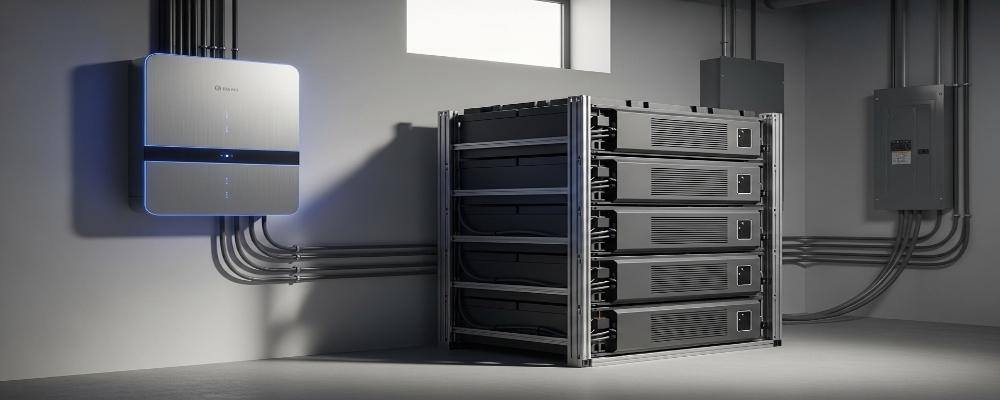 10kWh Home Battery Backup System: Is 90% DoD Better for Daily Solar Storage?
2026-09-29
-
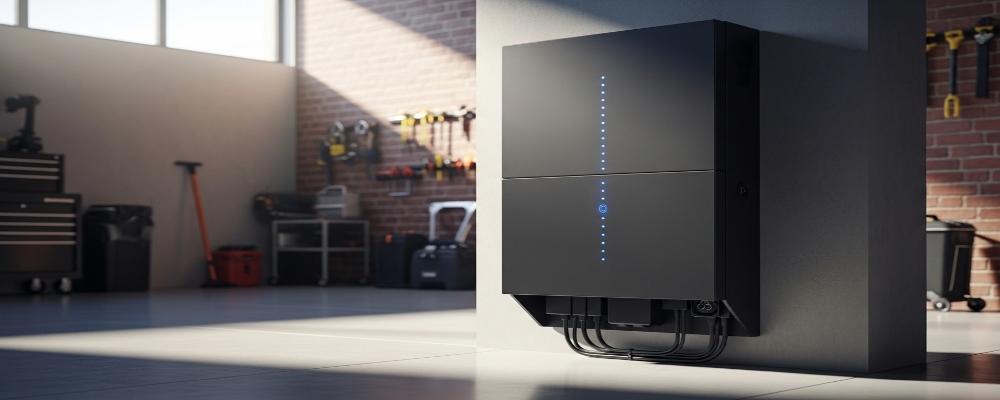 Integrated Home Energy Storage System 150–430V MPPT Design
2026-09-28
-
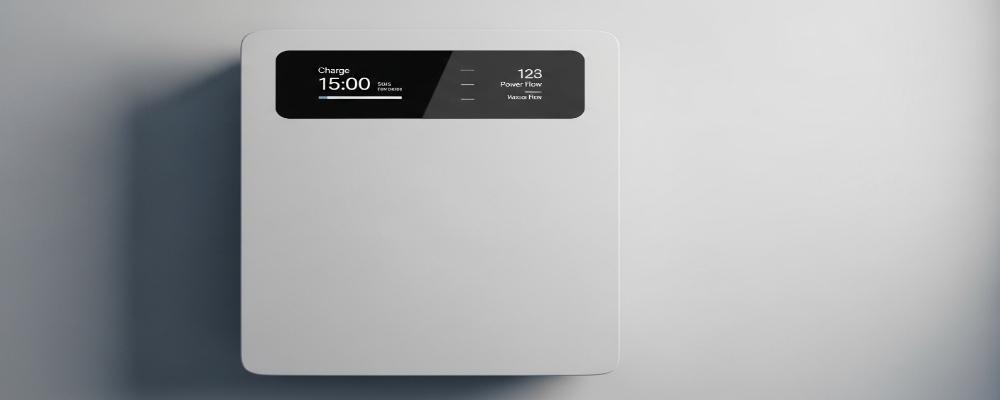 LiFePO₄ Residential Backup Battery SOC Accuracy in Parallel Systems
Share this:





.svg)






-899.svg)


