




How an All-In-One Home Energy Storage System Plays Three Roles: Inverter, Charger, and Battery Manager
For homeowners searching for solar backup solutions, the term All In One Home Energy Storage Systems usually refers to products that are modular and compact compared to more traditional component-based systems. But what does “all in one” truly mean? Unlike conventional systems where the inverter, charge controller, and battery management are separate boxes, an integrated unit combines three critical functions into a single chassis. This article explains—step by step—how a modern All In One Home Energy Storage System simultaneously acts as an inverter, a solar charger, and an intelligent battery manager, using VoltaLink‘s Off Grid Solar Battery System as a practical example.
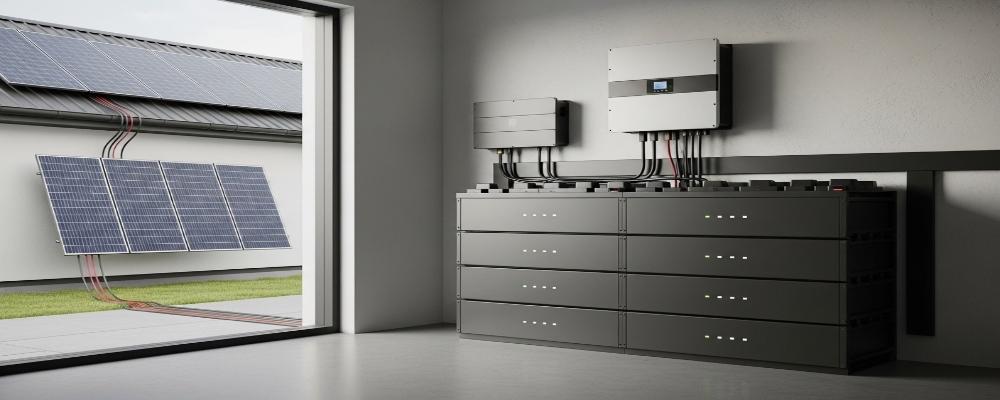
Why Traditional Systems Need Three Separate Devices
Before understanding integration, it helps to know how conventional solar storage works. The standard off-grid or hybrid system has:
1. Solar charge controllers. These come with an MPPT to stabilize solar fluctuating voltages to a stable charging current.
2. Inverters to supply AC to appliances from battery stored DC.
3. BMSs to look after battery cells and prevent damage.
Every device depends on cables and specific protocols (CAN/RS485) which results in multiple compatibility issues, poor energy flow and complicated cables. These issues are avoided in the All In One Home Energy Storage System as it combines all three functionalities in a single unit that uses a common controller.
Role 1: The Inverter – DC to Clean AC Conversion
Backup electricity is one of the core functionalities of all energy storage systems. For the All In One Home Energy Storage System, the inverter section takes the storage systems 51.2V DC and converts it to AC at the standard household voltage.
Some of the modern integrated inverter functions (derived from VoltaLink’s design):
1. Inverters output a Clean Pure Sine Wave: The total harmonic distortion is less than 3% and the voltage is within 230VAC ± 5%. This allows the safe operation of sensitive electronics.
2. Rated and Surge Powers: The system can provide 5500W continuous power and surge up to 11000W. This range covers the starting current requirements for appliances that can be as high as 3–7 times their running current.
3. A Selectable Wide Input Voltage: Grid power can fluctuate and the system can still produce a clean output. The system can select voltage input ranges of 170–280V in UPS mode and 90–280V in Appliance Mode.
4. Automatic Frequency Detection: The system can automatically set itself to a 50 or 60Hz output frequency without user intervention. Thus it is a globally compliant system.
In contrast to a stand alone inverter, which only offers DC to AC conversion, an integrated inverter communicates in real time with a battery manager system. When the battery’s state of charge drops below a predetermined point, the inverter is instructed internally to either reduce its output, or change to grid bypass mode. No additional communication wiring is required.
Role 2: The Charger – Managing Multiple Power Sources
A stand alone solar charge controller only manages the solar pv input. An All In One Home Energy Storage System integrates a multi-source charger that accepts energy from solar, the AC grid, or a generator. This charger section has three sub-functions.
1. 1.MPPT solar charging:
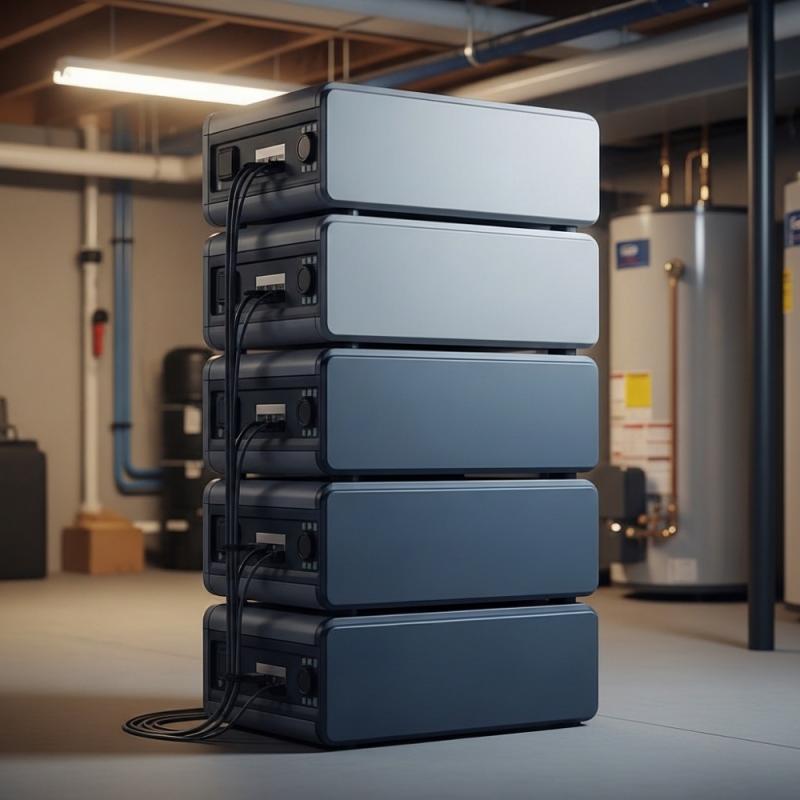
The integrated MPPT solar charger operates within a 60-360VDC range and can accept up to 6000W of solar power (450VDC at 28A). Unlike other solar charge controllers, it can adjust the electrical operating point in order to maximize solar energy conversion, even in partial shading or cloudy conditions. The efficiency improvement of MPPT solar charge controllers compared to traditional PWM (Pulse Width Modulation) controllers can be in the range of 20-30%.
2. 2.AC grid charging (bypass mode):
The system can draw from the grid via its built-in AC to DC converter when there is not enough solar energy and the battery level is low.
3. 3.Generator charging support:
For off-grid systems, the charger can accept AC input from a backup generator, which will be engaged automatically when battery SOC is below the user determined level.
All charging sources are prioritized intelligently, with the solar charger being the first choice, and the grid or generator, being the second choice. This automatic source selection is a core advantage of the All In One Home Energy Storage System.
Role 3: The Battery Manager – Smart BMS as the Guardian
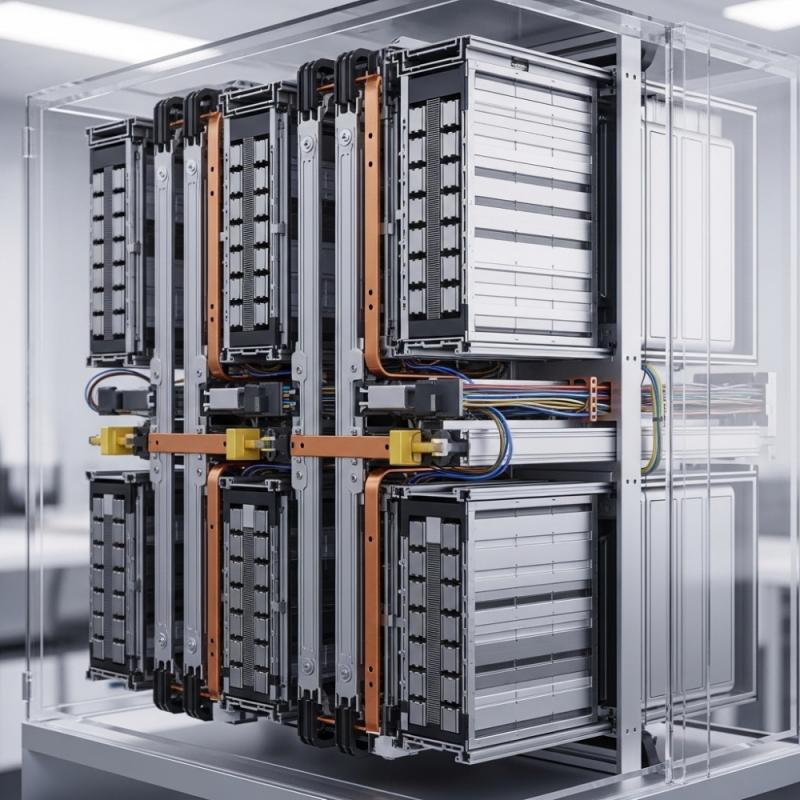
The third and most overlooked role is battery management. A traditional setup uses a separate BMS box that only disconnects on fault conditions. In a unified design, the BMS is incorporated on the same control board as the inverter and charger, and can carry out timely preventative actions.
The smart BMS with VoltaLink‘s Off Grid Solar Battery System:
• Monitors Voltage: Assesses every single cell of the LiFePO4 prismatic cells (51.2V nominal, 200Ah capacity, 10.24kWh total). If any cell goes beyond the ±0.5V threshold, the BMS instructs the charger to slow down or instructs the inverter to reduce the load.
• Applies Current Limiting: Smart BMS ensures discharge limits are not breached. BMS makes pushing DoD towards 100% safe for LiFePO4 chemistry. With discharge and charge limits enforced by BMS, battery operation can exceed 6000 full cycles.
• Temperature protection: Using embedded thermistors, the BMS reduces charge current below 0°C (to avoid lithium plating) and disconnects above 65°C (to prevent thermal runaway).
Short circuit and overcurrent shutdown: Responds within microseconds, faster than any external fuse.
Because the BMS communicates directly with the inverter/charger via internal bus (not external CAN/RS485), response times are measured in milliseconds. For example, if the BMS detects a sudden temperature rise, it can command the inverter to immediately limit output power rather than shutting down completely—keeping the lights on while protecting the battery.
How Integration Creates Synergy: The “Three-in-One“ Advantage
When these three roles operate inside a single enclosure, several unique benefits emerge that no separate-component system can match.
1. 1.Shared Intelligence:
The main microcontroller employs an adaptive energy control algorithm. Referring to the MPPT section, BMS, and inverter output measurement, it is aware of the solar availability, battery status, and load demand, respectively. Accordingly, it makes the real time decision to charge, discharge, or bypass.
2. 2.Smooth Mode Transition:
• VoltaLink’s system provides an automatic transition among the three modes.
• Grid-tied mode: Solar charging of the battery occurs. The excess energy can be used for self-consumption (feed-in can be set).
• Off-grid mode: Solar charging of the battery occurs. The inverter is isolated from the grid.
• Hybrid mode: The solar, battery, and grid components are used to circumvent the peak tariff.
The control logic system removes delay caused by the relay clicks during the transition.
3.Minimized Energy Loss:
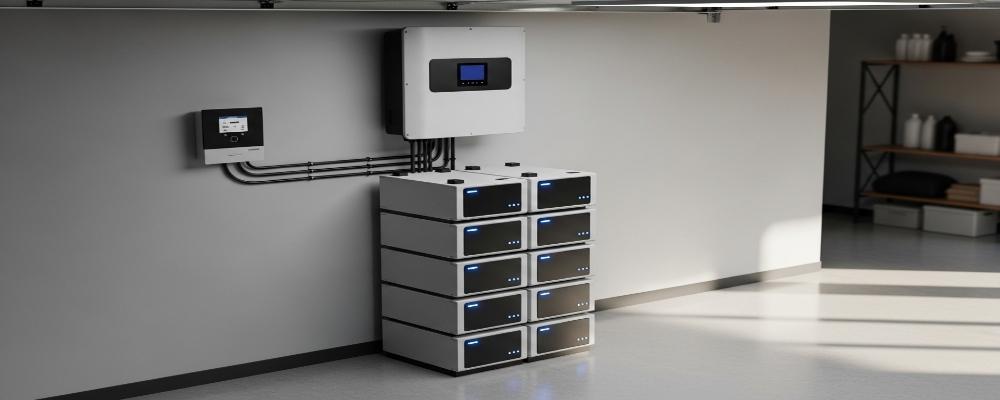
In a system with separate components, energy travels through cables and terminals for each individual step (PV → charge controller → battery → inverter → load). Energy loss for each of these steps can be 1-3%. The All In One Home Energy Storage System encloses the system with high conductivity copper busbars (600 x 500 x 660mm, 120kg total). The system weighing 120 kilograms usually requires 3 to 4 workers to carry and transport. However, the innovative built-in heavy-duty swivel wheel design (80mm high) of VoltaLink enables a single worker to easily achieve precise positioning in a garage or storage room. Combined with the single-panel wiring design, the overall construction labor cost is reduced by more than 50%. Compared to conventional split-component setups, this fully integrated architecture significantly reduces line losses, achieving an industry-leading peak round-trip efficiency of 90%.
4. 4.Simplified installation and maintenance:
The system has all connections (PV input, AC output, internal battery wiring) made on a single panel. An electrician can complete the installation in under two hours. The system is easy to position due to built-in wheels (80mm height from bottom). Maintenance involves only the external enclosure and no separate BMS firmware updates or inverter-charger compatibility checks are required.
Practical Example: A Day in the Life of an All-in-One System
An example VoltaLink Off Grid Solar Battery System with 10.24kWh of battery storage in a home with 4kW of solar panels, shows how the three roles work in conjunction with each other.
• Morning (Low Solar, High Grid Price): Charging starts at 800W with the first beam of the sun. The BMS checks the battery temperature at 15°C, and safe. The inverter stays on Standby, charging directs all solar to top off the battery, from 40% up to 60% SOC.
• Afternoon (Peak Solar): The system enters Self Consumption Mode when the PV output reaches 5000 W. The inverter powers the home with 1500W from the solar. The charger takes the rest, 3500W, to the battery. When the SOC hits 95%, the BMS does equalization.
• Evening (Grid Outage): The storm hits, and the utility power goes down. The internal Transfer Switch changes the system to Off Grid Mode within <20 ms. The inverter draws 2000W from the battery to power the lights, fridge and a TV. The BMS does allow 90% DoD as Discharge Current Level and temperature are in range. The charger section is inactive.
• Night (Battery Low): A SOC of 20% is a Low Battery warning sent by the BMS. The system switches to UPS Mode, grid power is drawn only when utility power returns at 2:00 AM. By sunrise, the battery is at 30%, ready for another solar cycle.
All these decisions happen inside the same metal enclosure without external controllers.
Why VoltaLink‘s Design Stands Out
VoltaLink’s Off Grid Solar Battery System exemplifies the mature All In One Home Energy Storage System category with specific engineering choices:
• LiFePO4 prismatic cells: Offer thermal stability and 6000+ cycle life, unlike NMC chemistries that require more aggressive BMS intervention.
• Broad MPPT range (60–360V): Enables the series connection of 400W panels (10 sets of 360V) at a current of 28A.
• Metal casing with flame-retardant materials: Complies with residential safety standards of CE, UL, ROHS.
• Scalable design: Allows 6 unit connection over CAN/RS485 for expansion from 10.24kWh to 60kWh, with a single control point.
Conclusion
An All In One Home Energy Storage System is not simply a box containing a battery and an inverter. It is a tightly integrated energy management platform where the inverter, charger, and BMS constantly share data through a common brain. This synergy delivers higher efficiency (90% peak), faster protection response, simpler installation, and more reliable automatic mode switching than any collection of separate components. For homeowners seeking true energy independence with minimal complexity, understanding these three roles—and how they work together—is the first step toward making an informed choice.
If you would like to explore VoltaLink’s Off Grid Solar Battery System further, including its 10.24kWh capacity, 5500W pure sine wave inverter, and smart BMS with full electrical and thermal protection, please contact their technical team for customized project support.
Frequently Asked Questions
Q1: What components are in the All-in-One Home Energy Storage System?
A: The All-in-One Home Energy Storage System includes Home Solar Inverters, MPPT Solar Inverters, BMS, and more.
Q2: Do you have solar panel systems?
A: We do not directly manufacture photovoltaic modules, but our integrated system perfectly integrates the 6000W MPPT solar charging controller, which can seamlessly work with the mainstream photovoltaic panels on the market.
Q3: Is having a battery inside a home a risk?
A: Home energy storage is exceptionally safe when engineered correctly. VoltaLink utilizes premium LiFePO4 prismatic cells…
Q4: What is the life expectancy of the battery?
A: The battery is expected to last longer than 6,000 charge cycles. At 90% depth of discharge, this is usually around 15 to 20 years of daily use.
Q5: Can I increase the capacity after buying it?
A: Yes. The storage capacity can be increased, starting from 10.24kWh with additional units of 60kWh and more, connected in parallel.

-

 OEM Residential Energy Storage Solutions: Passive vs. Active Cell Balancing
2026-09-30
-
 Smart Home Battery with BMS Communication: Cybersecurity and BMS Safety
 -
 10kWh Home Battery Backup System: Is 90% DoD Better for Daily Solar Storage?
2026-09-29
-
 Integrated Home Energy Storage System 150–430V MPPT Design
2026-09-28
-
 LiFePO₄ Residential Backup Battery SOC Accuracy in Parallel Systems
Share this:





.svg)






-899.svg)


