




Sizing Your LiFePO4 Home Battery: A Complete Guide to Choosing the Right Number of 5.12kWh Modules
Selecting the right capacity for a LiFePO4 Home Battery is one of the most important decisions for any homeowner considering solar integration or backup power. Undersize the system, and you risk running out of power during an outage. Oversize it, and you tie up capital in unused capacity. This guide walks you through a practical, step-by-step sizing methodology using a real-world example: the VoltaLink modular energy storage system, built around 5.12kWh LiFePO4 modules. You will learn how to match battery capacity to your household’s unique energy profile, while understanding the technical boundaries that matter.
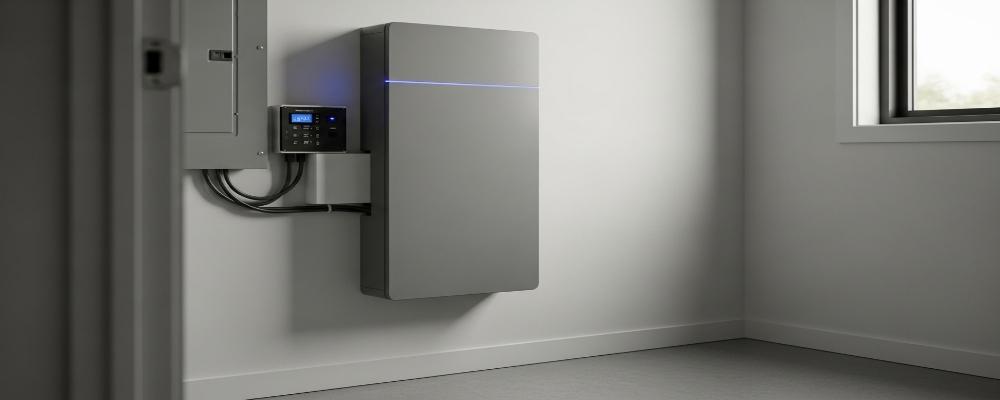
Step 1 – Measure Your Daily Household Energy Consumption (kWh)
Before knowing how many modules you need, you ought to know how much energy your house uses in a single day. Energy usage is measured in kilowatt-hours (kWh).
Perform a home energy audit. List all home appliances (i.e., refrigerator, lights, TV, well pump, etc.). Tally their power in watts (W) or kilowatts (kW).
• Estimate the run hours: The power of the home appliance multiplied by the estimated hours it runs in a day, then divided by 1000 gives total kWh. A refrigerator rated at 150W and running for 8 hours = 1.2 kWh.
• Use your utility bill: Most utility bills provide the kWh usage for the month. Divide by 30 for an average daily use. A typical North American or European household uses 10-20kWh in a single day.
• Be mindful of seasonal differences: Heating and cooling loads are bound to change. Size your LiFePO4 Home Battery for the worst-case season (usually summer or winter, depending on climate).
• Example: A medium-sized home with a fridge, LED lights, TV, router, and a sump pump might consume 12 kWh per day. Adding a central AC or electric water heater can raise that to 25–30 kWh daily.
Step 2 – Define Your Primary Goal: Backup, Self–Consumption, or Off–Grid
The number of battery modules you need depends heavily on your application. VoltaLink’s modular architecture supports three common scenarios.
• Emergency backup (critical loads only): You only want to keep essential devices running during an outage (fridge, freezer, internet, phone charger, a few lights). Typical need: 5–10 kWh of usable storage.
• Solar self-consumption (time-of-use arbitrage): You save up excess solar energy generated in the day to use at night instead of paying for expensive grid electricity. Typical need: 10–20 kWh to cover evening and morning peaks.
• Partial off-grid or whole-home backup: You want to run most appliances (including a well pump, microwave, or small air conditioner) for 12–24 hours without grid or solar input. Typical need: 20–30 kWh or more.
Step 3 – Understand What a Single 5.12kWh Module Can Deliver
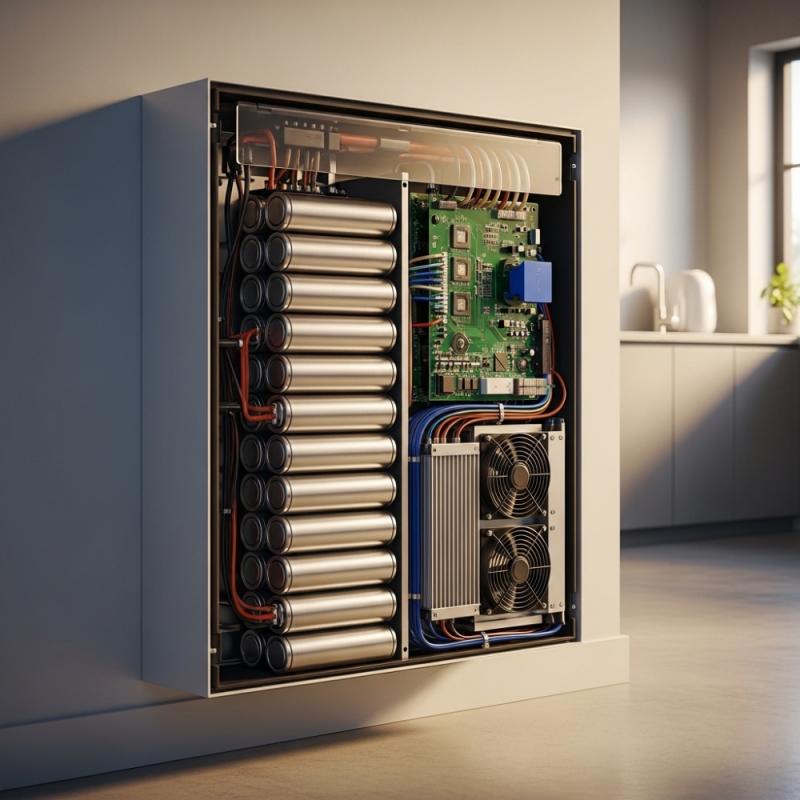
VoltaLink’s basic building block is a 51.2V 100Ah LiFePO4 battery with 5.12 kWh of rated energy. But two critical inverter limits affect real-world usability.
• Continuous power limit: The integrated inverter provides 5200W (5.2 kW) continuously. Four connected modules (20.48 kWh) still limit you to 5200W draw.
• Surge power capacity: 10400W for a few seconds. This covers starting loads for motors (refrigerator compressors, sump pumps, garage door openers).
• Usable vs rated energy: LiFePO4 chemistry allows for 80 – 90% DoD deep discharge. A 5.12 kWh module has 4.3 – 4.6 kWh available for daily use.
• Cycle life impact: Daily cycling is still acceptable with over 6000 cycles. VoltaLink’s adaptive charging behavior and BMS protection will provide stable performance for years.
Step 4 – How Many LiFePO4 Battery Modules Do I Need for Backup Duration?
Use the following formula.
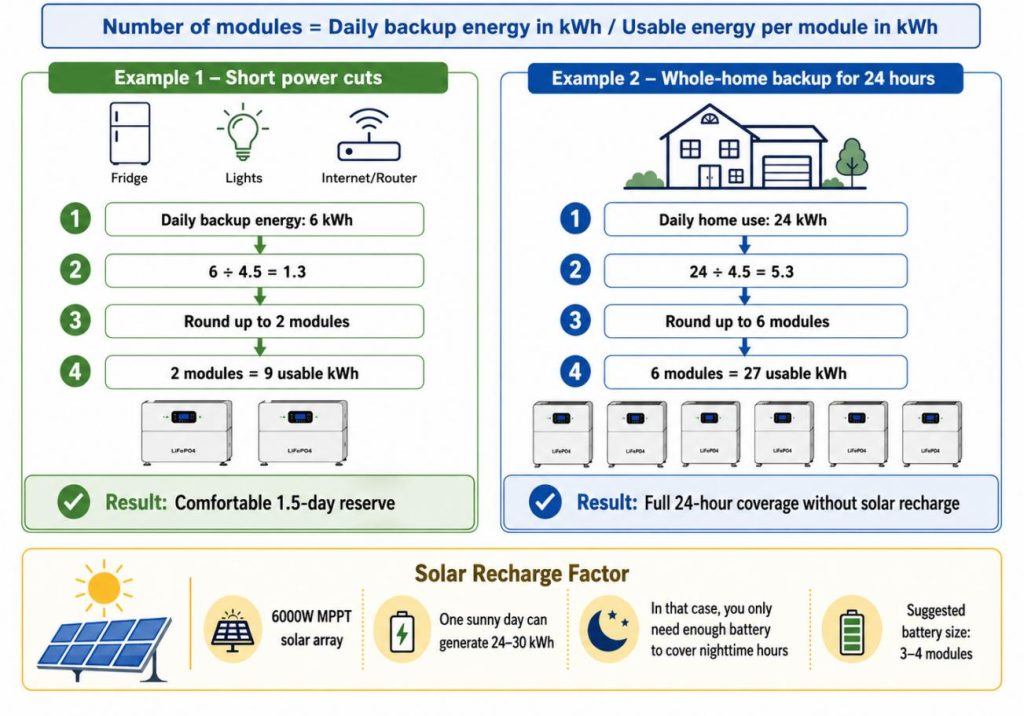
Number of modules = Daily backup energy in kWh / Usable energy per module in kWh
�� Example 1: For short power cuts with little critical load, a daily backup energy estimate to run the fridge, lights, and the internet is 6 kWh. With 4.5 usable kWh per module, you require at least 2 modules (9 usable kWh). This gives a comfortable 1.5-day reserve.
�� Example 2 – Whole-home backup for 24 hours: Your home uses 24 kWh per day. 24 ÷ 4.5 ≈ 5.3 → round up to 6 modules (27 usable kWh). This provides full 24-hour coverage without solar recharge.
Solar recharge factor: If you have a 6000W MPPT solar array (VoltaLink’s PV input supports up to 6000W), one sunny day can generate 24–30 kWh. In that case, you only need enough battery to cover nighttime hours (e.g., 3–4 modules).
Step 5 – Do Not Ignore the Inverter Power Constraint
Many homeowners mistakenly focus only on kWh capacity and forget the peak power limit. VoltaLink’s 5200W inverter means that even with six modules, you cannot run a 7000W electric oven and a 3000W AC at the same time.
•Identify high-wattage appliances: Electric ranges (3000–5000W), clothes dryers (2500–4000W), and central AC (3000–6000W) may exceed the inverter alone.
• Load management strategy: Run heavy appliances one at a time, or keep them on the grid side. The battery can still power lights, outlets, and smaller appliances.
• Surge power benefit: A 1500W well pump might have a 6000W startup surge. VoltaLink’s 10400W surge easily handles this without tripping.
• VoltaLink’s layered energy distribution system: This system prevents energy allocation bottlenecks because it assigns inverter energy to specific household loads.
Step 6 – Modular Expansion: Better to Start Small
Real modularity is integral to VoltaLink’s design and allows customers to buy one, two, or any number of 5.12kWh modules and then add as many modules as desired without replacing anything that was initially installed.
•Compact Modular Alignment: The dimensions of each expansion module (440×190×1271mm) are such that they can be stacked neatly on top of each other, allowing future installations to remain within the same footprint.
•No inverter upgrade: With the 5200W inverter and 6000W MPPT built in, no upgrades are required. Adding modules only increases energy storage duration, not peak power.
•Quiet operation structure: Each module runs with minimal noise, so adding multiple units does not turn your utility room into a server farm.
•Rapid system response capability: When you add modules, the BMS automatically balances them, ensuring smooth transitions between charge and discharge states.
Note: For the installers, the compact cascading design of 440×190×1271mm and the BMS automatic balancing technology mean that the capacity expansion can be completed by one person within 30 minutes, significantly reducing the on-site labor costs and the rate of after-sales technical support.
Additional VoltaLink Design Advantages That Improve Real–World Sizing
Beyond raw numbers, several engineering features make VoltaLink’s LiFePO4 Home Battery easier to size and live with.
•Adaptive charging behavior: The system automatically adjusts charging patterns based on solar or grid input conditions. This means you do not need to manually reconfigure when you add modules.
•Consistent performance under load variation: Even if household demand fluctuates (morning coffee maker, evening TV), the battery maintains stable voltage and frequency. Your sizing does not need “extra headroom” for instability.
•Built-in BMS with CAN/RS485 communication: Real-time monitoring of voltage, current, and temperature allows precise state-of-charge tracking. You can confidently use 90% of the rated capacity without damaging the battery.
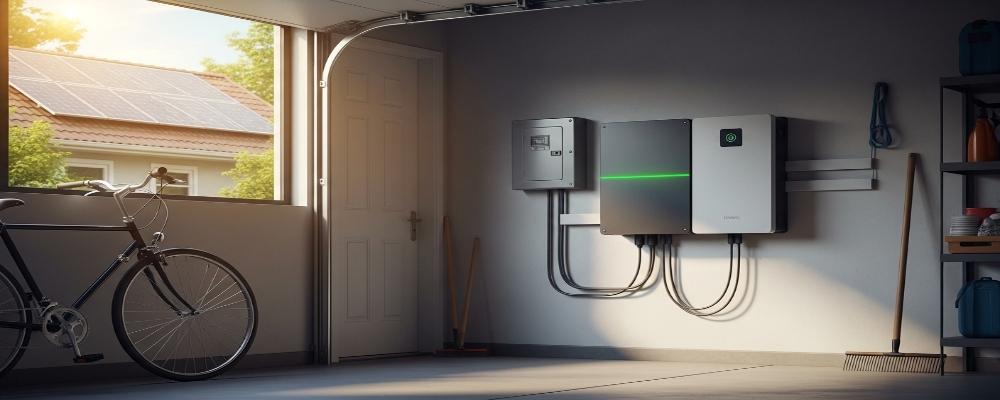
•Indoor-optimized IP20 design: The metal plate housing is made for clean, dry indoor spaces (garage, utility room). No need to derate capacity for outdoor weather extremes.
A Practical Sizing Table (Based on VoltaLink 5.12kWh Modules)
| Number of Modules | Total Rated Energy | Usable Energy (90% DoD) | Typical Application |
| 1 module | 5.12 kWh | ~4.6 kWh | Nighttime router + lights + phone charging |
| 2 modules | 10.24 kWh | ~9.2 kWh | Critical loads (fridge, freezer, sump pump) for 1 day |
| 4 modules | 20.48 kWh | ~18.4 kWh | Whole-home evening use (no AC) or 2 days of critical loads |
| 6 modules | 30.72 kWh | ~27.6 kWh | Whole-home backup for 24 hours (including small AC) |
CAT: Unsure about your peak load? Download our Free Home Energy Audit Worksheet to trace your appliances.
Final Recommendations
•Start with an energy audit: Never guess your daily kWh. Use a plug-in power meter or your utility bill.
•Prioritize critical loads first: If your budget is limited, size for refrigeration, internet, and lighting. Add modules later for comfort appliances.
•Account for solar recharge: With a 6000W MPPT array, one sunny hour generates 6 kWh. A 10 kWh battery (2 modules) can be fully recharged in under two hours of good sun.
�� Consult VoltaLink‘s technical team: Every home is different. The modular design means you can begin with a conservative estimate (e.g., 2–3 modules) and expand as you collect real usage data.
A properly sized LiFePO4 Home Battery not only keeps your lights on during outages but also maximizes your solar investment. VoltaLink’s combination of true 5.12kWh modularity, a 5200W pure sine wave inverter, and smart energy management gives you the flexibility to start small and grow confidently. Building a cost-effective and resilient residential storage system is possible using the previously stated methods.
Frequently Asked Questions
Q1: Can I place another order to receive more 5.12kWh modules?
A: Yes. Modular flexibility is a primary focus of the VoltaLink system design. Accordingly, there is no maximum limit on the number of additional modules that you can purchase.
Q2: If I purchase additional modules, will peak power (watts) remain the same? What will happen to total energy (kWh)?
A: You can order as many modules as you like, but the peak power will remain capped at 5200W. Total energy (kWh) will be expanded.
Q3: What is the usable energy in one 5.12kWh LiFePO4 module actually?
A: 4.3-4.6kWh because of a recommended depth of discharge of 85-90%.
Q4: Can I size my battery off of just my monthly electric bill?
A: Yes, a monthly bill can serve as a baseline. However, you should divide the total monthly kWh by 30 to get a daily average…
Q5: Will a 5.12kWh battery operate my electric water heater or my HVAC?
A: It will operate both of these systems for a limited amount of time, so use load control for high-watt appliances or keep these systems on the grid.

-

 OEM Residential Energy Storage Solutions: Passive vs. Active Cell Balancing
2026-09-30
-
 Smart Home Battery with BMS Communication: Cybersecurity and BMS Safety
 -
 10kWh Home Battery Backup System: Is 90% DoD Better for Daily Solar Storage?
2026-09-29
-
 Integrated Home Energy Storage System 150–430V MPPT Design
2026-09-28
-
 LiFePO₄ Residential Backup Battery SOC Accuracy in Parallel Systems
Share this:





.svg)






-899.svg)


